Oregon’s Rogue Valley – Wine Buyer’s Guide

Jonathan Cristaldi

Going Rogue: Inside Oregon’s Wildly Promising Southern Wine Region

I recently ventured to southern Oregon to serve as one of the judges for the inaugural Rogue Valley Wine Competition, bravely putting my gums—and sense of restraint—to the test once again so that you don’t have to! 

The experience offered an up-close look at what’s happening in this quietly dynamic region, where rugged mountain landscapes, volcanic soils (sloughed off from literal volcanoes you can still see), and passionate producers are shaping a fresh chapter in Oregon wine.

Between marathon tasting flights and visits to local cellars, it quickly became clear that something exciting is happening here—a real vibrancy and freshness to the wines, along with pulsating energy.

The Rogue Valley is slowly shedding its “under-the-radar” status, driven by passionate individuals making wines with real personality and polish—and at incredibly affordable prices. If you’re in the market for excellent wines under $50 or collector-worthy wines under $100, look to the producers featured in this report, but don’t stop there. 

If you’re a theater-goer whose annual pilgrimage to the Shakespeare Festival in Ashland doesn’t include extra days to visit wineries, it’s time to make those plans. 

Left to Right: Jonathan Cristaldi, Ron Acierto, Dr. Liz Thach, Master of Wine (MW).

Cristaldi's Top 10 Rogue Valley Wine Picks

Ascendance, the top cuvée, offers a lovely creamy texture balanced by exceptional length, with spicy ginger and granitic minerality shining through. Gorgeously medium-bodied, it has a satiny palate feel and beautifully layered notes of Indian spices and ginger. A refined and elegant expression of site and craft. Winemaker Brian Gruber explains that they work with 10 different clones of Chardonnay, most of which are planted on granitic soils. He prioritizes acidity at harvest, often doing multiple picks within the same block to build complexity and ensure he never needs to add acid. After settling overnight, the juice is racked to barrel and inoculated with native yeast in-barrel. The wine is aged for up to 15 months in one-third new French oak and goes through full malolactic fermentation. Lots are kept separate throughout aging, lees stirring is minimal, and blending occurs just before bottling. Of the three estate Chardonnays Winemaker Brian Gruber produces, Ascendance is the top cuvée and the first blend assembled—focused on precision and structure. Convergence follows, crafted for more roundness and ripeness, while the Estate Chardonnay is blended last, offering an expression that reflects the broader vineyard character.
A touch more elegant and delicate, this Pinot Noir reveals savory notes of black tea and bergamot, with Earl Grey–like tannins framing the medium-bodied palate. Fabulous orange peel nuances carry through, supported by a long, spicy finish that highlights the character of the clone. Refined and beautifully detailed. Winemaker Brian Gruber explains that this Pinot Noir is a blend of older plantings and newer vines established in 2018. Grapes are mostly destemmed, though select lots are fermented with whole clusters for blending flexibility. Fermentation occurs in stainless steel, with individual blocks vinified separately. After a short cold soak, native fermentations begin, accompanied by a regimen of pumpovers and punchdowns. Following primary fermentation, an extended maceration of up to 28 days builds mouthfeel, mid-palate weight, and structure. The wine is gently pressed, with primarily free-run juice selected for the final blend. It is aged in roughly one-third new French oak for up to 18 months before blending and bottling.

Cherry, pomegranate, blood orange, and grapefruit zest lead the aromatic profile, accented by clove and fresh cherry blossoms. A hint of bergamot emerges on the palate, which is more structured, with firm and robust tannins that resolve beautifully. Chalky minerality and elegant cedarwood notes frame the wine, highlighting its brilliant purity of fruit and spice. Balanced textures and fabulous energy make this a striking and vibrant expression. Winemaker Brian Gruber explains that this Pinot Noir is a blend of older plantings and newer vines established in 2018. Grapes are mostly destemmed, though select lots are fermented with whole clusters for blending flexibility. Fermentation occurs in stainless steel, with individual blocks vinified separately. After a short cold soak, native fermentations begin, accompanied by a regimen of pumpovers and punchdowns. Following primary fermentation, an extended maceration of up to 28 days builds mouthfeel, mid-palate weight, and structure. The wine is gently pressed, with primarily free-run juice selected for the final blend. It is aged in roughly one-third new French oak for up to 18 months before blending and bottling.

Fragrant notes of honeysuckle and jasmine intermix with rich baking spices, apple tarte Tatin, pear, and a dollop of lemon oil—all finding balance on the palate. Candied ginger and a beautifully crisp, pure fruit profile are supported by crunchy acid tension and a touch more richness than the Estate bottling. Totally balanced. A vibrant and refined expression. Winemaker Brian Gruber explains that they work with 10 different clones of Chardonnay, most of which are planted on granitic soils. He prioritizes acidity at harvest, often doing multiple picks within the same block to build complexity and ensure he never needs to add acid. After settling overnight, the juice is racked to barrel and inoculated with native yeast in-barrel. The wine is aged for up to 15 months in one-third new French oak and goes through full malolactic fermentation. Lots are kept separate throughout aging, lees stirring is minimal, and blending occurs just before bottling. Of the three estate Chardonnays Winemaker Brian Gruber produces, Ascendance is the top cuvée and the first blend assembled—focused on precision and structure. Convergence follows, crafted for more roundness and ripeness, while the Estate Chardonnay is blended last, offering an expression that reflects the broader vineyard character.
Native fermented in 1.5-ton macro bins, this 100% Wädenswil 2A clone Pinot Noir was aged for 10 months in 25% new French oak. It’s an expressive and bright Pinot with vibrant blood orange acidity, fragrant cherry and rose petal nuances, and layers of crushed wild herbs. Dusty cocoa powder tannins frame the juicy, long, and spicy finish. Winemaker Chris Jiron believes this late-ripening clone is ideal for the region.

This Dijon 777 Pinot Noir was whole cluster fermented and aged for 10 months in 25% new French oak. Bold, rich, and spicy—yet light on its feet—it delivers black cherry, clove, blood orange, and grapefruit zest. The tannins are ripe and grippy, and the finish reveals crushed stone and wet slate minerality. A fantastically structured Pinot Noir with impressive grip and tension—give it another year or two in bottle and enjoy over the next decade.

Sourced from Crater View Vineyard, just across the street from DANCIN, this Syrah was native fermented in 1.5-ton macro bins and aged for 17 months in 40% new French oak. It’s a beautifully multidimensional wine, showcasing pure blackberry and blue fruit nuances, candied violets, and white pepper. Medium-bodied on the palate with building tannins, exceptional length, and velvet-textured structure, it’s framed by Indian spices and layered with floral intensity on the long, energetic finish. An excellent wine.

Leads with paprika, dried thyme, rosemary, and a touch of dried dill, all building into a medium-bodied wine with rich texture and superfine tannins—firm, muscular, yet well integrated. It shows admirable restraint, with balanced acidity and intense red berry fruit driving a long, juicy finish.

Full-bodied and voluptuous, this wine offers generous flavors of ripe apple, pear, and white peach. The palate is expressive and satiny, braced by excellent acid grip and finishing with layers of fruit and pressed wildflowers. Aged for 14 months in oak with native yeasts, including 11 to 12 months on the lees in 80% new French oak.
The 2022 Syrah from Somar is a vivid, red-fruited expression with blue fruit nuances woven throughout, framed by velvety tannins and supple fruit layered with baking spices, a hint of vanilla, and crushed rock minerality with espresso bean and violet nuances. All too easy to drink.

Wineries to Watch

Here are three producers that stood out during my visit—estates that capture the region’s diversity, energy, and growing confidence.

Wines reviewed below were tasted during visits in early 2025.

Padigan Estate

Family-owned and rooted in the volcanic soils of Oregon’s Rogue Valley, Padigan Estate is a 60-acre property with 25 acres under vine, purchased by the Portuguese-American Ramos family in 2024. Formerly known as 2 Hawk Vineyard & Winery, the site was renamed Padigan as part of their rebranding. Winemaker Kiley Evans, who joined in 2015, crafts 5,000–6,000 cases annually from estate fruit, focusing on Rhône and Bordeaux varieties alongside Sauvignon Blanc, Chardonnay, and Pinot Noir.

Sustainability drives everything there. The family farms using compost to enrich the clay-volcanic soils, avoids glyphosate and synthetic herbicides, and powers the winery with solar panels and LED lighting. A gravity-flow facility was built in 2016. Beyond the estate, the Ramos family also farms Griffin Creek Vineyard for their Somar label (about 1,500 cases), which highlights Rogue Valley’s gravelly loams and Mediterranean-style varieties like Malbec, Grenache, Syrah, and Viognier—grapes the team believes best express this corner of southern Oregon. John Ramos, the patriarch, and his nephew manage the vineyards.

Kiley Evans and Jonathan Cristaldi
Picked at optimal ripeness—not raisined—this wine is bright and beautifully balanced, with cherry-walnut liqueur and milk chocolate notes. The mouthfeel is luscious and expressive, with vibrant acid tension and excellent length. Exceptionally balanced and delicious. Residual sugar: 9 g/L.

Leads with paprika, dried thyme, rosemary, and a touch of dried dill, all building into a medium-bodied wine with rich texture and superfine tannins—firm, muscular, yet well integrated. It shows admirable restraint, with balanced acidity and intense red berry fruit driving a long, juicy finish.

Full-bodied and voluptuous, this wine offers generous flavors of ripe apple, pear, and white peach. The palate is expressive and satiny, braced by excellent acid grip and finishing with layers of fruit and pressed wildflowers. Aged for 14 months in oak with native yeasts, including 11 to 12 months on the lees in 80% new French oak.
A deliciously rich Viognier with excellent mid-palate density, offering ripe white and yellow peach, apricot, and lemon oil character. Crisp, mouthwatering acidity provides balance, leading to a long finish marked by pressed wildflowers and almonds. It’s the kind of white you’ll want alongside Dover sole in a caper butter sauce with mashed potatoes.
Fragrant red berry fruit is tinged with bay laurel, spearmint, thyme, and cherry pit. Medium-bodied on the palate, with blood orange acidity and elegant cedarwood notes, complemented by dried fennel, espresso, and a kiss of red licorice. After a short cold soak, the wine was whole-berry fermented with native yeasts, received two punchdowns, then was pressed to tank, settled, and racked to barrel to complete fermentation. Malolactic fermentation followed, and the wine was aged for up to 22 months in 25–35% new French oak. Blending occurred halfway through the aging process.

This Malbec is savory and muscular, with notes of black cherry, black truffle, and charcuterie layered with pressed wildflowers, dried thyme, and black olive. Medium- to full-bodied, the palate mirrors the aromatics, framed by velvety, fine-grained tannins. Crushed stone minerality anchors the finish, along with a touch of clove and smoky, loamy earth. Aged up to 28 months in 65% new French oak.

Such an intriguing wine that really pulls you into the glass with its smoked paprika and cardmom notes, and walnut husk nuances with roasted coffee beans character. Medim bodied with dark loamy earth and dried currant and fig paste framed by soaring, powerful tannins that build on the bone dry finish.

Super expressive, with honeyed richness. Fermented in both tank and barrel, then aged on the lees for 5 to 6 months before bottling. The palate shows bracing lemon-lime acidity and crushed white flowers. Intensely fragrant and an ideal match for oysters. Winemaker Kelsey Evans uses multiple picks to build complexity.
Gorgeous aromas of white flowers, jasmine, honeysuckle, and apricot. The palate offers lush fruit expression, with lemon-lime, white peach, chalky minerals, and a hint of mango on the long, savory, spiced finish. Fermented and aged entirely in stainless steel for 5 to 6 months on the lees, which adds a touch of richness.
Orange oil, tangerine, and grapefruit zest lead the way, followed by a fruit salad of diced mango and green papaya, finished with a touch of crushed almonds. This Sauvignon Blanc offers great textural grip and a beautifully focused mid-palate of chalky minerality. Long, layered, and savory—it’s best paired with hard or medium-soft, grassy goat’s milk cheeses.
The 2022 Syrah from Somar is a vivid, red-fruited expression with blue fruit nuances woven throughout, framed by velvety tannins and supple fruit layered with baking spices, a hint of vanilla, and crushed rock minerality with espresso bean and violet nuances. All too easy to drink.

Super expressive on the nose, with a decidedly vinous character—white peach, apricot, and jasmine flowers. The palate shows balanced fruit sweetness, carrying through that grapey, vinous quality—like biting into a crunchy green grape that’s both juicy and sweet, with a gentle phenolic grip. The wine finishes effortlessly, with a satiny kiss of sweetness.

DANCIN

Founded in 2010 by Dan and Cindy Marca, DANCIN is perched at about 1,800 feet in the Rogue Valley foothills, where 20 acres of estate vines are dedicated primarily to Pinot Noir and Chardonnay. The winery was built in 2014 and they have since expanded their lineup to include non-estate bottlings of Fiano, Barbera, Syrah, Sangiovese, and Zinfandel. Since 2018, winemaker Chris Jiron has guided production, drawing on his experience at Fallen Cellars.
 

DANCIN’s vineyards are farmed with an emphasis on organic practices, dry farming where possible and maintaining healthy soils through cover crops and light tilling. Visitors can enjoy lunch, dinner, or Sunday brunch from the on-site kitchen while taking in vineyard views. Each Memorial Day, the Marcas host a traditional Native American Salmon Bake.

Native fermented in 1.5-ton macro bins, this 100% Wädenswil 2A clone Pinot Noir was aged for 10 months in 25% new French oak. It’s an expressive and bright Pinot with vibrant blood orange acidity, fragrant cherry and rose petal nuances, and layers of crushed wild herbs. Dusty cocoa powder tannins frame the juicy, long, and spicy finish. Winemaker Chris Jiron believes this late-ripening clone is ideal for the region.

This Dijon 777 Pinot Noir was whole cluster fermented and aged for 10 months in 25% new French oak. Bold, rich, and spicy—yet light on its feet—it delivers black cherry, clove, blood orange, and grapefruit zest. The tannins are ripe and grippy, and the finish reveals crushed stone and wet slate minerality. A fantastically structured Pinot Noir with impressive grip and tension—give it another year or two in bottle and enjoy over the next decade.

Sourced from Crater View Vineyard, just across the street from DANCIN, this Syrah was native fermented in 1.5-ton macro bins and aged for 17 months in 40% new French oak. It’s a beautifully multidimensional wine, showcasing pure blackberry and blue fruit nuances, candied violets, and white pepper. Medium-bodied on the palate with building tannins, exceptional length, and velvet-textured structure, it’s framed by Indian spices and layered with floral intensity on the long, energetic finish. An excellent wine.

Native fermented in 1.5-ton macro bins and aged for 10 months in 25% new French oak, this 100% Pommard clone Pinot Noir is spicy and expressive, with cocoa nib nuances and dusty cherry notes. Medium-bodied on the palate, it delivers juicy cherry and blackberry fruit, pomegranate seeds, and a touch of grapefruit zest. Rose petal florals and a hint of honeysuckle linger on the long finish. The wine has excellent grip and tension, offering both structure and elegance.

Super zesty, with sea spray–infused wild herb minerality and bright straw aromatics. Medium-bodied, it delivers beautiful purity of orchard fruit on a complex mid-palate, with lemony acid tension and crushed almonds on the finish. Bright, energetic, and focused—a tremendous value at this price.

Native fermented in 1.5-ton macro bins and aged for 10 months in 25% new French oak, this Dijon 777 Pinot Noir offers cherry and strawberry fruit layered with fragrant Indian spices and sandalwood. Medium-bodied with a long, expressive finish, it’s both aromatic and finely structured.

The Italian city of Alba is a sister city to Medford, Oregon, and Sorella—the Italian word for sister—honors that connection. This 100% Barbera Clone 6 was aged in 28% new French oak and delivers a bold, dark-fruited profile, laced with cherry, cherrywood, raspberry, and spiced plums. Robust, chocolaty tannins and tangy blood orange acidity carry through to the finish, giving this wine both power and vibrancy.

Here’s a clonal soup for the true wine geeks: this Pinot Noir blend brings together Wadenswil 2A, Dijon clones 115, 667, 828, 777, 114, and Pommard, all aged in 30% new French oak. It’s bright and spicy, with red cherry fruit, bold tannins, and notes of underbrush and pine forest. The tannins build through the long finish, gradually softening as blood orange acidity emerges and mingles with elegant cedarwood character and deeper layers of dark cherry fruit.

Fermented in a single stainless steel barrel and neutral French oak for up to six months before bottling, this wine is an absolute standout. It offers fragrant citrus, apricot, pear, and yellow apple, layered with aromatic wild herbs. The fruit is lush and silky, backed by a spine of racy acidity and a spicy ginger and saline mineral finish.

Dijon and Wente clones fermented and aged in neutral French oak barrels for six months. Bright and citrusy, with crunchy acidity and appealing notes of apple and pear. The finish is long, clean, and laced with baking spice—very lovely and beautifully balanced.

Sourced from the Oregon State Extension Center in Jacksonville, OR, this Pinot Noir is made from fruit grown to support research efforts. It’s a more rustic expression, offering notes of black tea, black truffle, and candied cherry, with a savory wild herb finish.

Irvine & Roberts Vineyards

Perched at 2,200 feet on a northeast-facing slope, Irvine & Roberts Vineyards was founded in 2012 by Doug and Dionne Irvine and Kelly Roberts. The first wines debuted in 2014, followed by the opening of a winery and tasting room in 2017.
 
Today, the estate spans 75 acres, with 46 acres planted mainly to Pinot Noir and Chardonnay, along with smaller blocks of Pinot Meunier and Gamay Noir. Now owned by a local collective of nine partners, including winemaker Brian Gruber, the estate has become one of the region’s benchmarks for cool-climate, Burgundian-style wines—and dynamic, tension-filled, expressive sparkling options.
 
Wind and elevation define this site—conditions that produce smaller berries, thicker skins, and naturally vibrant acidity. Gruber has divided the vineyard into 41 individual blocks to capture subtle nuances across the property’s marine-sedimentary and decomposed granite soils. Farming is organic in practice, with LIVE certification and Salmon-Safe recognition.
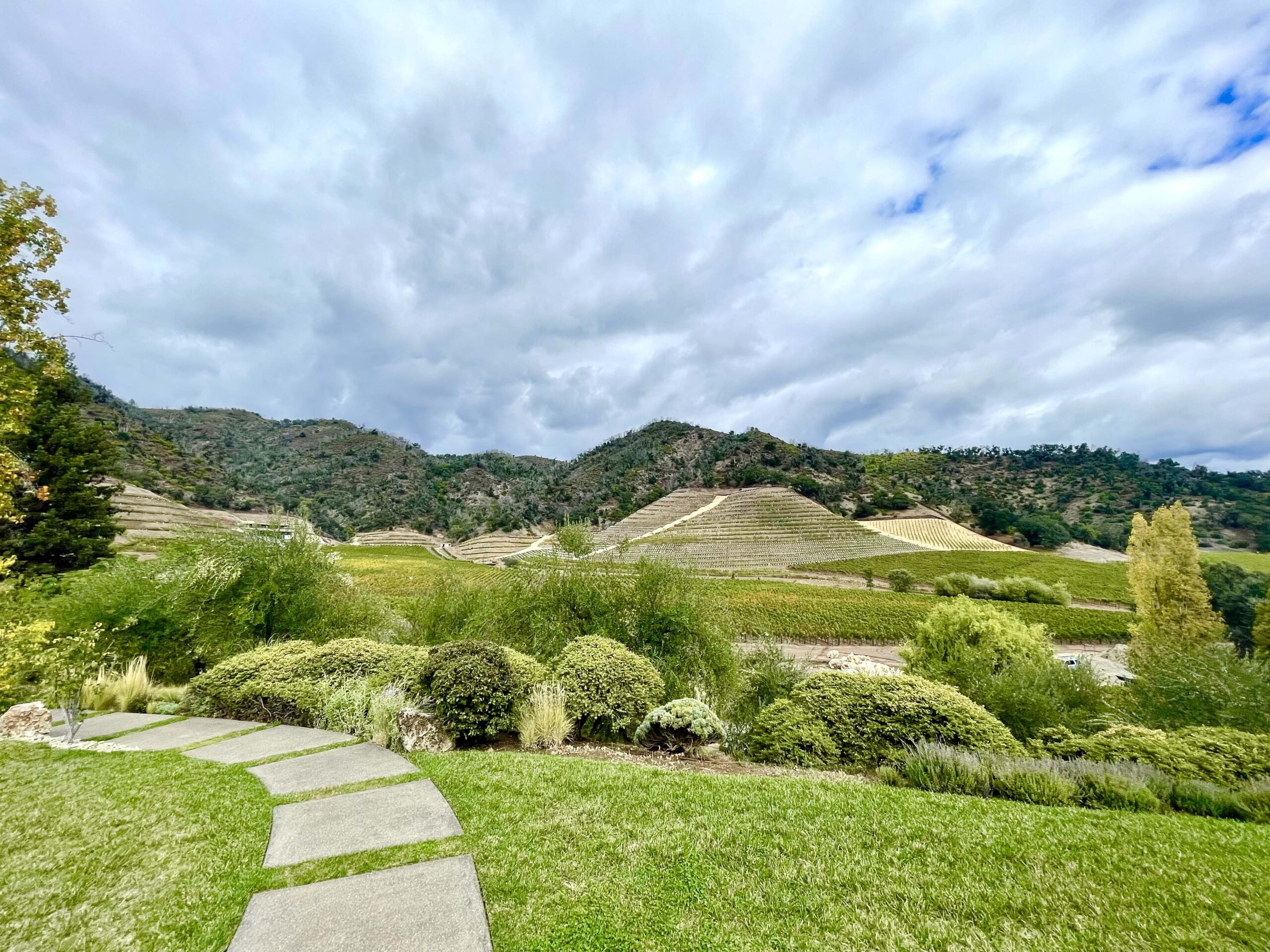
View from Irvine & Roberts
Ascendance, the top cuvée, offers a lovely creamy texture balanced by exceptional length, with spicy ginger and granitic minerality shining through. Gorgeously medium-bodied, it has a satiny palate feel and beautifully layered notes of Indian spices and ginger. A refined and elegant expression of site and craft. Winemaker Brian Gruber explains that they work with 10 different clones of Chardonnay, most of which are planted on granitic soils. He prioritizes acidity at harvest, often doing multiple picks within the same block to build complexity and ensure he never needs to add acid. After settling overnight, the juice is racked to barrel and inoculated with native yeast in-barrel. The wine is aged for up to 15 months in one-third new French oak and goes through full malolactic fermentation. Lots are kept separate throughout aging, lees stirring is minimal, and blending occurs just before bottling. Of the three estate Chardonnays Winemaker Brian Gruber produces, Ascendance is the top cuvée and the first blend assembled—focused on precision and structure. Convergence follows, crafted for more roundness and ripeness, while the Estate Chardonnay is blended last, offering an expression that reflects the broader vineyard character.
A touch more elegant and delicate, this Pinot Noir reveals savory notes of black tea and bergamot, with Earl Grey–like tannins framing the medium-bodied palate. Fabulous orange peel nuances carry through, supported by a long, spicy finish that highlights the character of the clone. Refined and beautifully detailed. Winemaker Brian Gruber explains that this Pinot Noir is a blend of older plantings and newer vines established in 2018. Grapes are mostly destemmed, though select lots are fermented with whole clusters for blending flexibility. Fermentation occurs in stainless steel, with individual blocks vinified separately. After a short cold soak, native fermentations begin, accompanied by a regimen of pumpovers and punchdowns. Following primary fermentation, an extended maceration of up to 28 days builds mouthfeel, mid-palate weight, and structure. The wine is gently pressed, with primarily free-run juice selected for the final blend. It is aged in roughly one-third new French oak for up to 18 months before blending and bottling.

Cherry, pomegranate, blood orange, and grapefruit zest lead the aromatic profile, accented by clove and fresh cherry blossoms. A hint of bergamot emerges on the palate, which is more structured, with firm and robust tannins that resolve beautifully. Chalky minerality and elegant cedarwood notes frame the wine, highlighting its brilliant purity of fruit and spice. Balanced textures and fabulous energy make this a striking and vibrant expression. Winemaker Brian Gruber explains that this Pinot Noir is a blend of older plantings and newer vines established in 2018. Grapes are mostly destemmed, though select lots are fermented with whole clusters for blending flexibility. Fermentation occurs in stainless steel, with individual blocks vinified separately. After a short cold soak, native fermentations begin, accompanied by a regimen of pumpovers and punchdowns. Following primary fermentation, an extended maceration of up to 28 days builds mouthfeel, mid-palate weight, and structure. The wine is gently pressed, with primarily free-run juice selected for the final blend. It is aged in roughly one-third new French oak for up to 18 months before blending and bottling.

Fragrant notes of honeysuckle and jasmine intermix with rich baking spices, apple tarte Tatin, pear, and a dollop of lemon oil—all finding balance on the palate. Candied ginger and a beautifully crisp, pure fruit profile are supported by crunchy acid tension and a touch more richness than the Estate bottling. Totally balanced. A vibrant and refined expression. Winemaker Brian Gruber explains that they work with 10 different clones of Chardonnay, most of which are planted on granitic soils. He prioritizes acidity at harvest, often doing multiple picks within the same block to build complexity and ensure he never needs to add acid. After settling overnight, the juice is racked to barrel and inoculated with native yeast in-barrel. The wine is aged for up to 15 months in one-third new French oak and goes through full malolactic fermentation. Lots are kept separate throughout aging, lees stirring is minimal, and blending occurs just before bottling. Of the three estate Chardonnays Winemaker Brian Gruber produces, Ascendance is the top cuvée and the first blend assembled—focused on precision and structure. Convergence follows, crafted for more roundness and ripeness, while the Estate Chardonnay is blended last, offering an expression that reflects the broader vineyard character.
Total elegance—this Pinot Noir weaves conifer notes around bright red berry, cherry, and pomegranate fruit, accented by flinty minerality and gorgeous cedarwood. Medium-bodied, the palate delivers cherry, blood orange, and cranberry, all lifted by crunchy cranberry acidity. The tannins are fine, firm, and taut—beautifully elongated and persistent through the long, spicy finish. A superbly built and absolutely delicious Pinot Noir. Winemaker Brian Gruber explains that this Pinot Noir is a blend of older plantings and newer vines established in 2018. Grapes are mostly destemmed, though select lots are fermented with whole clusters for blending flexibility. Fermentation occurs in stainless steel, with individual blocks vinified separately. After a short cold soak, native fermentations begin, accompanied by a regimen of pumpovers and punchdowns. Following primary fermentation, an extended maceration of up to 28 days builds mouthfeel, mid-palate weight, and structure. The wine is gently pressed, with primarily free-run juice selected for the final blend. It is aged in roughly one-third new French oak for up to 18 months before blending and bottling.

The 2019 Brut Cuvée Zero Dosage spent an additional six months en tirage and is crafted in the Méthode Champenoise from a blend of 59% Chardonnay and 41% Pinot Noir. Winemaker Brian Gruber often conducts two separate picks—one for acidity, one for ripeness—with harvest typically taking place between late August and mid-October. This release offers a beautifully natural sweetness that stretches the palate, balanced by bracing acid tension. Savory notes of white truffle and flaky croissant mingle with bright lemon, quince, and layered citrus, all carried by remarkable length and precision.
Absolutely fantastic, this Chardonnay shows Chablis-like minerality and lemon-lime freshness with tremendous tension. Medium-bodied, it features a satiny core of apple and pear fruit layered with crushed almond, all leading to a long, saline-acid finish. Bright, fresh, and assertive—a standout. Winemaker Brian Gruber explains that they work with 10 different clones of Chardonnay, most of which are planted on granitic soils. He prioritizes acidity at harvest, often doing multiple picks within the same block to build complexity and ensure he never needs to add acid. After settling overnight, the juice is racked to barrel and inoculated with native yeast in-barrel. The wine is aged for up to 15 months in one-third new French oak and goes through full malolactic fermentation. Lots are kept separate throughout aging, lees stirring is minimal, and blending occurs just before bottling. Of the three estate Chardonnays Winemaker Brian Gruber produces, Ascendance is the top cuvée and the first blend assembled—focused on precision and structure. Convergence follows, crafted for more roundness and ripeness, while the Estate Chardonnay is blended last, offering an expression that reflects the broader vineyard character.
The nose is beautifully fragrant, with savory conifer and dried pine tips layered with incense and underbrush, interwoven with bright red berry fruit. The palate is medium-bodied, framed by gentle tannins and lifted by vivid blood orange acidity. The long, lingering finish offers a delicate kiss of sweetness balanced by a subtle, amaro-like bitterness. Bright, vivid, and wonderfully complex. Winemaker Brian Gruber explains that this Pinot Noir is a blend of older plantings and newer vines established in 2018. Grapes are mostly destemmed, though select lots are fermented with whole clusters for blending flexibility. Fermentation occurs in stainless steel, with individual blocks vinified separately. After a short cold soak, native fermentations begin, accompanied by a regimen of pumpovers and punchdowns. Following primary fermentation, an extended maceration of up to 28 days builds mouthfeel, mid-palate weight, and structure. The wine is gently pressed, with primarily free-run juice selected for the final blend. It is aged in roughly one-third new French oak for up to 18 months before blending and bottling.

The 2019 Brut Cuvée marks the second vintage of Irvine & Roberts’ Méthode Champenoise–style sparkling wine. A blend of 59% Chardonnay and 41% Pinot Noir, it was aged en tirage for 37 months. Winemaker Brian Gruber often conducts two separate picks—one to capture acidity and one for ripeness—with harvest typically spanning from late August to mid-October. The wine offers beautiful purity of orchard and citrus fruit, layered with French pastry notes, lemon peel, and chalky minerality. The mousse is assertive yet creamy, underscored by bracing acid tension. Fabulous, layered, and full of energy.
Produced in the Méthode Champenoise style, this Oregon sparkling wine is exceptionally limited—just 70 cases, or roughly 1.5 barrels. Aged en tirage for 37 months, it opens with a bold nose of lavish French pastry and lemon pot de crème. The concentrated, hearty mousse reveals layers of cherry fruit, white plum, and saline-acid minerality, all carried by building tension. Juicy, focused, and impressively long on the finish.

Belle Fiore Winery & Vineyard

Belle Fiore sits just outside Ashland, with vines first planted in 2007 on an estate originally established in 2000. The property includes a mix of varieties suited to the Rogue Valley’s warm, dry growing conditions—Pinot Noir, Syrah, Tempranillo, Merlot, Chardonnay, and others—which form a broad range of estate wines. The winery’s architecture and layout are designed around hospitality, with expansive views over the surrounding hills.

Winemaking is led by Rob Folin, whose path into the industry has been hands-on from the start. A former Marine, Folin began his career as an intern at Domaine Serene in 2002, working his way up to Cellar Master before moving into head winemaking roles elsewhere. He joined Belle Fiore with a straightforward, no-shortcuts approach, focusing on clean, careful cellar work and balanced expressions of the estate fruit. His style emphasizes consistency and structure rather than ornamentation, and he credits experience—not formal training—for shaping his philosophy.

Rob Folin, Belle Fiore. Folin also has a personal label called Ryan Rose.
The 2019 Cabernet Sauvignon opens with a gorgeous Left Bank–inspired nose of blackberry, graphite, and expressive cedarwood, layered with rich tobacco nuances. Medium-bodied on the palate, it features fine, dusty tannins and vibrant black currant fruit, with notes of loamy earth, vanilla bean, and savory wild herbs framing the long, focused finish. A tremendously satisfying wine of elegance and mineral purity. Belle Fiore Winery is an estate in Oregon’s Rogue Valley, with 31 acres of planted vineyards.

The Signature Series Syrah, was just two barrels, and fermented in open-tops and aged in 50% nfr for 22 months. Winemaker Rob Folin says this is the best barrel in the cellar in 2019 and the second barrel complements this Syrah. The aromastics are incredibly hedonistic with cinnamon and allspice, with asomeo f the meaty Syrah characterur shining through with red cherry, blackberry, and blue fruit with notes of dried violets

This Signature Series Cabernet Franc is sourced from Fort Miller Vineyard and was fermented as whole berries in a 5-ton open-top fermenter, then aged for 22 months in 30% new French oak. It’s a beautifully expressive wine with aromas of rose petal and rose stem, complemented by vibrant cherry and raspberry fruit. Medium- to full-bodied, it offers layered notes of tobacco leaf, allspice, and sage, all supported by powerful, grippy tannins that give it structure and age-worthy depth.

Winemaker Rob Folin says he loves the sweetness and toastiness imparted by the Icon barrels used to age this wine—“it’s not just salt and pepper,” he notes, “it’s the steak and butter sauce, too.” The 2019 was fermented in open-top bins and aged in 40% new French oak Icon barrels. The result is a terrifically spicy wine with good density and width, dark cherry fruit dusted with cardamom and coriander, hints of wood smoke, clove, and allspice, and super-fine, sweet tannins that carry through a long, elegant finish.

The 2020 Teroldego is a bold, supple, and juicy wine with notes of dark chocolate, black cherry, and blackberry, complemented by wet slate nuances and saline-acid tension on the medium-bodied palate. A total crowd-pleaser, it’s the perfect pairing for a juicy, medium-rare burger.

Fermented in open-top bins and aged for 24 months in roughly 30% new French oak, this wine delivers classic tar and rose petal notes alongside black truffle, charcuterie, and a distinctive black sea salt character. Earthy and layered with underbrush, it’s medium-bodied with sinewy tannins, crunchy red fruit, and a touch of allspice on the lengthy, savory finish.

Fermented in stainless steel and aged in 30% new French oak, this wine opens with bright red cherry and raspberry aromatics layered with rose petal nuances. Medium-bodied on the palate, it features robust, chunky tannins, graphite, and expressive cedarwood, finishing long with crushed stone minerality. Bold, structured, and finely detailed.

Winemaker Rob Folin’s second vintage at Belle Fiore. This is a robust and bold Pinot Noir with a rich, dark-fruited profile, black cherry, and cherry coulis, rose petals and sgaebrush. Has a MB palate feel with firm tannins and notes of black tea on the finish. Fermented in open top bins, and aged 18 months in 30% nfr.

This is a Caprettone, a grape variety from Coda di Volpe in the Vesuvio DOC in Campania, typically blended. Grown on the Belle Fiore estate, there is a bout an acre and a half and winemaker Rob Folin fermentes ina m ix of ss, acaica and French oak all neutral. It’s a bracing, refreshing, lemon-lime-bright wine with nice nutty notes in the nose and loads of canided citrus fruit and vivid acidity. Great tension.

Related Posts

Oregon’s Rogue Valley – Wine Buyer’s Guide

The Rogue Valley is slowly shedding its “under-the-radar” status, driven by passionate individuals making wines with real personality and polish—and at incredibly affordable prices

MAILING LIST

The only email you want to open