
In early June, Jonathan Cristaldi travelled to three major New York State wine regions.
In this report: 16 winery profiles and over 260 wines reviewed.

New York State AVA Map. Source: NewYorkWines.Org/Resources
REPORT HIGHLIGHTS
Cristaldi: New York State's Wine Awakening
From Cabernet Franc and Hybrids Varieties to Impressive
Sparkling Wines and Ultra-clean Pét-Nats.
In early June, I tasted my way through New York State wines—from Brooklyn’s Red Hook Winery to the maritime vineyards of Long Island, the historical estates of the Hudson Valley, and the steep lakeside slopes of the Finger Lakes. What’s clear is this: New York wine is having a moment. Scratch that—it’s having an awakening.
Below are 16 winery profiles of places I visited. However, I tasted and rated many other brands beyond the wineries profiled for the full report. To search by brand name, go here.
***
It began with a marathon tasting at Red Hook Winery, where nearly a hundred wines offered a kaleidoscope of New York’s terroir. Of the 260+ still and sparkling wines I tasted for the entire report, around 90 were Cabernet Francs, while the balance held a mix of Riesling and Hybrid grapes, with a smattering of Pinot Noirs, Chardonnays, and a few other Alsatian varieties.
However, before you delve into this comprehensive piece, I would like to acknowledge that without the support and logistical brilliance from Sam Filler, the executive director of the New York Wine & Grape Foundation, and the organization’s media arm, Teuwen Communications, this tour of New York would not have been possible.
Listen: It’s a long read, but broken into sections you can delve into chronologically, or return to later. This report is free to read, but the wine reviews and scores are behind a paywall. Thank you in advance for reading and if you decide to subscribe, I thank you for supporting this work. – Cristaldi

Throughout my epic tasting at Red Hook, I encountered remarkably few misfires, underscoring the overall high level of quality of wines from across the New York regions.
The sparkling wines were especially memorable for their frothy, ultra-airy mousse and beautifully acid-driven finishes. Many of the wines made in the traditional method unfold with complex fruit and floral character, delivering both charm and precision. Some carbonated sparklers, which I’d never come across, were surprisingly complex as well.
The Cabernet Francs stood out as particularly dynamic—earthy and finely structured. They weren’t overtly fruity; instead, they leaned savory, with fine-grained tannins and an herbaceous edge that felt unmistakably New York. Not quite Loire earthy, and not sun-scorched California herbs—this was something uniquely its own with a deep forest, spicy, aromatic fresh factor. That distinction kept surfacing across my tasting notes.
What surprised me most was the next-level ‘clean’ quality of the Pet-Nats I tasted. In my experience, most Pet-Nats are in a funk zone all their own with varying degrees of enjoyability. But those that had been disgorged before capping offered clarity and freshness—bright, lifted wines with none of the visual chaos or sediment-heavy textures that typically keep me at arm’s length, or unwelcome sour notes that can make so many Pet-Nats barely drinkable.
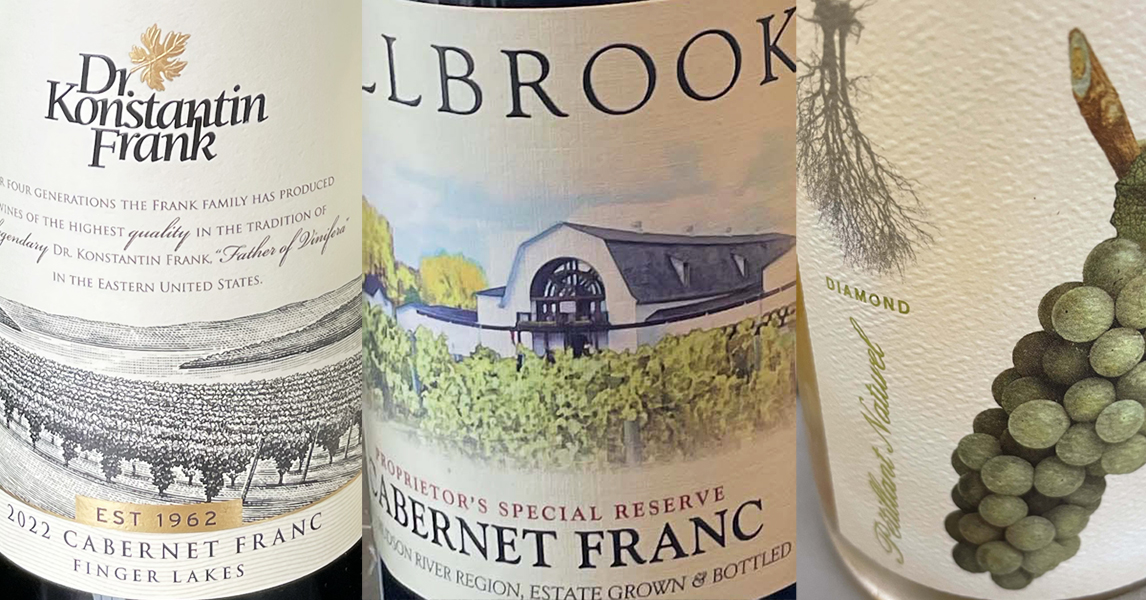
Also, I was enamoured by the orchard-fruit-like purity and acid freshness of several hybrid varieties like Cayuga White, Traminette, Seyval Blanc, and Diamond. If you skipped my Top 3 Consumer Takeaways above, take a moment to read #3.
Before venturing east with me to Long Island, check out these few photos I snapped on a tour of the Red Hook Winery space in Red Hook, Brooklyn. Thanks to Mark for letting me take over his office on a Sunday.
Or Jump to a Featured Winery
Journey On: A New York State of Wine
I had Billy Joel’s ‘New York State of Mind’ rocking around my brain as I first made my way east to Long Island to visit several of the region’s foundational estates: Sparkling Pointe, Wolffer Estate, Paumanok, Channing Daughters, and Macari.
LONG ISLAND
Sparkling Pointe delivered beautifully structured traditional method wines, primarily from Chardonnay and Pinot Noir, with both depth and finesse. At Wölffer, Cabernet Franc took center stage—layered, age-worthy, and finely textured with a mix of ripe fruit and herbal energy. Channing Daughters impressed me with perhaps the best wines I’ve ever tasted from them: bright, focused, lean yet complex, and clearly the product of an intentional shift toward higher precision. My tasting at Paumanok offered a snapshot of past and present, with winemaker Kareem Massoud showing a spate of vintages including a 1995 Cabernet Sauvignon and 2010 Cabernet Franc, both aging so gracefully it makes me hope more consumers will ask about older vintages on their next visit to New York State wine country. Massoud also showed a ‘minimalist’ Cabernet Franc that was native fermented on skins in stainless steel for two months with délestage before pressing, followed by malolactic fermentation and 12 months in puncheons, and it was a wonderful revelation, bright, elegant, and racy.
Everywhere I went, there was a shared commitment to more sustainable farming—pragmatic, innovative responses to the region’s temperamental weather. Growers spoke of mildew and mold pressure with the same urgency as they did orientation of vine rows, airflow, and canopy management. At Macari, I stood on a high bluff overlooking the Long Island Sound and tasted crisp, clean Pét-Nats and lively Cabernet Francs that matched the dramatic landscape.
HUDSON RIVER REGION
From there, I headed north with Sam Filler, Executive Director of the New York Wine & Grape Foundation, whose insights into the evolving wine landscape—from vineyard health to marketplace positioning—were invaluable. We had many hours in the car, and, dear readers, I assure you that we talked of worldly things beyond wine!
In the Hudson River Region, the wines at Milea Estate stood out for their clarity and acid-driven beauty. Millbrook Vineyards & Winery is entering a new chapter under winemaker Ian Bearup, formerly of Balletto Vineyards in California’s Russian River Valley. His site-driven approach is poised to bring new brightness and tension to the Millbrook lineup. Whitecliff offered a compelling set of hybrid wines—Vidal Blanc, Seyval Blanc, Vignoles, and Traminette—that were impressively clean, complex, and energetic.
THE FINGER LAKES
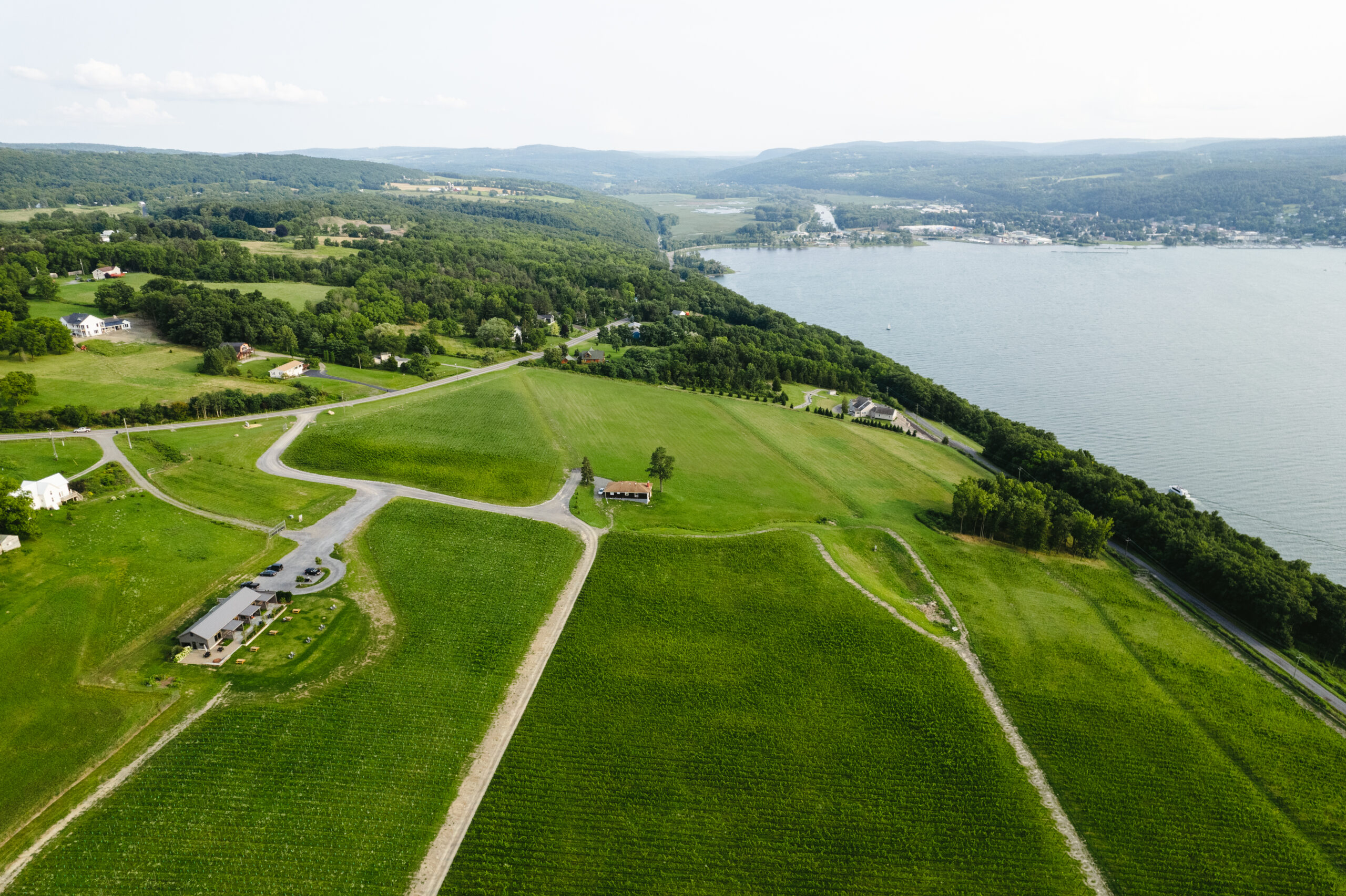
Then came the long solo drive to the Finger Lakes (or ‘FLX’ for short), revealing more of the gorgeous upstate New York landscape—its vast, rolling hills, forests of maple, and endless fields of sweet green grass, all of it perfuming the air with that unmistakably fresh, almost nostalgic scent. You know you’ve arrived in the FLX when you pass Montezuma National Wildlife Refuge, the famous nature preserve where the American Bald Eagle was successfully reintroduced after nearing extinction (one even swooped down as if to lift my car to its nest for dinner).
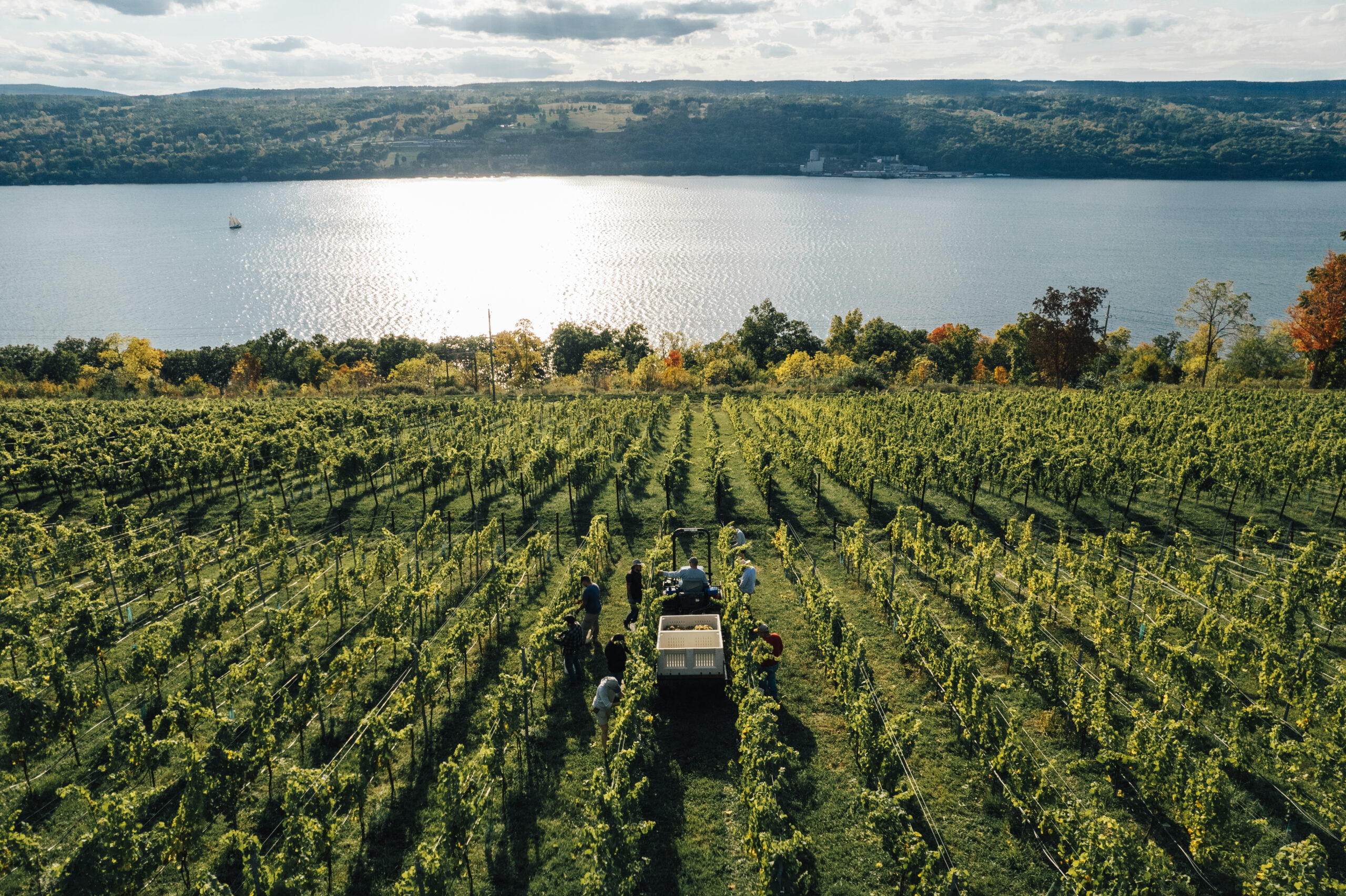
As you approach the lakes, you’re struck by their sheer vastness and tranquil beauty. There’s something meditative about driving north and south along their banks—the way the light catches the water, the spaciousness, the breezes and rustling of leaves and vines, all contributing to the slowing down of time.
The region’s microclimates are equally dramatic and varied. Even in early summer, you can feel how things will play out come winter: the warmth stored by the deep lakes, the constant air circulation they generate—natural buffers that help protect the vines growing along their edges.
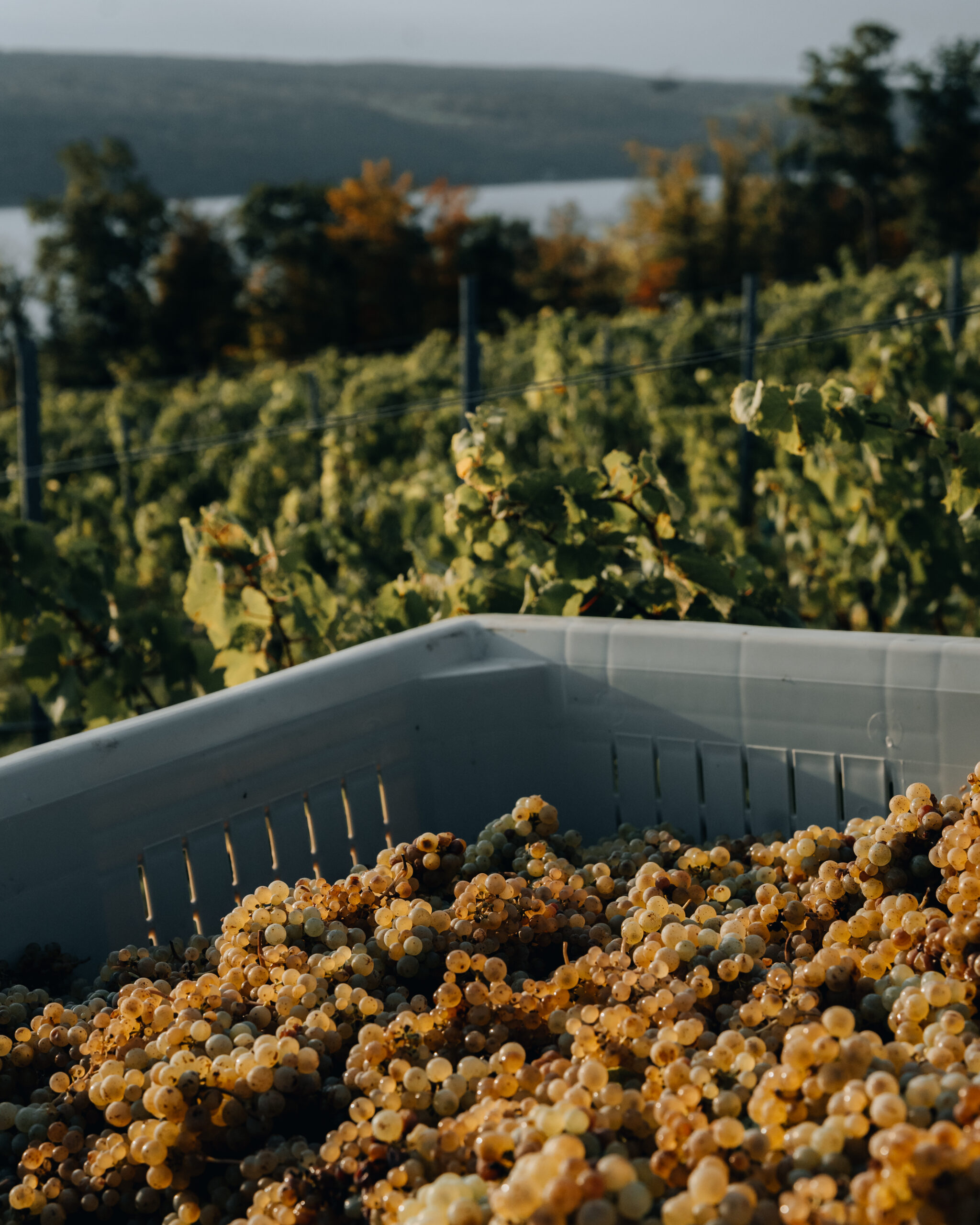
Though Riesling is undoubtedly the star of the show here, my focus was on Cabernet Franc—and they didn’t disappoint. Visits to Buttonwood Grove, Anthony Road, and Billsboro showed wines that were structured, laced with fine tannins, and full of purity and precision. A dinner with Phil Plummer of Montezuma Winery offered a mind-bending view into Pét-Nats and Hybrids that were so clean and complex, made by an incredibly thoughtful group of people. And the Rieslings that I did taste—from Weis, Wiemer, and Dr. Konstantin Frank—were positively stellar wines. Even better than I remembered from over a decade ago, when I last immersed myself in this region’s offerings. But maybe they’ve always been magical, I just hadn’t had my own wine awakening to realize it.
THE TAKEAWAYS
Consumers: New York is producing wines of remarkable complexity, layered nuance, and dynamic freshness. Alcohol levels tend to be moderate (upper 10-12 percent ranges, and low 13s), while acidity brings vibrancy and lift across styles and grape types. Most excellent bottles are priced under $50, with standout offerings between $50 and $75, and only a few nudging past that mark. This is value-priced heaven. Quality ground zero. If you haven’t yet visited Long Island, the Hudson Valley, or the Finger Lakes—go. Meet the growers and winemakers. Hear their stories, taste the fruit of their struggles, and revel in the triumphant wines in the glass, and immerse yourself in the pure spirit of these handcrafted, food-friendly wines.
Trade: Your lists should reflect this moment. Sparkling wines from New York belong on your shelves and among your sparkling offerings, both BTG and BTB. So do the earthy, energetic Cabernet Francs, the cleaner, more thoughtful Pet-Nats, and the incredibly priced hybrid varieties that yield truly compelling wines. Riesling, of course, is a no-brainer—but don’t stop there. Push beyond your comfort zone and explore the full spectrum of what’s growing here. The possibilities are thrilling—and the wines are ready.
THE FUTURE
What ties it all together is a sense of momentum. Growers are leaning into site specificity, climate adaptation, and sustainable practices. Winemakers are crafting with intention. And the wines—they’re starting to turn heads well beyond the state line. New York’s wine awakening isn’t coming. It’s here.
New York State Wine Region 'Must-Knows'
Readers, these expandable sections below chronicle some pretty geeky details about each wine region in New York State. You’ve been warned of the geek-level. Proceed to enrich your knowledge, or skip ahead and start exploring Producer Profiles.
(A note on the facts that follow: Most statistical information was sourced from the 2024 NYWGF Vineyard Report. For Wine Trade readers seeking more detailed information, the assets provided by the NYWGF are so thorough and well-organized that we would be remiss if we attempted to summarize everything. Therefore, below this section is a slideshow of information-heavy PDFs, all downloaded from the resources portal at newyorkwines.org, which break down the three main regions Cristaldi visited during his trip. Dig in, or skip ahead.)
Fast Facts - AVA Snapshots:
Long Island
Hudson River Region
Finger Lakes
Click on and scroll through these six pages for detailed summaries on climate, key grape varieties, and additional fast facts from Long Island, the Hudson River Region, and the Finger Lakes.
SOURCE: NEW YORK WINES RESOURCES PAGE


Vintage Guide: 2019 - 2024
Cristaldi’s notes on the most recent vintages.
| Vintage | Style & Highlights |
|---|---|
| 2019 | Bright, balanced, classic cool-climate elegance |
| 2020 | Bold, concentrated, sometimes lacking vibrancy |
| 2021 | Refined, high-acidity, low-yield finesse |
| 2022 | Varied—winemakers leaned into adaptability |
| 2023 | Challenging yet resolved into classic expressions |
| 2024 | Near-ideal ripening, expressive, structured wines |
HOT TOPICS
LONG ISLAND
PRODUCER FEATURES

Long Island AVA Map. Source: NewYorkWines.Org/Resources
Sparkling Pointe
Address: 39750 County Road 48, Southold, NY 11971
Year Founded: 2004
First Vintage Released: 2004 (first estate-grown vintage in 2007)
Ownership: Tom and Cynthia Rosicki
A note on the photos above: Cristaldi met with Head Winemaker Andrew Rockwell at Page at 63 Main in Sag Harbor, New York, to taste through a lineup of Sparkling Pointe wines. The food, the service, and the wines were all fantastic.
Estate Overview:
Sparkling Pointe farms 40 acres of vineyards, certified by Long Island Sustainable Winegrowing, across three separate vineyard sites in the North Fork of Long Island AVA. Long Island’s maritime climate is shaped by the surrounding Long Island Sound, Peconic Bay, and Atlantic Ocean. Summer’s warm days and cool nights help maintain balance and freshness in the grapes, while annual rainfall is moderate and evenly spread throughout the season. The region’s flat topography was formed by glacial retreat and is composed of sandy loam soils with excellent drainage. Plantings at Sparkling Pointe include Chardonnay, Pinot Noir, Pinot Meunier, with smaller blocks of Merlot and Muscat Ottonel.
Winemaking and Grapegrowing Philosophy:
Sparkling Pointe is a Long Island Sustainable Winegrowing-certified vineyard with a strong focus on biodiversity, soil health, and environmental protection. All grapes are hand-harvested and transported a short distance to the estate winery in Southold. The team typically harvests in late August through early September.
Winemaker:
This year, Andrew Rockwell was named Head Winemaker. Rockwell has worked at Sparkling Pointe since 2017. He studied biomedical engineering at Washington University in St. Louis and received his enology degree from Cornell University. Up until this year, Gilles Martin had made the wines at Sparkling Pointe since the beginning. Martin completed his Master’s in Oenology at the University of Montpellier. His thesis on wine ultra-filtration earned first prize from former French president Jacques Chirac. Gilles has worked at Roederer Estate (California), Delas-Frères (Rhône Valley), Weingut Hans Lang (Germany), and Houghton (Australia).
Interesting to Note:
Sparkling Pointe’s facility is net-zero for energy production and features one of the most advanced sparkling production setups on the East Coast, including a 3,000 bottle-per-hour bottling line, gyro-pallet riddling, and fully automated disgorging line. Rockwell says the brilliantly frothy and airy mousse characteristic of their sparkling wines is a product of “a high level of protein retention from grape musts and long lees aging.”
Wölffer Estate Vineyard
Address: 139 Sagg Road, Sagaponack, NY 11962
Year Founded: 1988
First Vintage Released: 1991
Ownership: Marc and Joey Wölffer; Partner and Winemaker Roman Roth
Estate Overview:
Wölffer Estate is located 2.6 miles from the Atlantic Ocean and farms 175 total acres, including 55 sustainably farmed acres in Sagaponack. The estate owns an additional 28 acres on the North Fork and has long-term contracts on 338 acres in the North Fork and 1,750 acres in Côtes de Provence. For the winery’s New York State wines, a combination of Bridgehampton loam soil and breezes from the Atlantic Ocean, creates maritime conditions ideal for achieving the balance of ripeness and acidity that defines Wölffer’s signature style.
Winemaking and Grapegrowing Philosophy:
Vineyard Manager Richie Pisacano oversees farming, which includes Merlot, Chardonnay, Cabernet Franc, Cabernet Sauvignon, Pinot Noir, Trebbiano, and Vignoles.
Wölffer has been certified for six consecutive years as one of the few vineyards recognized by Long Island Sustainable Winegrowing. A combination of Bridgehampton loam soil and breezes from the Atlantic Ocean, located just 2.6 miles from the estate, creates maritime conditions ideal for achieving the balance of ripeness and acidity that defines Wölffer’s signature style. All wines are made using estate-grown or locally sourced fruit.
Winemaker: Roman Roth, who has served as winemaker since 1992, can often be heard singing in his tenor voice among the barrels at the winery. Born in Germany, his wine career took off when he began a three-year apprenticeship at Germany’s Kaiserstuhl Wine Cooperative in Oberrotweil while attending technical school as a teenager. He later traveled to the United States to work at Saintsbury Estate in California, followed by a stint at Rosemount Estate in New South Wales, Australia. Upon returning to Germany, he became a winemaker at Winzerkeller Wiesloch near Heidelberg and earned his Master Winemaker and Cellar Master degree from the College of Oenology and Viticulture in Weinsberg. In 1992, Roman became the founding winemaker at Wölffer Estate Vineyard. He also consults for several other Long Island producers and has served as President of the Long Island Wine Council.
Interesting to Note:
Wölffer Estate also owns 200 acres of vineyards in Mendoza, Argentina, and 2.5 acres in Mallorca, Spain. They produce dry ciders and gin; their Dry White and Rosé ciders are crafted from New York State apples sourced from Halsey Apple Orchard and other local growers.
Channing Daughters Winery
Address: 1927 Scuttlehole Road, Bridgehampton, NY 11932
Year Founded: 1995
First Year Wine Released: 1996
Owned by partners: Molly Channing, Larry Perrine, Allison Dubin, James Christopher Tracy
Estate Overview:
Channing Daughters Winery encompasses 27 acres of vineyards. The six separate vineyards on the Bridgehampton farm were planted between 1982 and 2007. The varieties in each block reflect the evolution of the winery, starting with Walter Channing’s initial experiments and progressing to an interest in Italian grape varieties. The winery has also explored co-planting multiple varieties and has shifted from single-clone plantings of Chardonnay to interplanted blocks featuring ten different clones.
Winemaking and Grapegrowing Philosophy:
Channing Daughters practices Certified Sustainable winegrowing practices, and their winemaking emphasizes minimal intervention. “It’s almost frightening how rustic the winemaking style is, but it’s absolutely intentional in its Old School approach, and executed with great attention to detail.” Tracy says that he does filter the wines now, as he wants them polished and not turbid. Cross‑flow filtration has been in use over the last decade, and Tracy notes that, in his view, their wines benefit greatly from being fined.
Winemaker:
James Christopher Tracy has made the wines since 2001. James was born and raised in the San Francisco Bay Area, the son of a former vineyard owner and automobile dealer and a master gardener mother. He earned a BA in Performing Arts and Philosophy and performed in theatre before pivoting to the food and wine world. After graduating top of his class from the French Culinary Institute, he worked as a pastry sous-chef in New York and earned the WSET Diploma and Certified Wine Educator credentials. He joined Channing Daughters in 2001 after co-founding Momentary Theatre and becoming a wine club regular. As winemaker and partner, he introduced indigenous yeast fermentations, ancient techniques, small batches, field blends, white skin fermentation, and skin-contact “orange” wines—pushing stylistic boundaries and steering the estate toward world-class acclaim.
Interesting to Note:
CEO Larry Perrine spent decades in the aerospace industry, studied advanced soil science and microbiology, and participated in Cornell’s Graduate Program in Enology and Viticulture in the Finger Lakes—where he became a research viticulturist and helped establish the region’s first Grape Research Program. Partner Walter Channing was a sculptor, and his works are dotted across the estate.
Macari Vineyards
Address: 150 Bergen Ave, Mattituck, NY 11952
Year Founded: 1995
First Year Wine Released: 1998
Owned by: Macari Family
Setting the stage: Wine educator Gibson Campbell led us on a tour and later for our tasting we were joined by the wine team and owner, Alexandra Macari.
Estate Overview:
Macari Vineyards is located in Mattituck on Long Island’s North Fork and remains under family ownership since vines were first planted in 1995. The estate spans nearly 500 acres of waterfront farmland that was originally a potato farm for over 50 years under Joseph Macari Sr. The site is now managed with regenerative agriculture practices, including cattle-grazed composting and minimal herbicide use. In 2022, the family added Meadowlark North Fork in Cutchogue—a winery destination offering small-batch, on-site wines, a wine bar, and gardens.
Winemaking and Grapegrowing Philosophy:
The estate supports its compost-driven soil program with a herd of cattle and limiting chemical inputs, including herbicides. In the cellar, new oak is used sparingly. Meadowlark North Fork wines are more experimental, featuring techniques such as carbonic maceration, extended lees aging, skin contact, and whole-cluster fermentations.
Winemaker:
Byron Elmendorf (joined 2020) brings a wealth of international experience to Macari. Raised abroad and originally trained in plant biology and environmental science at Brown University, he shifted to winemaking after a formative harvest in New Zealand. He earned his MS in Viticulture and Enology from UC Davis in 2013, then spent time working harvests across France, Italy, and Sonoma County. In 2015, he became head winemaker at Boeger Winery in California’s Sierra Foothills, and later launched his own CLIME Wines, earning “Winemaker to Watch” honors from the San Francisco Chronicle in 2019.
Interesting to Note:
The estate was once a potato farm, and today its bluffs represent the highest elevation on the North Fork.
Macari's Gibson Campbell describes the Glacial Moraine at the edge of the winery property.
Paumanok Vineyards
Address: 1074 Main Rd, Aquebogue, NY 11931
Year Founded: 1983
First Year Wine Released: 1989 (Barrel Fermented Chardonnay released in 1990)
Owned by: Charles & Ursula Massoud
Estate Overview:
Paumanok Vineyards is an estate winery located on the North Fork of Long Island, owned and operated by the Massoud Family. Paumanok produces a range of varietal and blended wines from its 80 acres of vineyards, growing Chenin Blanc, Chardonnay, Riesling, Sauvignon Blanc, Cabernet Franc, Cabernet Sauvignon, Merlot, and Petit Verdot, along with more recent plantings of Albariño, Malbec, Melon de Bourgogne, and Pinot Noir.
Winemaking and Grapegrowing Philosophy:
Paumanok Vineyards has been Certified Sustainable by Long Island Sustainable Winegrowing since 2012, the first program of its kind on the East Coast.
Winemaker:
Kareem Massoud (2001–Present). Kareem Massoud has been the winemaker since the 2001 vintage, following in the footsteps of his father, Charles, who served as winemaker from 1990 to 2000.
Interesting to Note:
They were the first winery on Long Island to implement renewable energy systems, with solar panels installed in 2009 and achieving 100% solar power since 2017. They were also the first winery on Long Island to use screw caps (starting with the 2007 vintage), and the first farm in New York State to receive an electric tractor (delivered in 2024).
HUDSON VALLEY
PRODUCER FEATURES

Hudson River Region AVA Map. Source: NewYorkWines.Org/Resources
Milea Estate Vineyard
Address: 450 Hollow Rd, Staatsburg, NY 12580
Year Founded: 2012 (first vines planted), 2015 (first wine released)
First Year Wine Released: 2015 (vintage that appeared on the label: 2015)
Owned by: Barry and Sang Milea
Estate Overview:
Milea Estate Vineyard spans 315 acres across three properties in the Hudson Valley, with 18 acres currently under vine and plans to expand to 40. The estate partners with sustainably farmed vineyards on Long Island and in the Finger Lakes. Primary grape varieties include Cabernet Franc, Chardonnay, and Central European cultivars such as Blaufränkisch and Grüner Veltliner. In 2026, Milea plans to open Hudson Valley Vineyards, a dedicated facility for méthode champenoise sparkling wine.
Winemaking and Grapegrowing Philosophy:
The winery follows a minimal intervention approach, practising sustainable, New York State Grown & Certified vineyard management while integrating Biodynamic and organic methods. Oak usage is restrained—up to 30% new French oak for reserve wines and 10–15% for the farmhouse tier. Selected yeasts are used during fermentation.
Winemaker:
River Allan (2022–present). The winemaking team is led by General Manager Russell Moss, who holds bachelor’s and master’s degrees in viticulture and enology. Moss has worked in New Zealand, Oregon (Domaine Serene), and Burgundy (Château de la Crée), has lectured at Cornell University, and currently serves as a global vineyard consultant—including for the Kingdom of Bhutan.
Interesting to Note:
Milea Estate Vineyard is certified by the New York Sustainable Winegrowing Program and participates in the Hudson Valley Heritage Grape Project, which aims to preserve historic grape varieties. The estate also features a pre-Revolutionary farmhouse dating to 1747, once owned by a colleague of George Washington.
Millbrook Vineyards & Winery
Address: 26 Wing Rd, Millbrook, NY 12545
Year Founded: 1983
First Year Wine Released: 1986 (from the 1985 vintage)
Owned by: John Dyson
Estate Overview:
Millbrook Winery encompasses a 30-acre estate vineyard located on a 100-acre property in the foothills of the Taconic Mountain range. The vineyard is planted to Cabernet Franc, Chardonnay, Pinot Noir, Gamay Noir, Tocai Friulano, Riesling, Grüner Veltliner, and Traminette. In addition to estate-grown fruit, Millbrook sources from select growers in the North Fork of Long Island and the Finger Lakes.
Winemaking and Grapegrowing Philosophy:
The winery follows a minimalistic approach in both vineyard and cellar, focusing on clean farming and straightforward winemaking to highlight the purity of fruit and varietal expression.
Winemaker:
The current winemaker is Ian Bearup, who succeeded longtime winemaker John Graciano in 2021. Graciano helmed the cellar for over three decades, shaping Millbrook’s style and earning a reputation for consistency and quality across vintages.
Ian Bearup was born in Mendocino County, California, and grew up in Upstate New York. His family moved frequently between the two regions, and he spent many of his formative years in the Anderson Valley vineyards his parents managed for his uncle—now part of Goldeneye Winery. Ian began his wine career in 2007 as a cellar intern at St. Francis Winery and has since worked in New Zealand, Oregon, and multiple regions across California.
Interesting to Note:
Owner John Dyson is a prominent figure in both public service and American wine. He served as New York State Commissioner of Agriculture and Markets and later as State Comptroller, and is credited with creating the iconic “I ♥ NY” tourism campaign. He also patented the Dyson Gobelet vine training system, designed to improve air circulation and sun exposure in cool-climate vineyards. Dyson was once the majority owner of Williams Selyem in Sonoma County and, though he has since sold most of his shares, nearly the entire range of Williams Selyem wines remains available for purchase at the Millbrook tasting room.
And as a fun aside: current winemaker Ian Bearup grew up in the same town as our intrepid founder and editor-in-chief, Jonathan Cristaldi.
Whitecliff Vineyard & Winery
Address: 331 McKinstry Road, Gardiner, NY 12525
(Plus a second vineyard and tasting room on the Hudson River in Columbia County at 4150 NY-23, Hudson, NY 12534)
Year Founded: 1998
First Vintage Released: 1999 (from the 1998 harvest)
Ownership: Michael Migliore and Yancey Stanforth‑Migliore
Estate Overview:
Whitecliff occupies a 70‑acre former dairy farm in Gardiner, with 25 acres currently under vine. Initial plantings date to 1979 (experimental trials in the 1980s), leading to more extensive plantings in the ’90s and ’00s. The vineyard specializes in cold‑hardy vinifera—Gamay Noir, Cabernet Franc, Chardonnay, Pinot Noir, Riesling—and French‑American hybrids like Seyval Blanc, Traminette, and Vidal Blanc.
In 2015, they leased 10 acres near the Hudson River in Columbia County, planting a 6‑acre block (Cabernet Franc, Gamay Noir, Pinot Noir) plus a 4‑acre parcel with Chardonnay, Riesling, and small Syrah and Cabernet Sauvignon trials—alongside a second tasting room. Whitecliff also sources exclusively New York fruit, working with growers from the Hudson River Region, Finger Lakes, and North Fork of Long Island.
Winemaking and Viticulture Philosophy:
Early adopters of low‑intervention winemaking in a fledgling Hudson Valley scene, they continue to prioritize minimal manipulation in both vineyard and cellar to elevate site expression.
Winemaker:
Brad Martz joined as a volunteer in 2010 and succeeded founder Michael Migliore as winemaker. Michael, who brought a chemistry and engineering background from IBM, led winemaking from inception. Brad, originally a tech consultant, transitioned into wine through hands‑on mentorship under Michael.
Interesting to Note:
-
In 2010, their Riesling won Best White in Show at the San Francisco International Wine Competition.
-
In 2015, Michael Migliore became the first Hudson Valley grower awarded Grower of the Year by the New York Wine & Grape Foundation—a milestone for the region.
-
All Whitecliff wines are vegan, with no animal‑derived fining agents.
Olana House Connection:
During the tasting, Yancey Migliore talked of an intriguing connection to the Olana House, which can be seen through a window in the tasting room at Whitecliff’s tasting room in Hudson, New York. Here’s the backstory:
In 2015 Whitecliff owner, Michael Migliore, was offered the opportunity to rent land abutting the Hudson River for the establishment of a new vineyard. He immediately fell in love with the location because of its ideal qualities for grape growing, its incredible scenic beauty, and its historic and cultural significance as part of the viewshed of Olana — the nineteenth century home of Hudson River School painter, Frederic Church. An interesting twist of fate in the story is that the only reason the land was available for an agricultural lease was due to the Brown family, who are the owners of the property, having sold the development rights to Scenic Hudson, (a Hudson Valley environmental organization) in the 1990’s. And by a great coincidence, Michael’s wife and fellow owner, Yancey, was part of the management team of Scenic Hudson at that time. Twenty years later, Michael and Yancey signed a lease and established their vineyard on the property.
A Stop at Elsasser's @ 111 in Greenwich, New York
Long, long story short: Christopher Bischoff, the owner of this country-style German and Alsatian eatery is a long-time friend who gave me my first wine book back in 2004: Kevin Zraly’s Windows on the World. Chris opened this spot a few years ago, and, as they say in the Michelin Guide, it is ‘worth a special journey.’ That’s not to say he’s cranking out Michelin 3-star cuisine. That’s not his thing. But bringing world class, affordable wines to the local community in and around Greenwich, that’s his thing. If you’re heading to the area, stop in and say Cristaldi sent you. Follow on IG: @Elsassers111
FINGER LAKES
PRODUCER FEATURES

Buttonwood Grove Winery
(Overlooking Cayuga Lake)
Address: 5986 State Route 89, Romulus, NY 14541
Year Founded: 2004
First Year Wine Released: 2004 (from the 2002 vintage)
Owned by: Dave and Melissa Pittard (since 2014)
Estate Overview:
Buttonwood Grove Winery encompasses 72 acres of estate vineyards located across multiple properties along New York’s Route 89. The main Buttonwood Grove farm cultivates classic vinifera varieties such as Blaufränkisch, Cabernet Franc, Cabernet Sauvignon, Pinot Noir, Merlot, Chardonnay, Riesling, Gewürztraminer, and Sauvignon Blanc. Additionally, two hybrids—Melody and Arandell (a newer Cornell-developed red grape resistant to downy and powdery mildew)—are grown alongside Cayuga White, Concord, and Chancellor.
A few miles south of the estate, the Plane’s Vineyard is home to the world’s oldest commercial planting of Cayuga White, established in 1972, as well as Chardonnay vines dating to 1974. The Six Eighty Vineyards feature lesser-seen varieties including Grüner Veltliner, Pinot Meunier, Gamay Noir, and Chenin Blanc.
The Reimer Block, located in front of the winery, is named after the Reimer family, the original owners who cleared the land and planted vines in 1999, harvesting their first crop in 2003 and opening the tasting room in 2004. When the Pittards purchased the property in 2014, they retained the Buttonwood Grove name and made significant changes, including building an on-site winery. Since then, the planted estate acreage has expanded to 24 acres.
Winemaking and Grapegrowing Philosophy:
All vineyards are certified sustainable through the New York Sustainable Winegrowing program.
Cayuga Lake plays a major role in viticulture. At 382 feet deep, with the estate rising another 100 feet above lake level, its moderating influence and morning sun exposure on the west side of the lake are crucial for drying canopies after rain. The region experiences dramatic shifts in wind direction, resulting in pronounced microclimates. Soils are primarily sandy loam with areas of clay, and common disease pressures include downy and powdery mildew, black rot, and Phomopsis (a fungal disease affecting canes but not typically fatal).
Winemaker history:
-
Susan Passmore (2014–2024): Serving as winemaker since the Pittards took ownership, Susan plans to semi-retire at the close of the 2024 season.
-
Ian Barry (2014–2024): Served as consulting winemaker and now leads winemaking for Robin’s Vines, the parent company of Buttonwood Grove and Six Eighty Cellars.
-
Julia Alvarez-Perez (2024–present): Currently serving as Cellar Manager.
Interesting to Note:
Since purchasing the winery, Dave and Melissa Pittard have more than tripled the planted vineyard acreage, expanding to 65 acres across three sites along Cayuga Lake. At the time of purchase, Buttonwood Grove had no on-site production and outsourced its winemaking to a neighboring facility. Within a year, the Pittards began construction on a production facility, bringing all winemaking in-house. The winery remains a proud participant in the Sustainable Winegrowing New York program.
Weis Vineyards
(Overlooking Keuka Lake)
Address: 10014 Day Road, Hammondsport, NY 14840
Year Founded: 2017
First Year Wine Released: 2017 (from the 2016 vintage)
Owned by: Peter and Ashlee Weis
Estate Overview:
Weis Vineyards specialises in German-style wines in the heart of the Finger Lakes. The estate includes approximately 30 acres of planted vineyards and partners with around 20 growers throughout the region. Riesling and Cabernet Franc form the core of the portfolio, with additional plantings of Grüner Veltliner, Zweigelt, and Chenin Blanc contributing to the range.
Winemaking and Grapegrowing Philosophy:
Peter Weis takes a hands-on approach in both vineyard and cellar, often relying more on taste and intuition than on numbers or lab metrics, with a focus on producing high-quality, approachable wines.
Winemaker(s):
-
Peter Weis (2017–present): Born in Zell Mosel, Germany, Peter grew up working in his family’s vineyards and cellar. He holds a degree in Winemaking, Business, and Agriculture from Bad Kreuznach. His winemaking journey began in 2005 at Schug Carneros Estate in Sonoma, followed by a 2006 move to the Finger Lakes, where he spent 11 vintages as a winemaker and vineyard manager before founding Weis Vineyards.
-
Tom Weber (2024–present): Tom joined the team in 2024 after working at Brooks Winery in Oregon and completing multiple harvests in France.
Interesting to Note:
Peter’s deep admiration for the Finger Lakes comes from its diverse soil types—particularly the slate-rich sites that remind him of his grandfather’s vineyards in the Mosel. “Our Riesling grapes are grown in locations where the slate content is high and similar to my grandfather’s vineyards back home,” he explains, noting that this mineral complexity is a signature of their wines.
Anthony Road Wine Company
(Overlooking Seneca Lake)
Address: 1020 Anthony Road, Penn Yan, NY 14456
Year Founded: 1989 (Martini Vineyards established 1973)
First Vintage Released: 1990 (from the 1989 crop)
Ownership: Family-owned and operated by the Martini family
Estate Overview:
Martini Vineyard spans 118 acres, with 24 acres currently under vine. Certified sustainable through the New York Sustainable Winegrowing program, the vineyard grows seven grape varieties: Riesling, Vignoles, Cabernet Franc, Pinot Noir, Lemberger, Chardonnay, and Pinot Gris. The site features bedrock of black-gray Genesee shale interbedded with limestone from the Upper Devonian period, topped with glacial till and Honeoye loam and Cayuga silt loam soils—naturally high in lime.
Anthony Road Wine Company produces up to 20 wines each vintage, made from 14 grape varieties and offered in multiple styles—particularly Riesling, which is crafted as dry, semi-dry, semi-sweet, and skin-fermented.
Winemaking & Grapegrowing Philosophy:
The winery emphasises sustainable growing practices, avoids herbicides, and prioritises minimal intervention in vineyard and cellar. A mix of indigenous and commercial yeasts is employed, with minimal filtration and restrained sulfur use.
Grape Grower: Peter Martini (Co-owner)
Winemaker: Peter Becraft (Head Winemaker)
Interesting to Note:
The estate includes a 2.5-acre teaching and demonstration vineyard, developed with the Finger Lakes Grape Program in collaboration with Cornell University and Finger Lakes Community College.
The winery also manages Nutt Road Vineyards, a 100-acre site with 60 acres under vine, certified sustainable and planted to twelve grape varieties: Riesling, Cabernet Franc, Pinot Noir, Lemberger, Chardonnay, Pinot Gris, Gewürztraminer, Cabernet Sauvignon, Merlot, Sauvignon Blanc, Petit Sirah, and Pinot Blanc.
John and Ann Martini founded the winery, supported by their four children—Peter (Vineyard Manager), Sarah (General Manager), Maeve (Office Manager), and Liz (Tasting Room Manager)—all now full-time employees and co-owners, leading this women-led business forward.
Montezuma Winery & Idol Ridge Winery
Locations:
Montezuma Winery Address: 2981 US Route 20, Seneca Falls, NY 13148
(Situated at the top of Cayuga Lake)
Idol Ridge Tasting Room: 9059 State Route 414, Lodi, NY 14860
Established: Montezuma Winery (2001); Idol Ridge Winery (2013)
Ownership: The Martin Family—George, Ginny, Ed, and Bill Martin
Setting the Stage:
Phil Plummer, the winemaker pictured above, joined me for dinner at The Park Inn (37 Shethar Street, Hammondsport, New York, 14840). We had a long dinner, closing down the restaurant, so, thanks to the entire staff who stayed on to tidy up after us. We had a whirlwind, great conversation, and the most important thing I want to communicate to you, good reader, is that Phil is making some of the best Pet-Nat wines I’ve tasted, period. And a host of other great wines. The guy is passionate, focused, dedicated, and doing great things. He is unquestionably one to watch.
Overview:
Family-owned and operated, the Martin family’s wine journey began not with grapes, but with bees. Their commercial beekeeping ventures led to mead-making, igniting a passion for fermentation that evolved into winemaking. Today, the family ethos of creativity and curiosity drives both Montezuma and Idol Ridge, guided by Head Winemaker Phil Plummer: “I like to color outside the lines,” he says, “but in a way that highlights the lines—so it’s obvious I’m aware of them and stepping outside intentionally.”
Winemaking and Grapegrowing Philosophy:
The Martins don’t cultivate estate vineyards; instead, they collaborate with growers across the Finger Lakes, sourcing a broad spectrum of fruit. This sourcing flexibility allows them to craft everything from structured traditional-method sparkling wines to co-fermented hybrid blends and quirky pét-nats. Under Plummer, the cellar blends tradition with experimentation, transforming classic techniques into contemporary expressions with a playful twist.
Winemaker: Phil Plummer
Phil Plummer has been at the helm of Montezuma Winery since 2013, stewarding a wide array of wines crafted from grapes, fruits, and honey—and was instrumental in launching Idol Ridge and sister brand Fossenvue. With over a decade’s experience in the Finger Lakes, he brings a curiosity-driven, low-intervention style to the Martin portfolio. In a 2023 seminar, Plummer quipped, “Sometimes you have to be like Luke Skywalker, throw the instruments away and go by feel,” illustrating his instinctive, Jedi-like artisanal approach (quote sources: kourofskywine.wordpress.com, easternwineryexposition.com).
Beyond winemaking, Phil is a thought leader. He has spoken on pét-nat techniques at the New York State Home Winemakers Seminar, contributed pieces to WineMaker Magazine—and has been featured in both the Wall Street Journal and Food & Wine for his refreshing, low-intervention wines.
Interesting to Note:
The family’s first creations were honey- and fruit-based meads, slowly transitioning into fermented grape and hybrid wines. Montezuma’s facility in Seneca Falls serves as the production hub for both brands. The portfolios span still and sparkling, dry to sweet, always focusing on approachability, originality, and drinkability.
Dr. Konstantin Frank Winery
(Overlooking Keuka Lake)
Address: 9749 Middle Road, Hammondsport, NY 14840
Year Founded: 1962
First Vintage Released: 1962
Ownership: Family-owned and operated, now in its fourth generation of leadership. Frederick Frank, the current proprietor, worked at Banfi for 13 years before returning to the family winery in 1993, collaborating with his father Willy Frank to continue the legacy established by his grandfather, Dr. Konstantin Frank. His daughter, Meaghan Frank, now works alongside him.
Estate Overview:
Perched on the southwestern hills of Keuka Lake, Dr. Konstantin Frank Winery pioneered the vinifera movement in the Eastern United States. In 1957, Dr. Frank planted the first vinifera vines in the region, challenging the prevailing belief that European varieties couldn’t survive cold climates. This launched the “Vinifera Revolution,” reshaping New York winemaking. In 1979, Willy Frank expanded the estate with new plantings of Chardonnay, Pinot Noir, Pinot Meunier, and Riesling, and by 1985 had introduced the winery’s first Méthode Champenoise sparkling wine. Today, the estate encompasses several sustainably farmed vineyards with some of the oldest vinifera vines in the country.
Winemaking & Vineyard Philosophy:
All estate vineyards are certified through the New York Sustainable Winegrowing program, producing Riesling, Chardonnay, Pinot Noir, and Grüner Veltliner. Dr. Konstantin Frank selected his site on Keuka Lake for its steep slopes and shale-based soils—conditions ideal for vinifera cultivation. Many of the original vines planted in 1958 remain productive, among the oldest of their kind in the U.S. Konstantin also introduced cold-climate techniques, such as “hilling up”—mounding earth around vines during winter for protection.
Winemaker:
Mark Veraguth (Head Winemaker) and Eric Bauman (Sparkling Winemaker).
Interesting to Note:
Dr. Konstantin Frank chose the site for its steep shale-based slopes and successfully planted the first European grape varieties in 1958. Many of these original vines remain in production, representing some of the oldest vinifera vines in America.
Fred Frank recalls, “In the late 1950s, Konstantin planted grapes in 1958 and by 1962 the winery was bonded. He worked to bring techniques to local growers, like growing vinifera in colder climates and ‘hilling up,’ which is like an insurance policy during the intense winter.”
In 1985, the winery released the Finger Lakes’ first-ever Méthode Champenoise sparkling wine, setting a new standard for American sparkling wine production. Many traditional practices continue to be done by hand.
Billsboro Winery
(Overlooking Seneca Lake)
Address: 760 West Lake Rd, Geneva, NY 14456
Year Founded: 1999 (current ownership began in 2007)
First Year Wine Released: 2007 (from the 2006 vintage)
Owned by: Kim and Vinny Aliperti
Estate Overview:
Established by Bob Pool and Jen Morris in 1999, Billsboro Winery was purchased in 2007 by Kim and Vinny Aliperti, who relocated from Long Island wine country to the Finger Lakes in 2000. Billsboro is winemaker-owned and sources 100% of its fruit from local growers around Seneca and Cayuga Lakes. Sawmill Creek Vineyards, on the southeast side of Seneca Lake, supplies over two-thirds of the winery’s production—including Cabernet Franc, Syrah, Albariño, and Sauvignon Blanc. Other grower partners include Nutt Road (Sauvignon Blanc, Pinot Blanc), Buttonwood (Grüner Veltliner, Pinot Noir, Cayuga), and Bright Leaf Vineyards (Pinot Noir, Cabernet Sauvignon).
Winemaking and Grape Growing Philosophy:
Billsboro works with grower partners who practice certified sustainable farming, focusing on producing wines responsibly with the goal of leaving a positive legacy for future generations.
Winemaker:
Vinny Aliperti has served as winemaker at Billsboro since 2006, crafting every wine in the portfolio. He began his career on Long Island at Wölffer Estate, working with Roman Roth in the 1990s, followed by harvest work at Hermann J. Wiemer in the Finger Lakes. He later became head winemaker at Atwater Vineyards in the early 2000s, before purchasing the Billsboro site—formerly owned by a retired Cornell professor.
Interesting to Note:
In 2023, Vinny Aliperti founded the FLX Craft Beverage Environmental Coalition, which advocates for stronger environmental policies within the industry. This initiative focuses on addressing climate change challenges and developing sustainable solutions for wine glass recycling in the region
Hermann J. Wiemer Vineyard
(Overlooking Seneca Lake)
Address: 3962 NY 14, Dundee, NY 14837
Year Founded: 1979
First Year Wine Released: 1982 (from the 1981 vintage)
Owned by: Fred Merwarth, Maressa Tosto-Merwarth, and Oskar Bynke (since 2007)
Estate Overview:
Hermann J. Wiemer Vineyard (pronounced: “Wee-mer”) spans 90 planted acres on the west side of Seneca Lake and oversees over 150 acres total. The estate includes three main vineyards: HJW, Magdalena, and Josef. The HJW Vineyard, the home estate site, achieved Demeter certification in 2023, having begun its biodynamic journey in 2015. The winery also manages Standing Stone Vineyards—just over 40 acres—on the east side of Seneca Lake.
Winemaking and Grapegrowing Philosophy:
In 2003, Hermann J. Wiemer Vineyard eliminated all herbicides and synthetic inputs. At the Demeter-certified estate site, chickens and geese provide pest control, while a pea and clover pollinator field attracts beneficial insects. Sheep graze cover crops, reducing tractor passes and helping reseed. Organic teas made from horsetail and lavender are brewed and sprayed to control fungal and insect pressure. All fruit is hand-picked and hand-sorted, fermented with native yeast, and no fining agents are used in the wines.
Winemaker:
Fred Merwarth (2003–present), succeeding Hermann Wiemer (1979–2006).
Interesting to Note:
Hermann J. Wiemer Vineyard operates its own vine nursery, grafting grapevines for clients across the U.S. and parts of Canada. It is the last remaining combined nursery, vineyard, and winery in the region. The winery also maintains registered proprietary clones of both Chardonnay and Riesling, developed from its HJW estate vineyard.
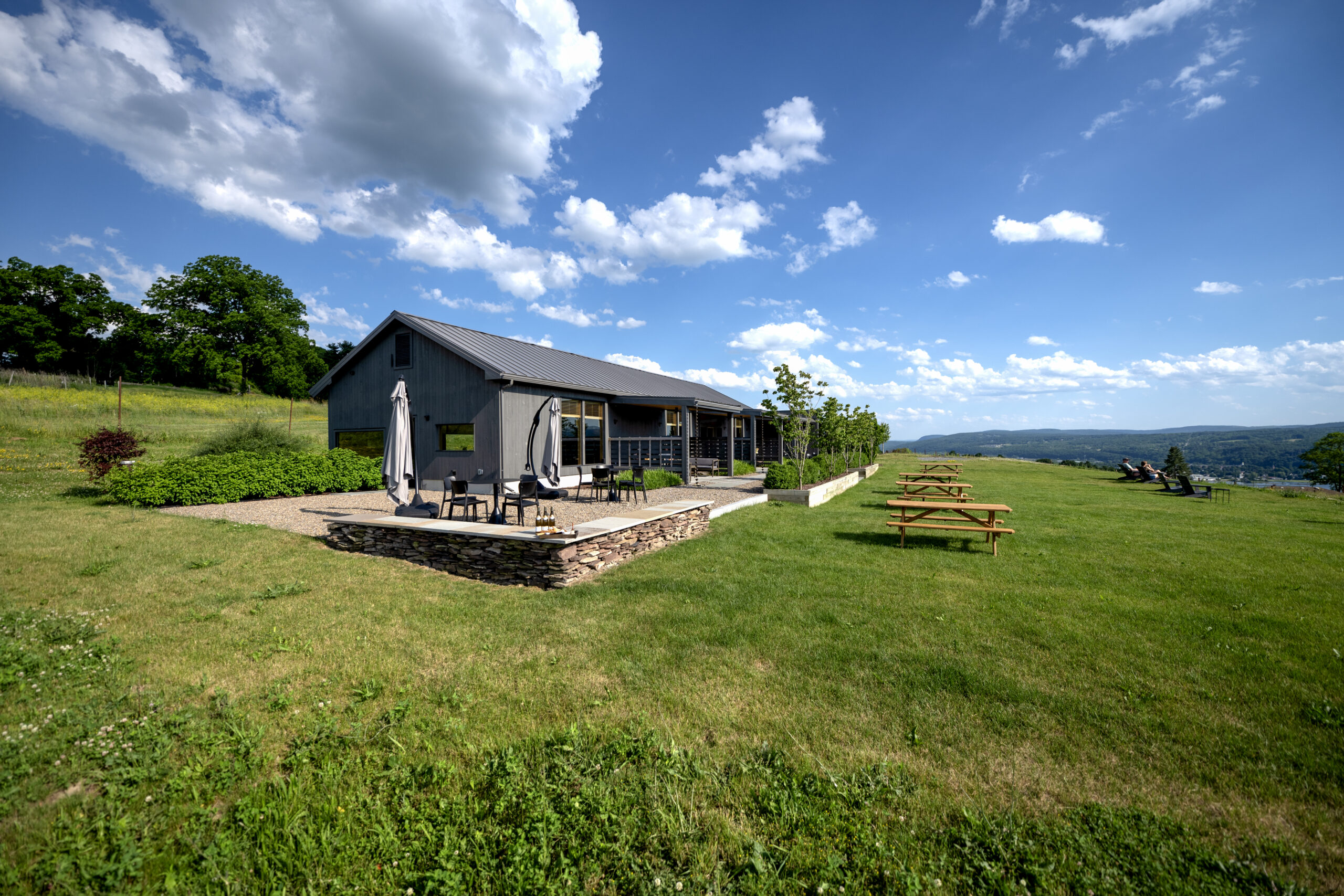
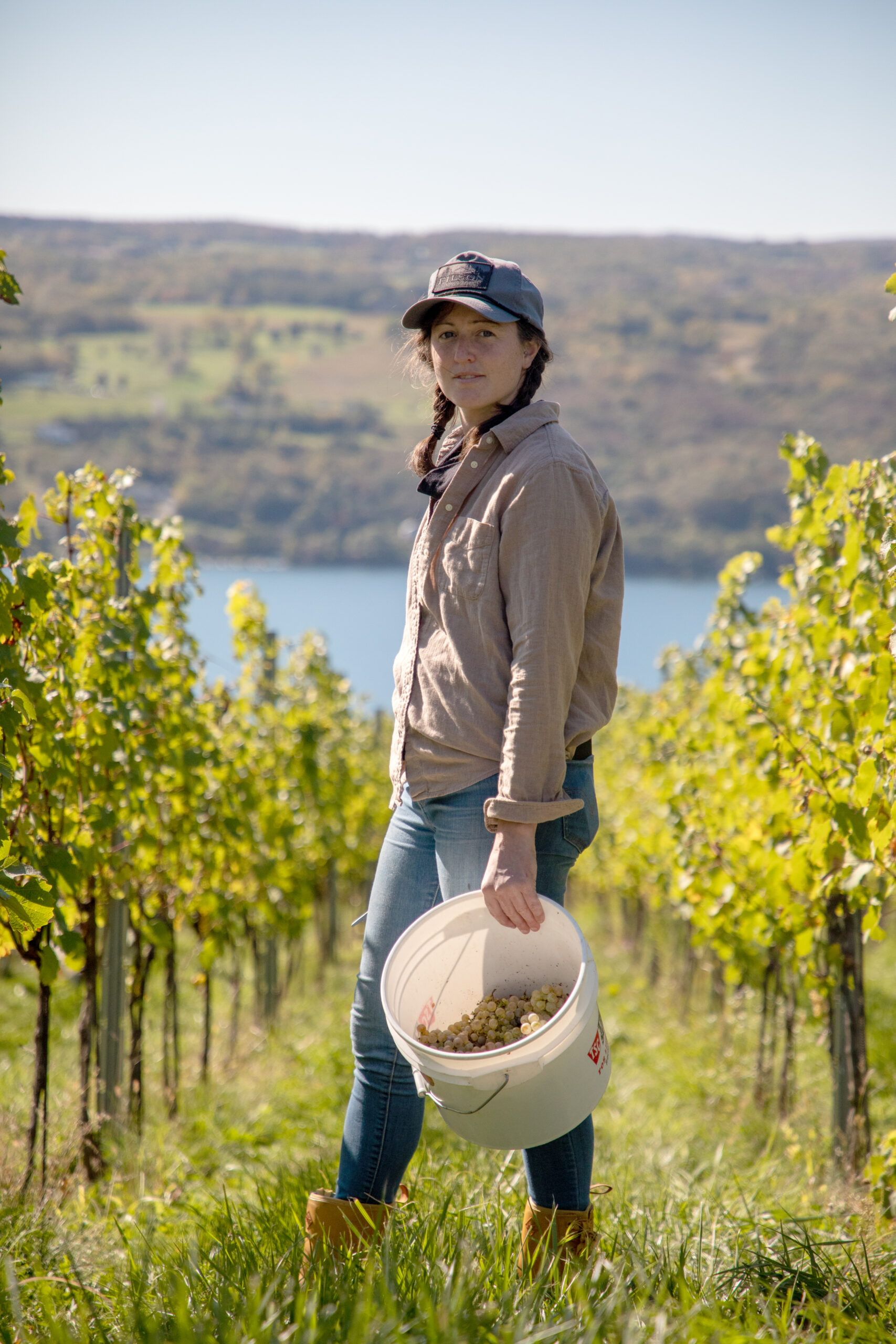
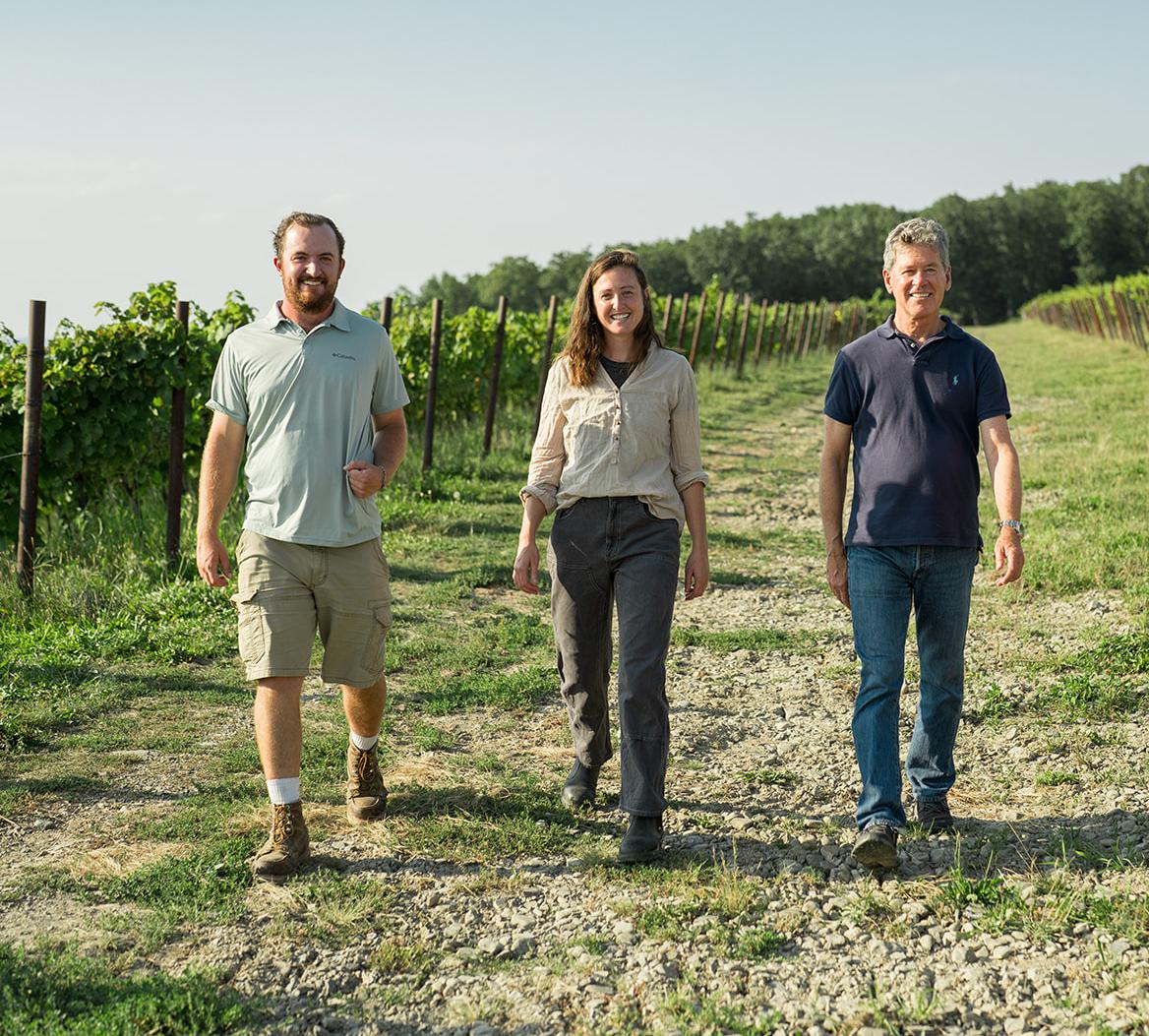
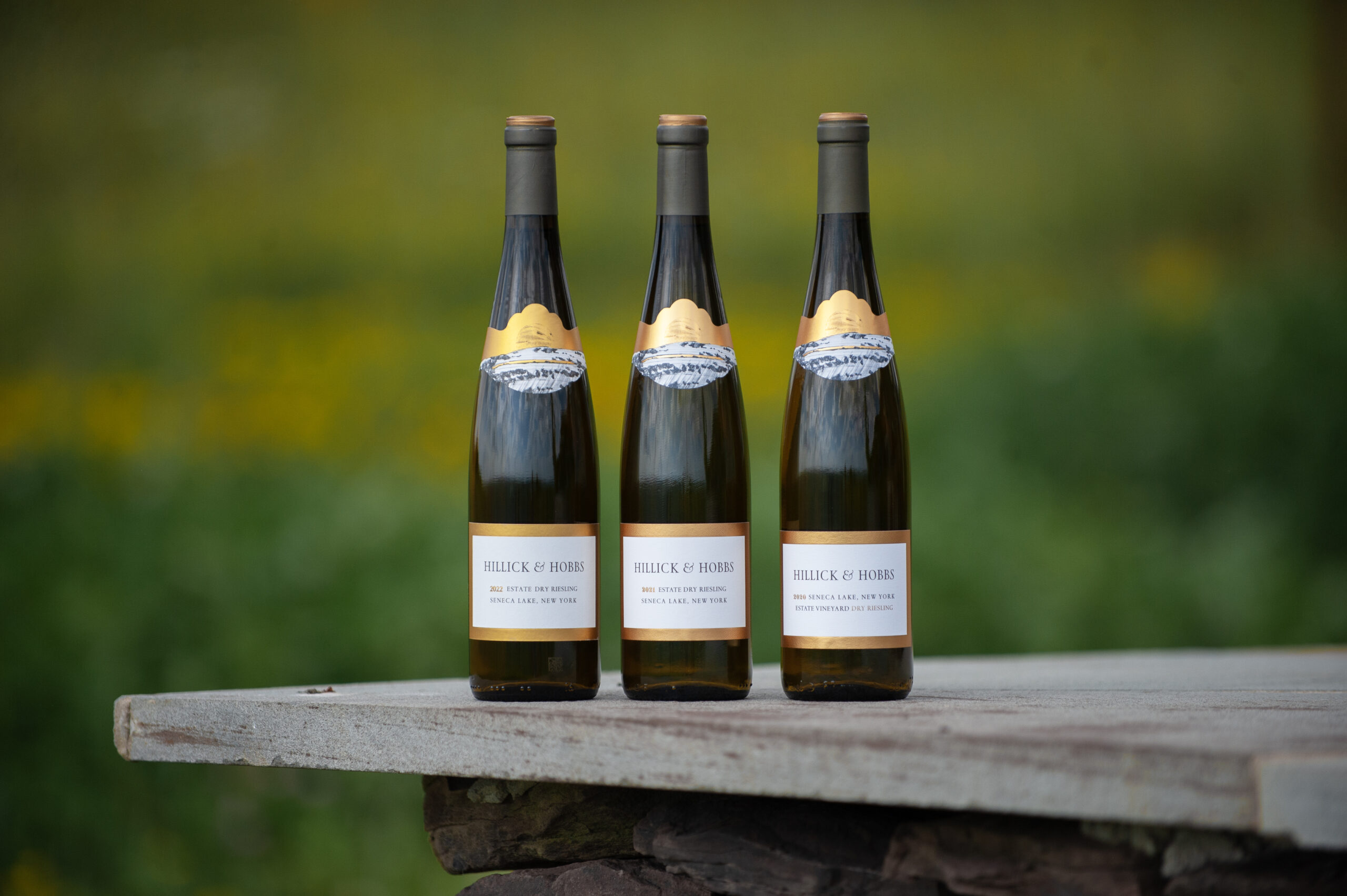
Hillick & Hobbs
(Overlooking Seneca Lake)
Address: 3539 NY-79, Burdett, NY 14818
Year Founded: 2013
First Year Wine Released: 2019 vintage, released in 2021
Owned by: Paul Hobbs
Estate Overview:
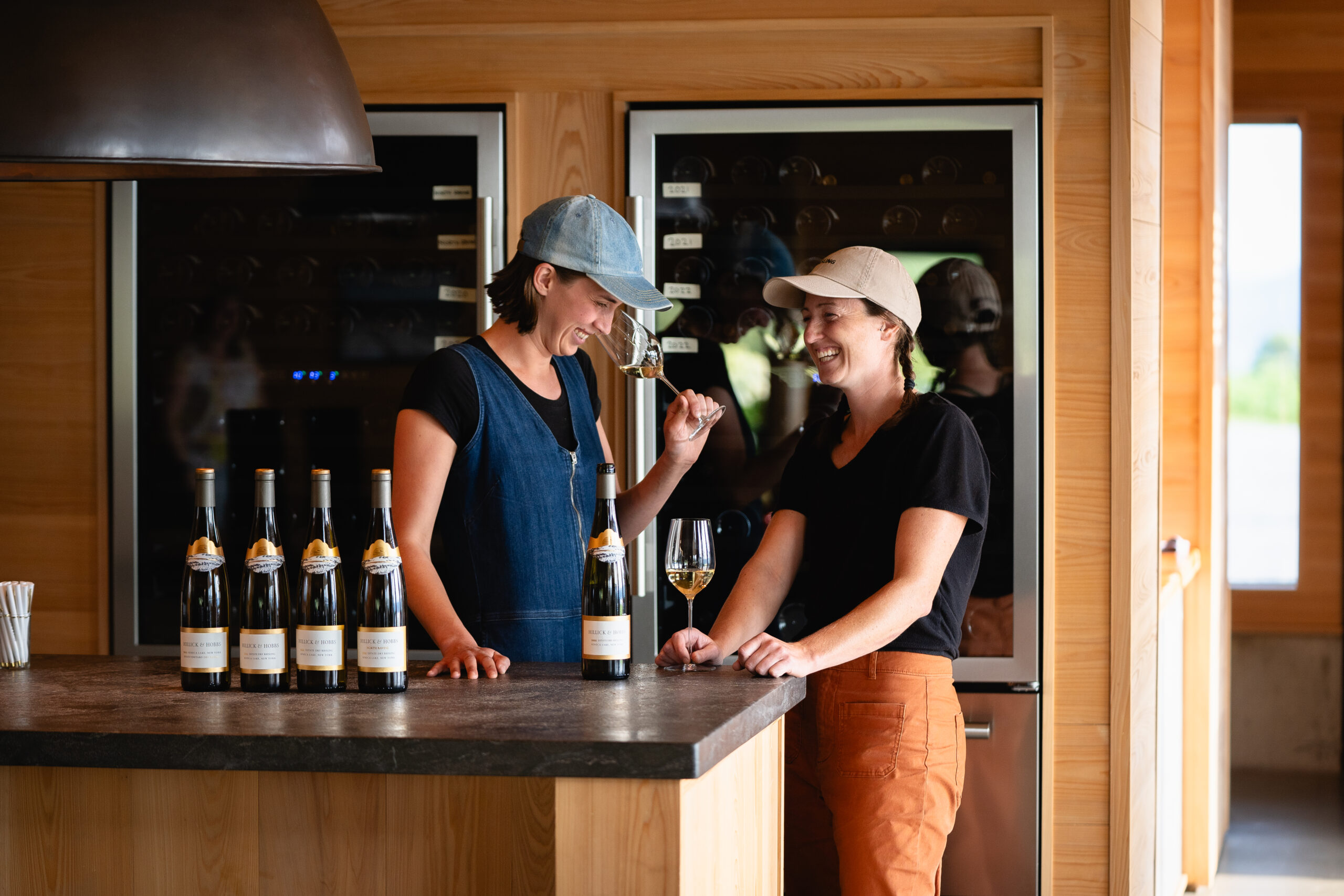
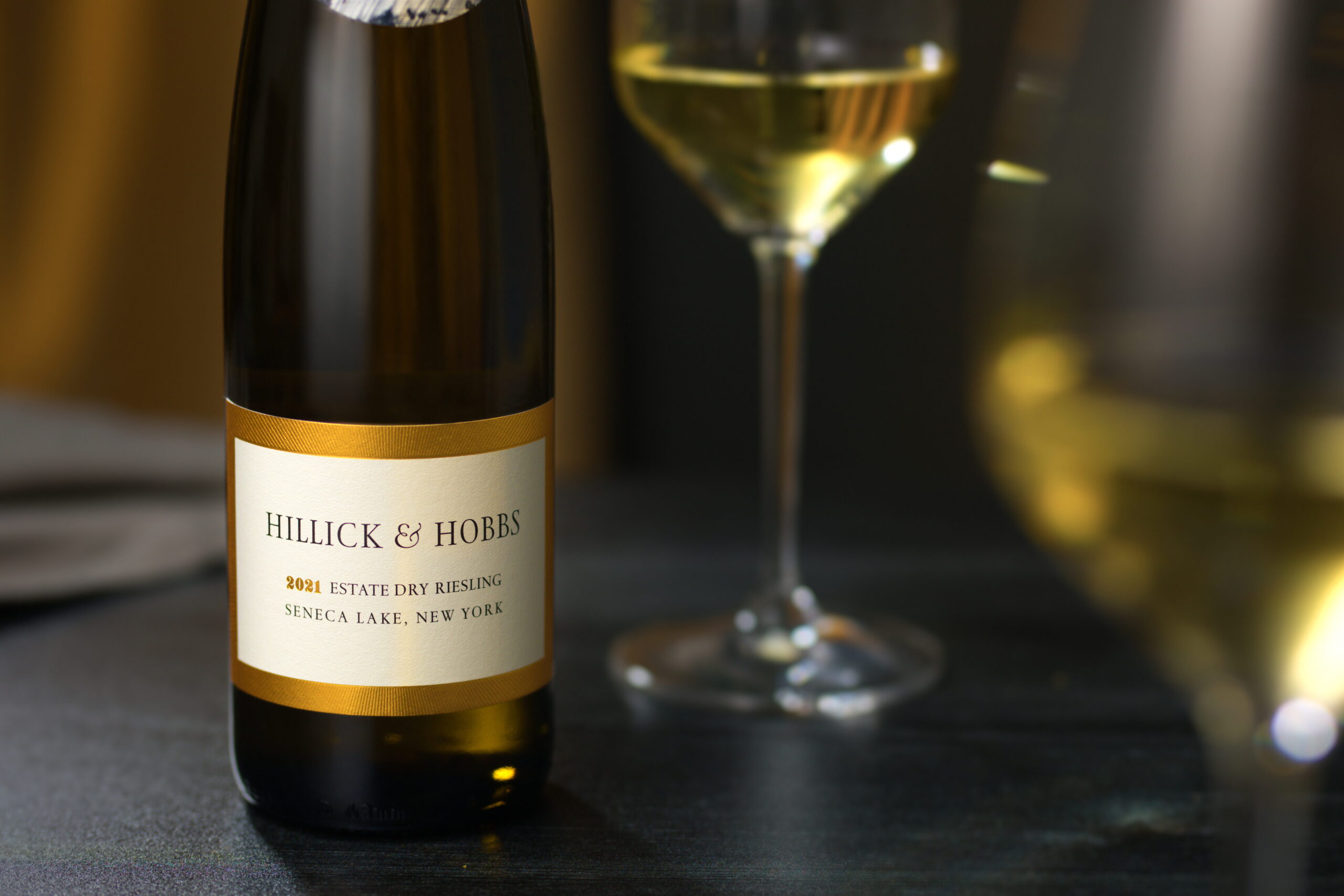
The pursuit to craft world-class Riesling brings Paul Hobbs back to his family roots in Upstate New York to create site-specific estate wines from the Finger Lakes region. Founded in 2013, Hillick & Hobbs is named in honor of his parents, Joan Hillick and Edward Hobbs, who met at nearby Cornell University in Ithaca, NY.
Paul, along with his younger brother David Hobbs, began actively searching for a site. The land they settled on, a 78-acre property south of Hector Falls, drew, they felt, similarities to the Mosel.
Winemaking and Grapegrowing Philosophy:
Best known for laser-focused, dry Rieslings that showcase the distinct minerality of Seneca Lake’s slate soils. Only Riesling is grown and produced—emphasizing a bone-dry style with very low residual sugar (often under 5 g/L). Vines are planted in high densities on steep slate-soil slopes overlooking Seneca Lake.
Planted acres total just 25, with vines rooted in lue slate, glacial till, and limestone glacial shale at elevations of 640-910 on 10-55 degrees western-facing slopes with vines oriented east-west running perpendicular to the lake. Fruit is picked early to mid-October at moderate Brix, gently whole-cluster pressed, and fermented slowly with native yeasts in stainless steel to preserve precision and primary fruit.
Winemaker:
Paul Hobbs, Founder, Owner, & Winemaker. Lynne Fahy, Winemaker & General Manager (2021-present)
Interesting to Note:
After years of searching around the Finger Lakes, Paul and David ultimately concentrated their efforts on Seneca Lake and found a property with similar attributes to those found in the famed Mosel region. Previously planted to native Labrusca varieties in the late 1800s, the property started to become overgrown in the 1930s after farming was abandoned.
Old cedar posts and wire trellising were found in the wooded areas, along with small terraces that allowed horses to work the original vineyard. The process of reclaiming the land back to vineyards began in 2013 and was a massive undertaking that required ingenuity and grit over nearly a decade. Before development could commence, innovative solutions unconventional by industry standards were necessary. The team engaged in a SWPPP (storm water prevention pollution program) and installed proper drainage channels on the site’s steep slopes to conserve the land’s attributes as well as minimize any environmental impact to Seneca Lake.
Once the site was ready for high-density plantings, holes for new grapevines had to be punched into the ground, one by one, using a custom-built jackhammer and trellised by hand.