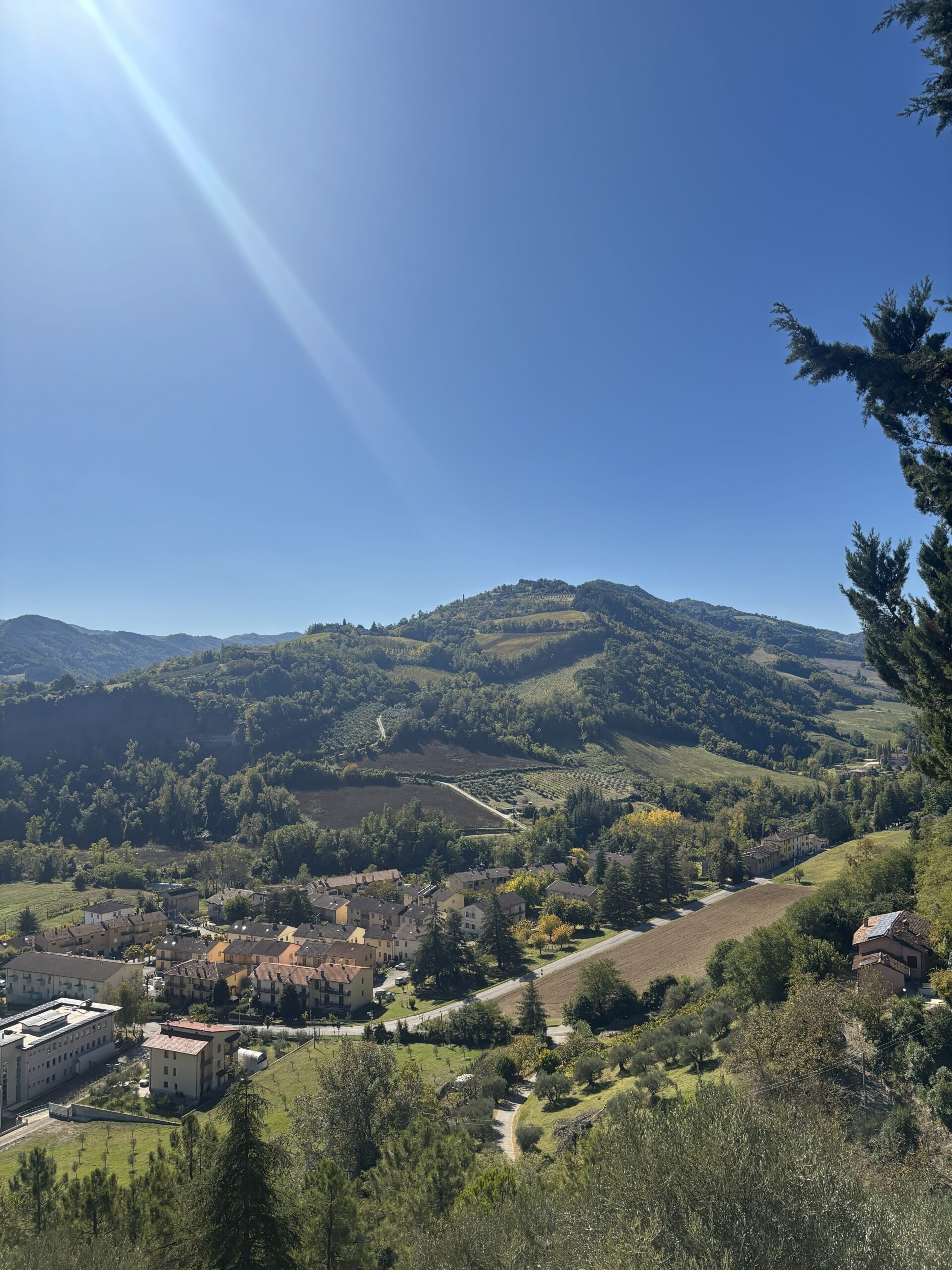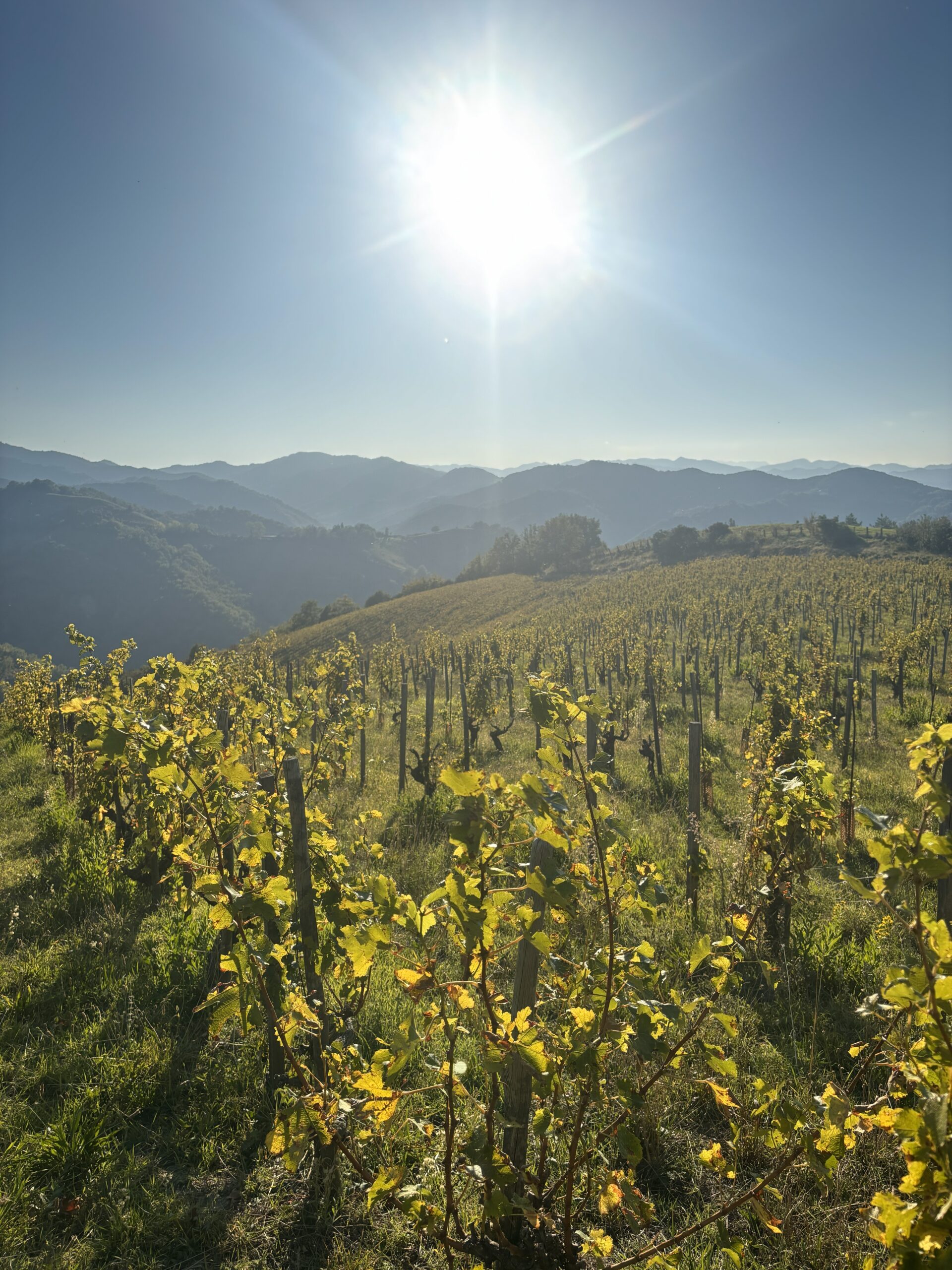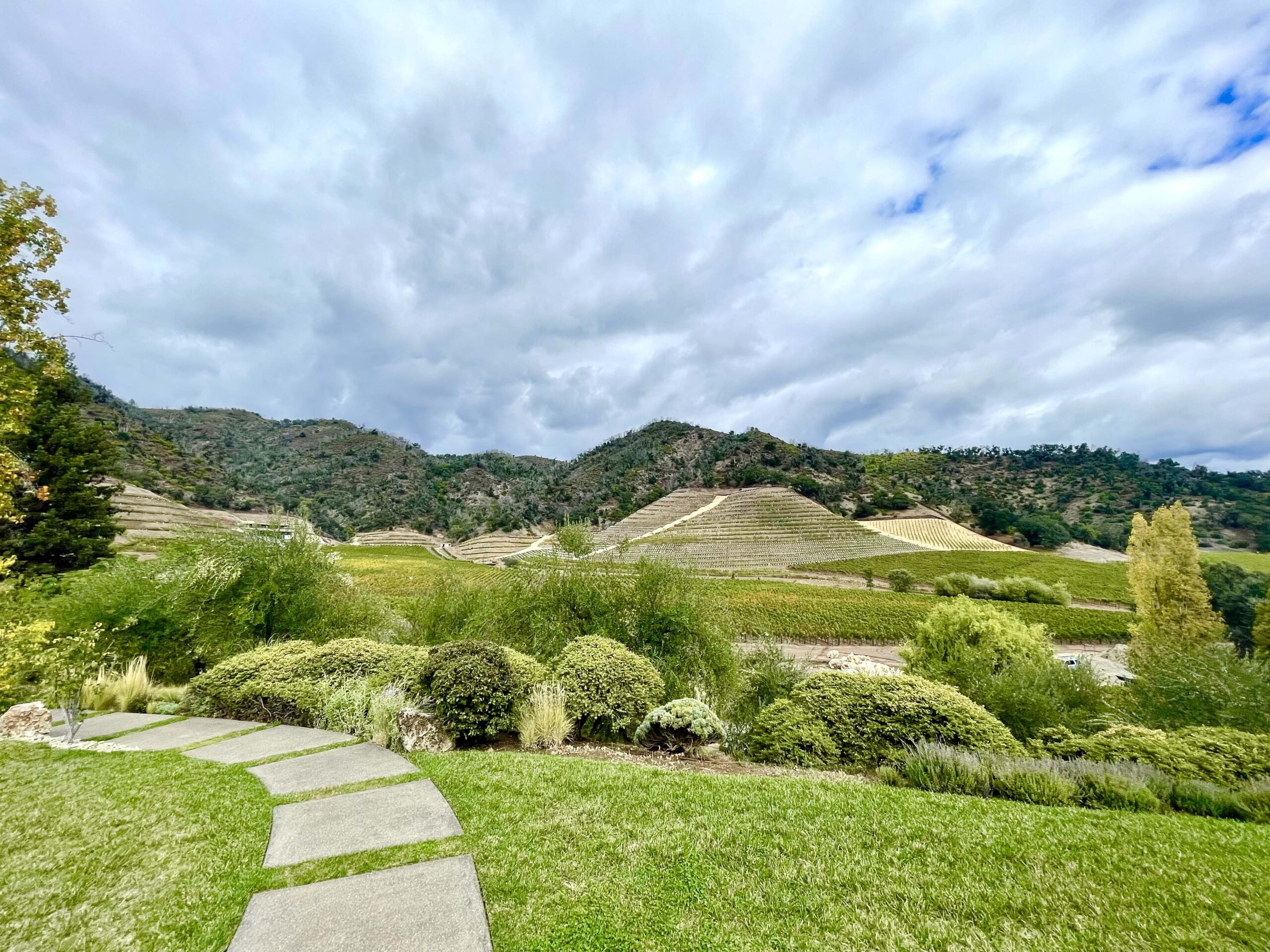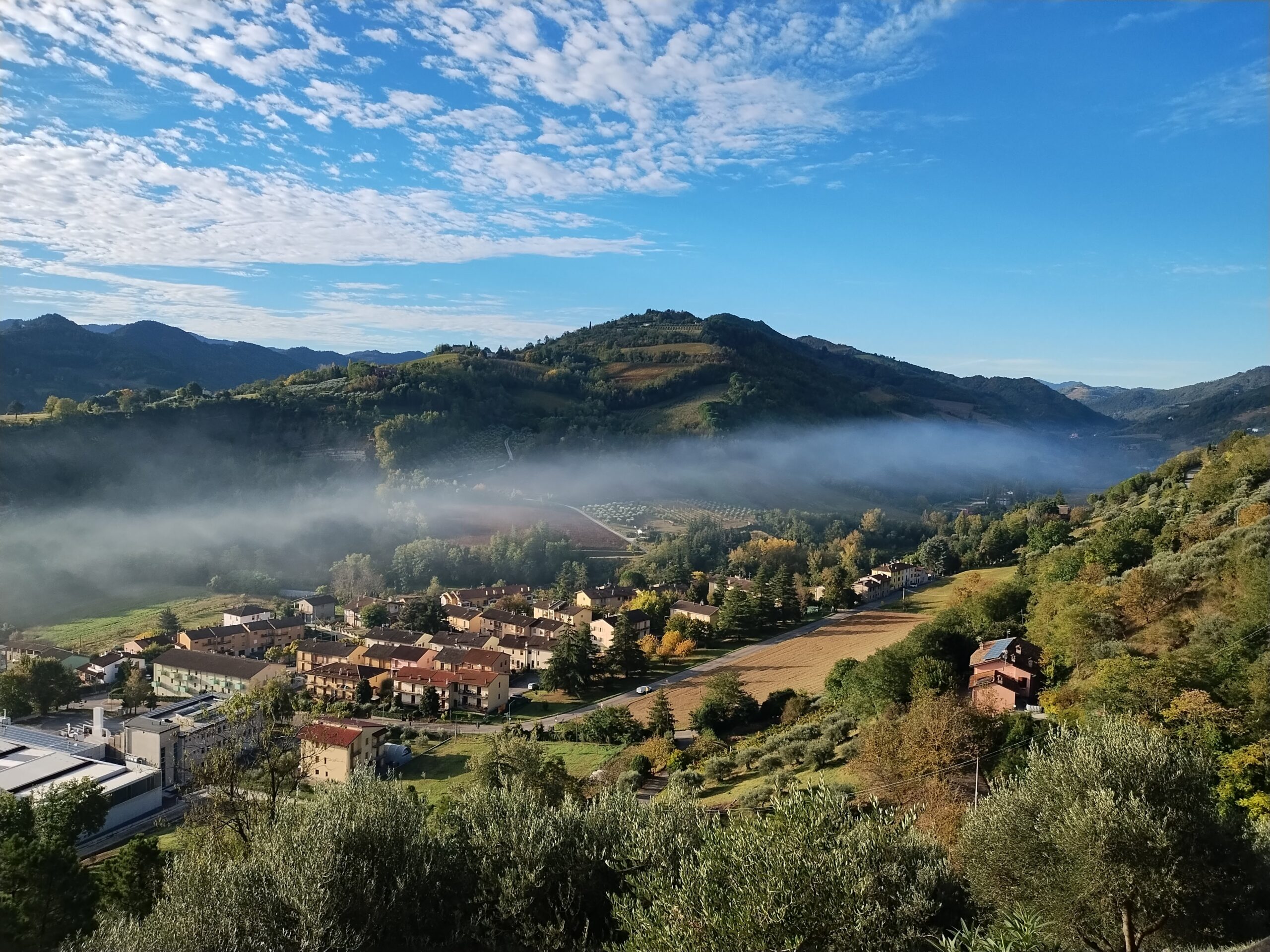

Last fall, staff writer Joe Roberts traveled through Central Italy at the invitation of Studio Cru (as part of Taste the Difference: Quality wines from the heart of Europe, a program co-funded by the European Union), tasting across a cross-section of historic zones where local identity still defines the wines more than trends or export expectations. What emerged was a powerful reminder of how deeply place-driven Central Italian fine wine remains, exemplified by four producers whose bottles speak unapologetically of their origins.
Beyond Tuscany: Central Italy's Rising Stars
There’s a word that Italians use—sometimes affectionately, sometimes critically—to describe an intense loyalty to one’s hometown, village, or immediate surroundings: campanilismo. The term comes from campanile, the bell tower that once defined the center of civic life in most Italian towns, and the radius within which one’s sense of belonging (and pride) was formed.
During my visit to Central Italy in the late Fall of 2025, that ethos came through clearly in the wines, and in the people behind them (probably in no small measure because of those people). Each of the producers highlighted here is deeply rooted in their local culture and landscape, crafting wines that reflect regional character rather than smoothing it away. These are not wines trying to be everything to everyone; they are wines that know precisely where they stand.
What follows are four producers worth seeking out; not because they conform to a shared style, but because each offers a compelling, authentic expression of their particular corner of Central Italy—shaped by history, geography, and a fiercely local point of view.

Madrevite
Trasimeno DOC, Umbria
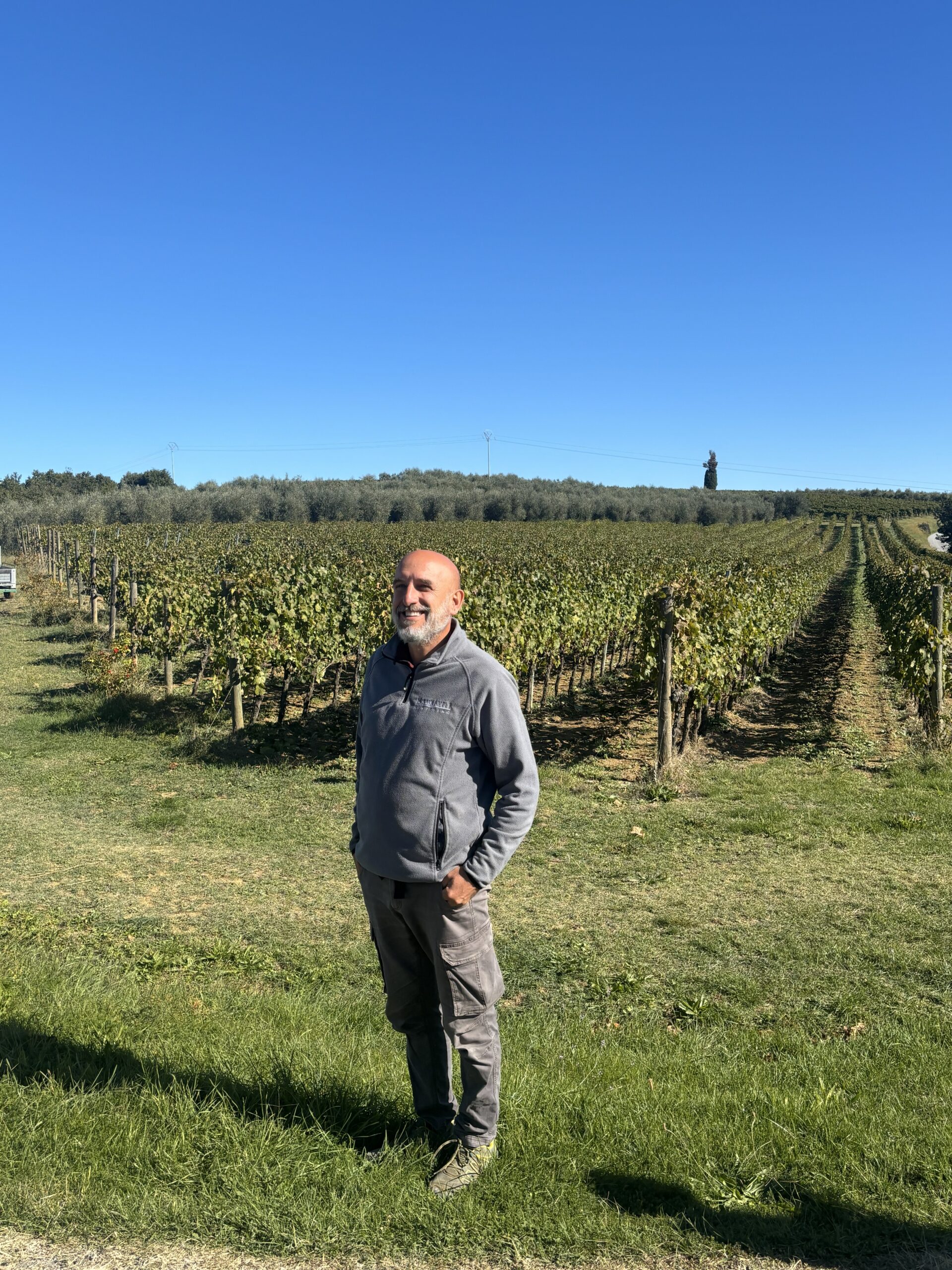
Founded in 2003 by Nicola Chiucchiurlotto, Madrevite is located in Cimbano, within the municipality of Castiglione del Lago in the hills overlooking Lake Trasimeno (near the Tuscan border). The estate lies within the Colli del Trasimeno DOC (an appellation with only about 20 producers), where the lake plays a critical moderating role, softening summer heat, preserving diurnal shifts, and extending the growing season.
The name Madrevite itself reflects the estate’s philosophical grounding. Historically, a madrevite was a simple Umbrian tool used to secure wine barrels—an object that symbolized both preservation and continuity. Chiucchiurlotto chose the name intentionally, signaling a winery rooted in local tradition while applying modern viticultural and winemaking precision.
Like many Umbrian farms of the past, Madrevite began as a diversified family holding, producing fava beans, grains, olives, grapes, and housing livestock rather than focusing exclusively on wine. That diversified mindset still shapes the estate today. The property spans roughly 150 acres across three wooded hills, with vineyards occupying about 27 acres at elevations between 918 and 1,180 feet. “The strategy is to divide the risk,” Chiucchiurlotto explains—an approach shaped largely by hail, the region’s most persistent climatic threat.
Sangiovese is part of the story here, but Chiucchiurlotto is frank about the realities of regional perception. “Sangiovese is beautiful here, but the problem is our neighbor: Tuscany.” Rather than compete directly with Tuscany’s gravitational market pull, Madrevite has focused on varieties that speak more distinctly to Trasimeno’s identity.
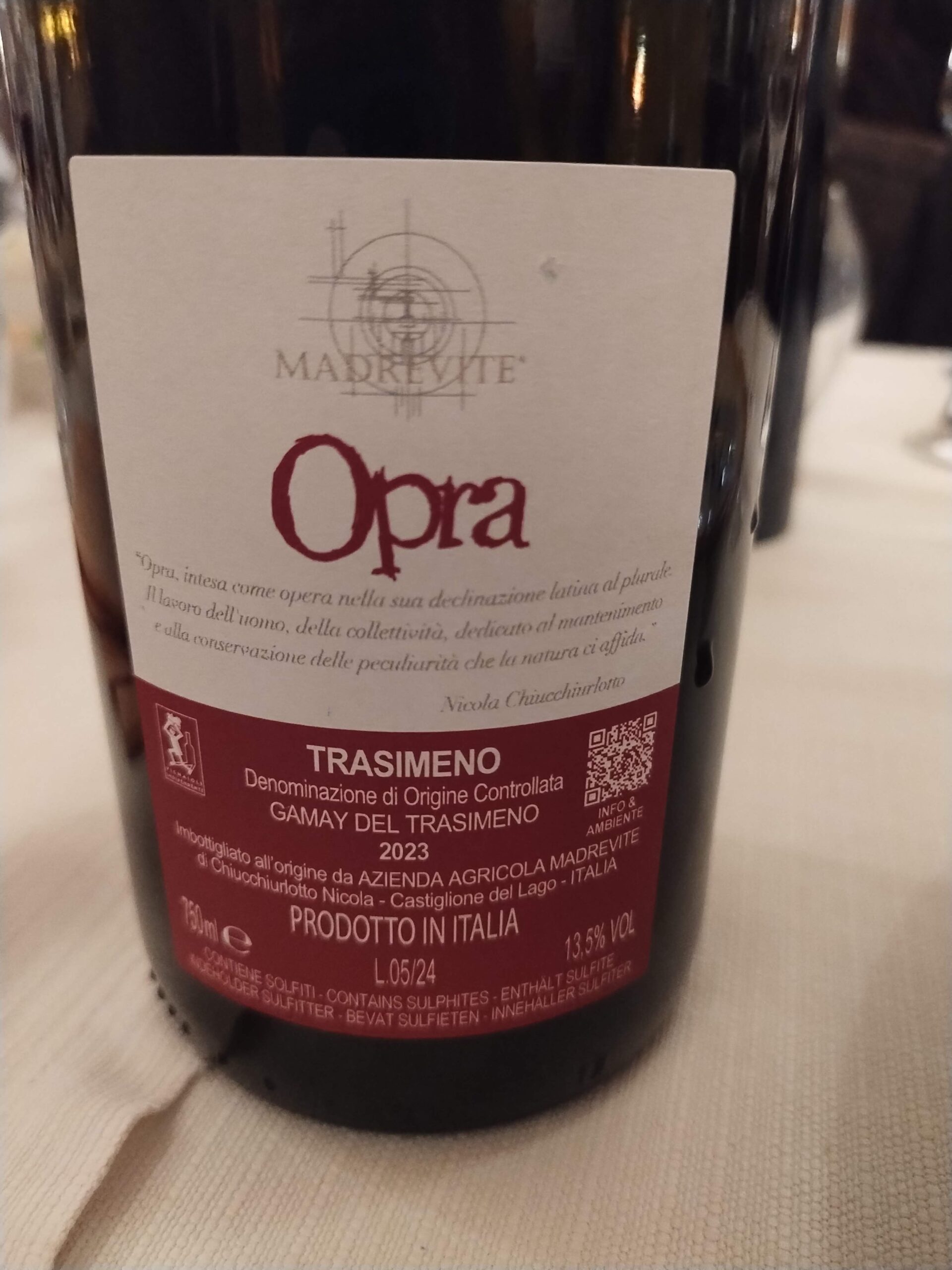
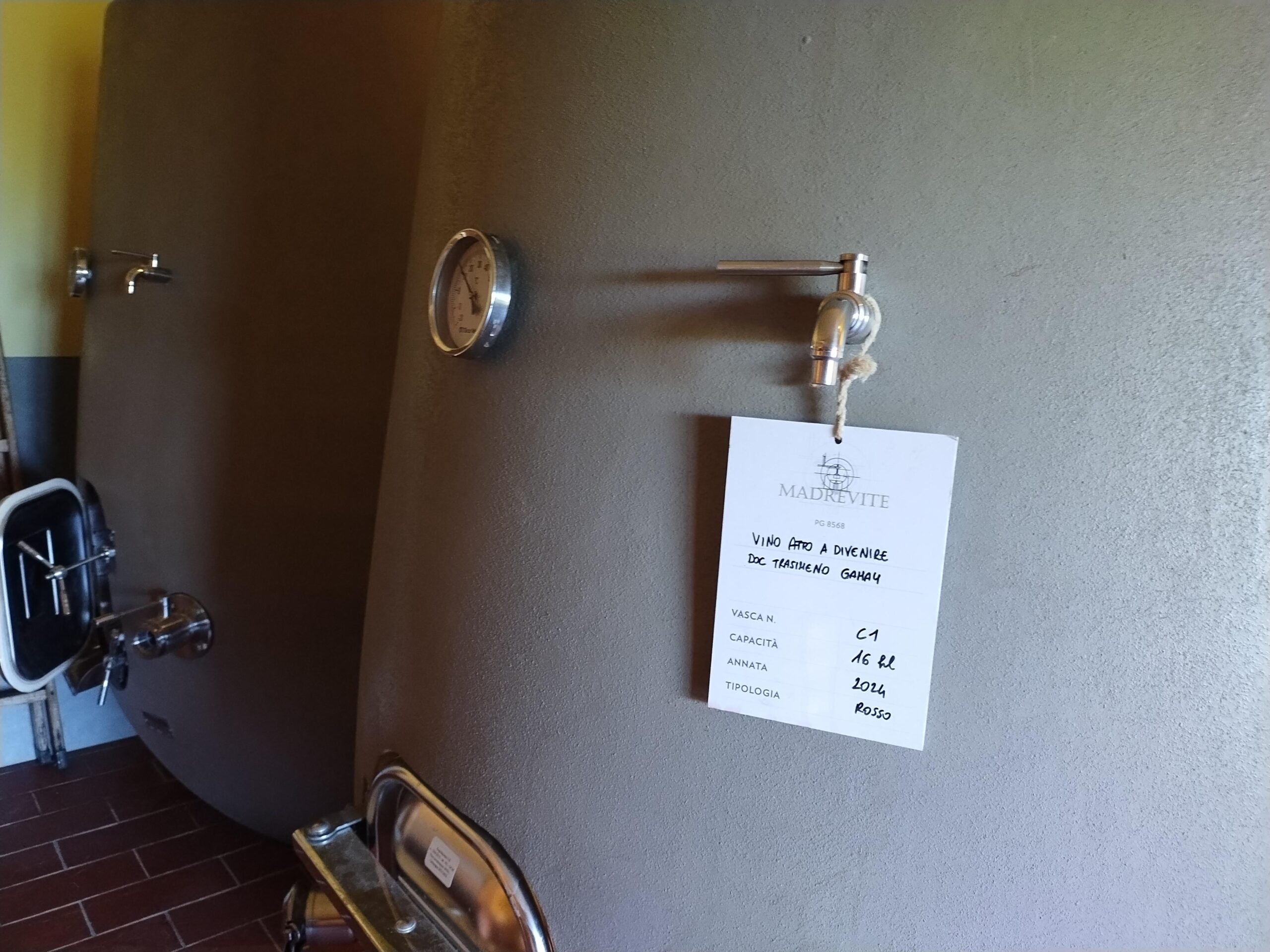
Chief among them is Gamay del Trasimeno: locally named, but genetically identical to Grenache. The grape has deep historical roots in the region, likely arriving via Spain in the early 1600s, with a second wave of plantings tied to Sardinian migration in the late 19th and early 20th centuries. At Madrevite, a small hilltop parcel—originally grafted by Chiucchiurlotto’s grandfather in the 1970s—serves as a living archive of this local heritage.
“Grenache is perfect for us, and perfect for this moment. It’s perfect for the cultivation [and climate]. The pulp is white, so it’s possible to produce rosé, and a very delicate red. It’s not Pinot Noir, but it is similarly elegant.” Planted on south-facing slopes to maximize sun exposure, the variety delivers perfume, finesse, and adaptability without sacrificing regional character.
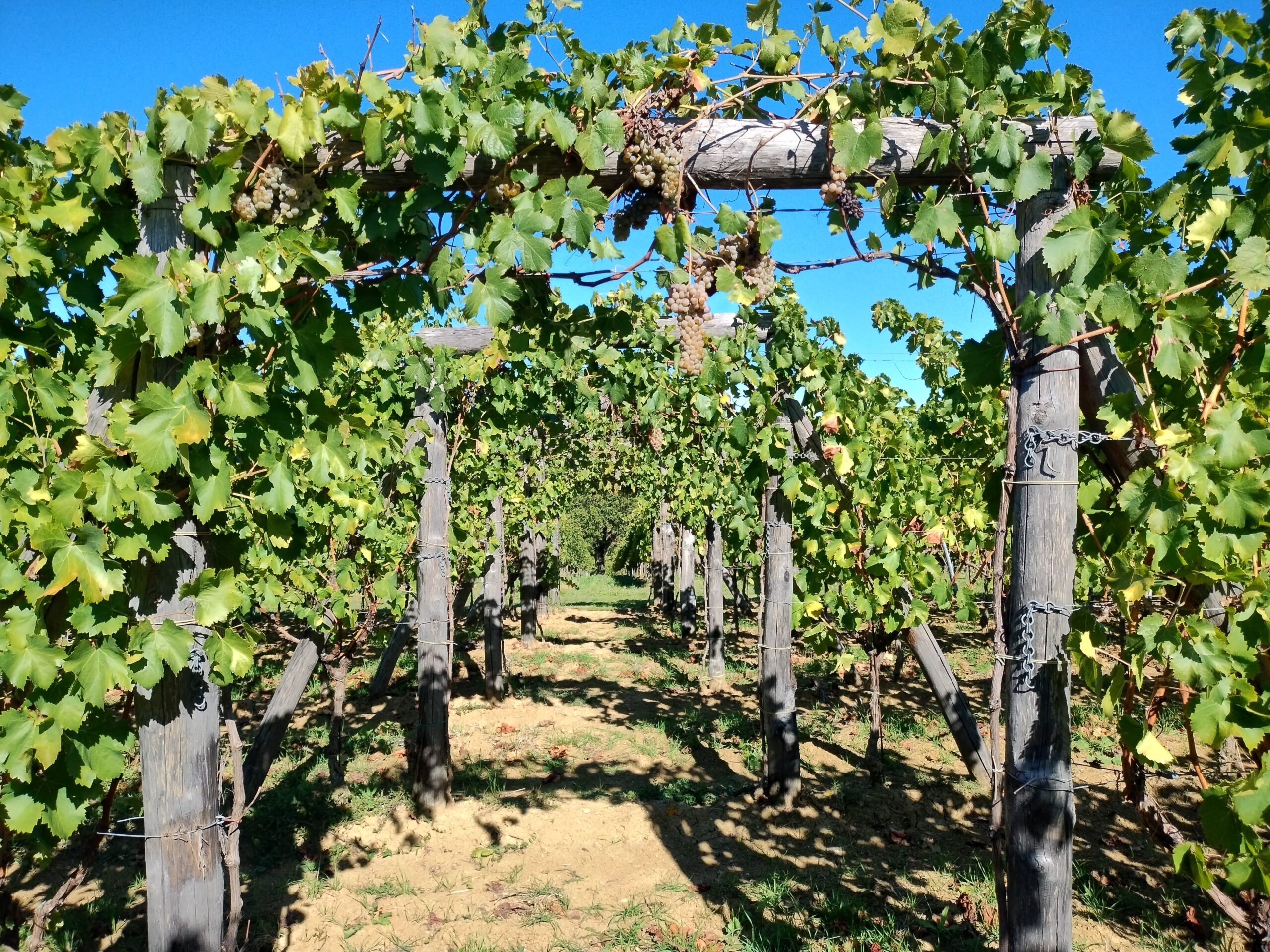
White varieties are treated with equal site sensitivity. Trebbiano Spoletino is planted on cooler, north-facing slopes and trained in part using elevated systems—a practical response to radiant heat that protects freshness and aromatic lift. This attention to orientation and training underscores how viticulture here is driven less by doctrine than by lived experience.
Madrevite is also deeply embedded in its local community. The estate hosts music festivals on-site and launched a restaurant project in 2023, reinforcing its role as a cultural gathering place rather than a closed, production-only winery. Wines are imported by Vinebar in the USA.
Tenuta Licinia
Foothills of the Tuscan Apennines, near Lucignano
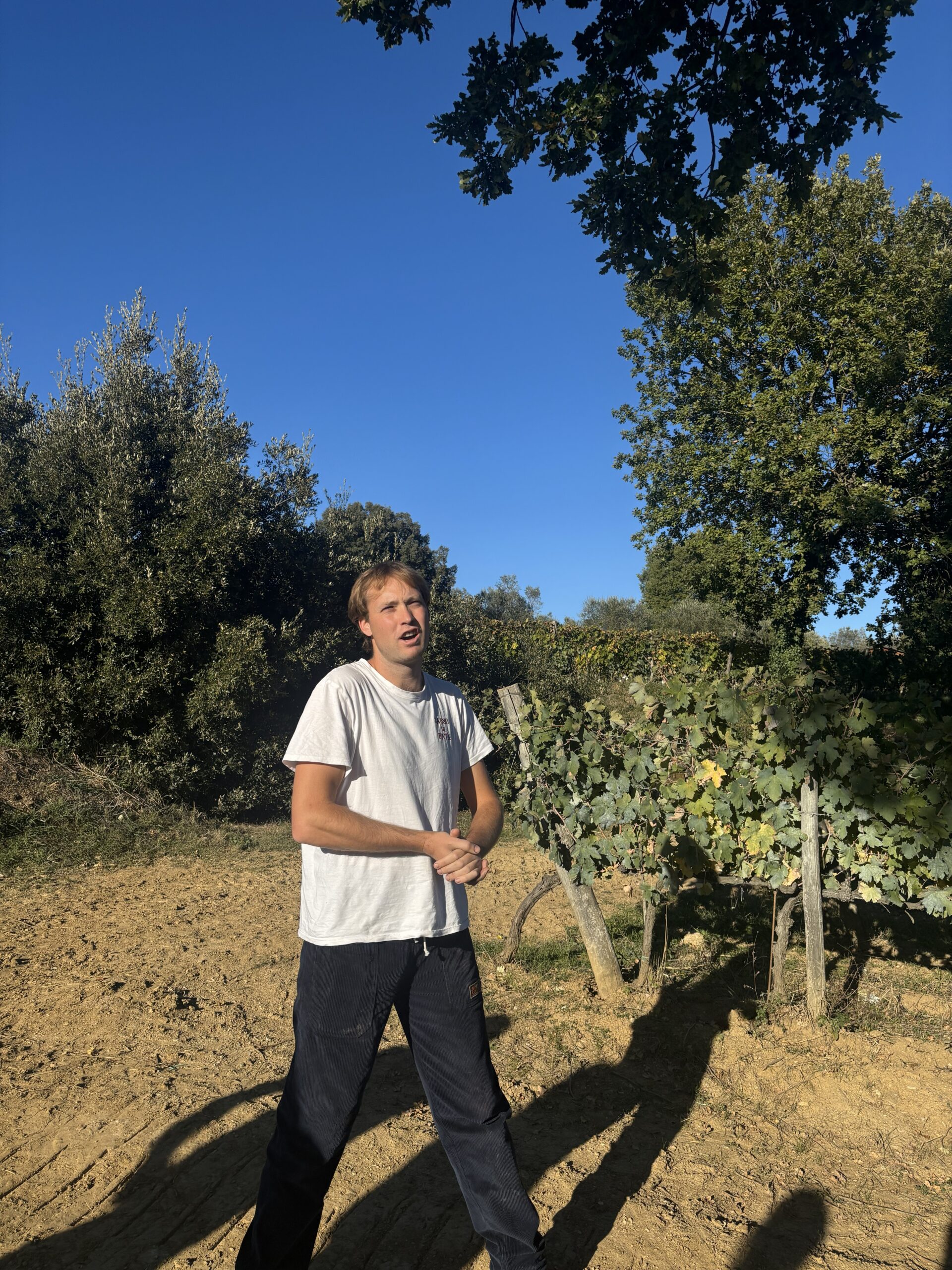
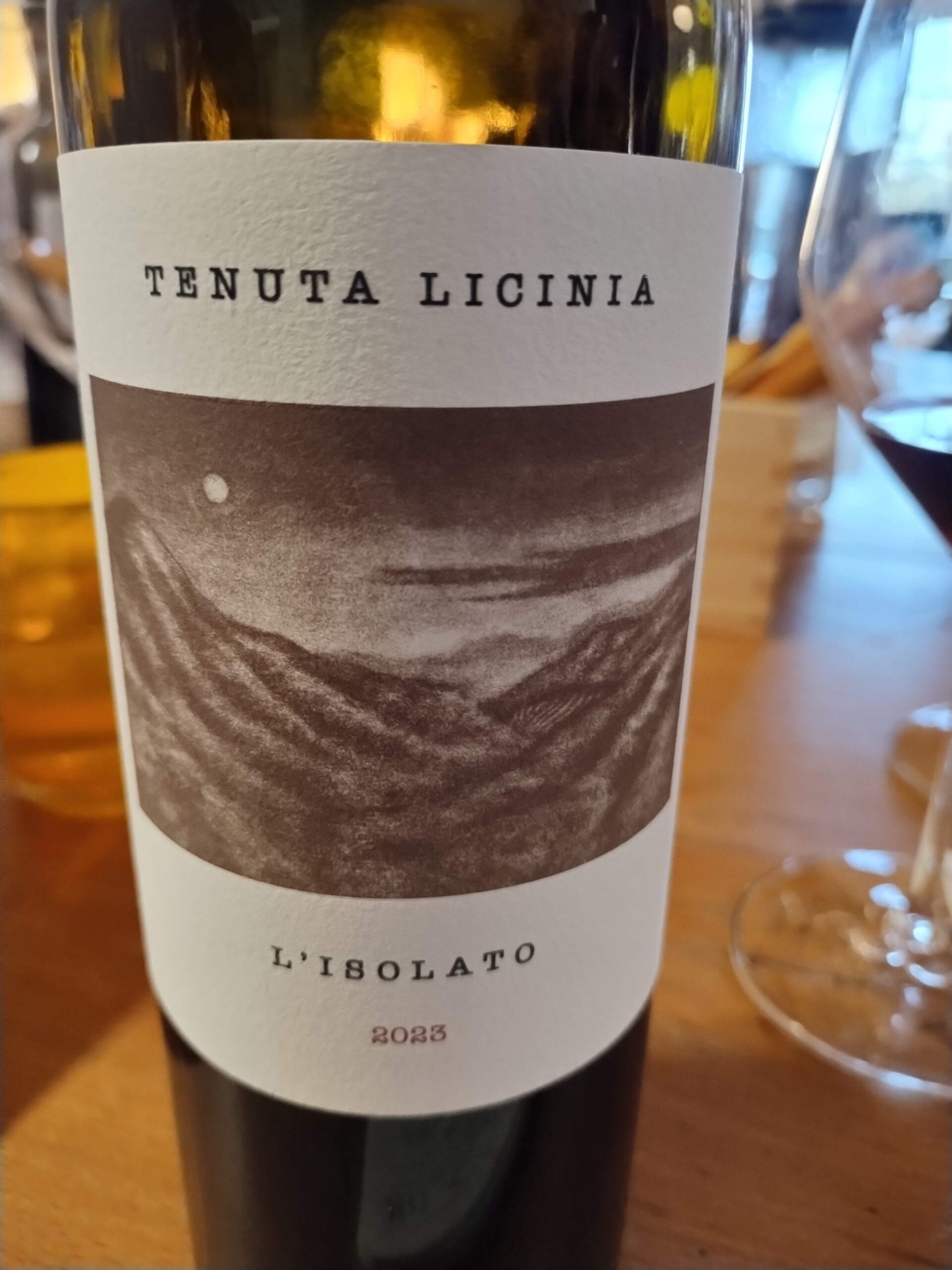
Tenuta Licinia sits quietly at the edge of Tuscany, near the village of Lucignano on the border between Siena and Arezzo, where the Apennines begin to fold into the Valdichiana. It is here that young winemaker James Marshall-Lockyer has taken on a project rooted less in prestige appellations and more in philosophical inquiry: what, exactly, makes a great wine great, and how often has Tuscany misunderstood its own answers.
“The quality revival in Tuscany happened in the ’80s and ’90s, but it didn’t really bring back everything that was lost. There wasn’t the element of terroir that was revived.” For Marshall-Lockyer, that missing link lies in historic vineyards that were never fully understood, let alone properly nurtured. His work at Licinia has been defined by a near-obsessive search for those overlooked sites.
“I wanted to find the best soils,” he says; but the process quickly revealed how little consensus existed. After visiting “nearly every vineyard in a 30 kilometer radius” and asking growers what soils best suited Sangiovese, “the winemakers tended to answer whatever soils they had.” The reality, as he sees it, is more blunt: “A lot of soils just aren’t good for anything.”
Rather than accept received wisdom, Marshall-Lockyer adopted a micro-parcel, geology-first approach, farming a patchwork of tiny, isolated vineyards spread across a wide radius. The estate today encompasses roughly 13.5 acres of vines within a broader 148-acre property dominated by woods and olive groves. The focus is on specific subsoils—particularly friable galestro clay schist—treated in a Burgundian clos mindset that privileges site identity over scale or blending convenience.
That Burgundy comparison is not accidental. “I’m most obsessed with finding beautiful flavors,” Marshall-Lockyer says. “What separates the greatest wines from very good wines is the beauty of [those] flavors.” He points to Burgundy as the clearest historical example, not just for its production hierarchy, but for its focus on aromatic clarity, nuance, and restraint.
Those priorities shape every decision in the vineyard and cellar. Harvest is determined by taste rather than metrics, and fruit is picked “by hierarchy” of plots. The goal is “all of the flavors but not too much muscle,” maximizing concentration in the berries while handling them gently in the winery, with careful pressing and restrained extraction to preserve finesse over force.
Now entering just its fifth vintage, Tenuta Licinia remains deliberately small, producing around 1,500 cases annually, with plans to roughly double production as additional parcels come online. The estate is certified organic, and in the U.S. the wines are distributed by Vera Wines.
Ronchi di Castelluccio
Romagna Apennines
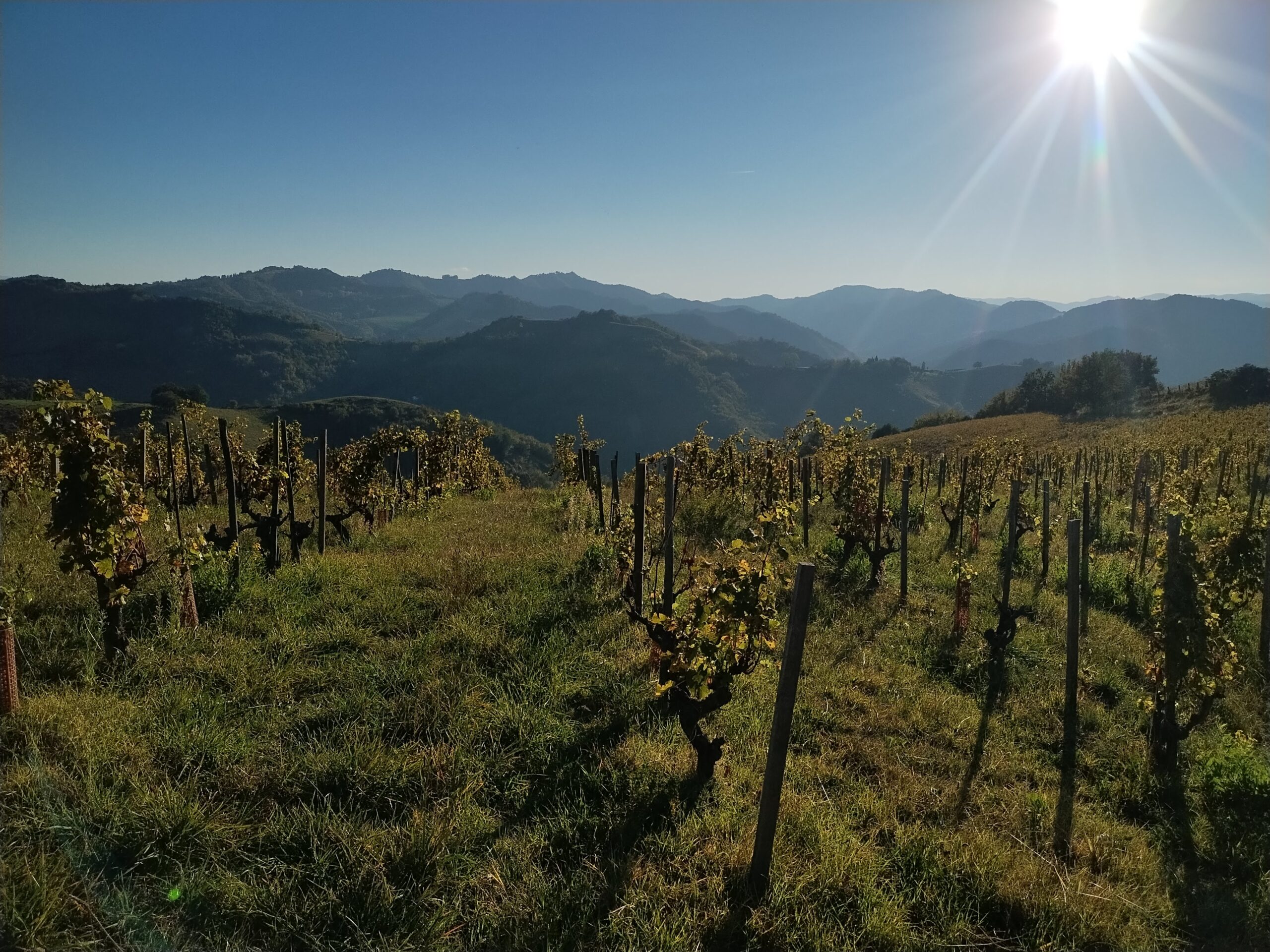
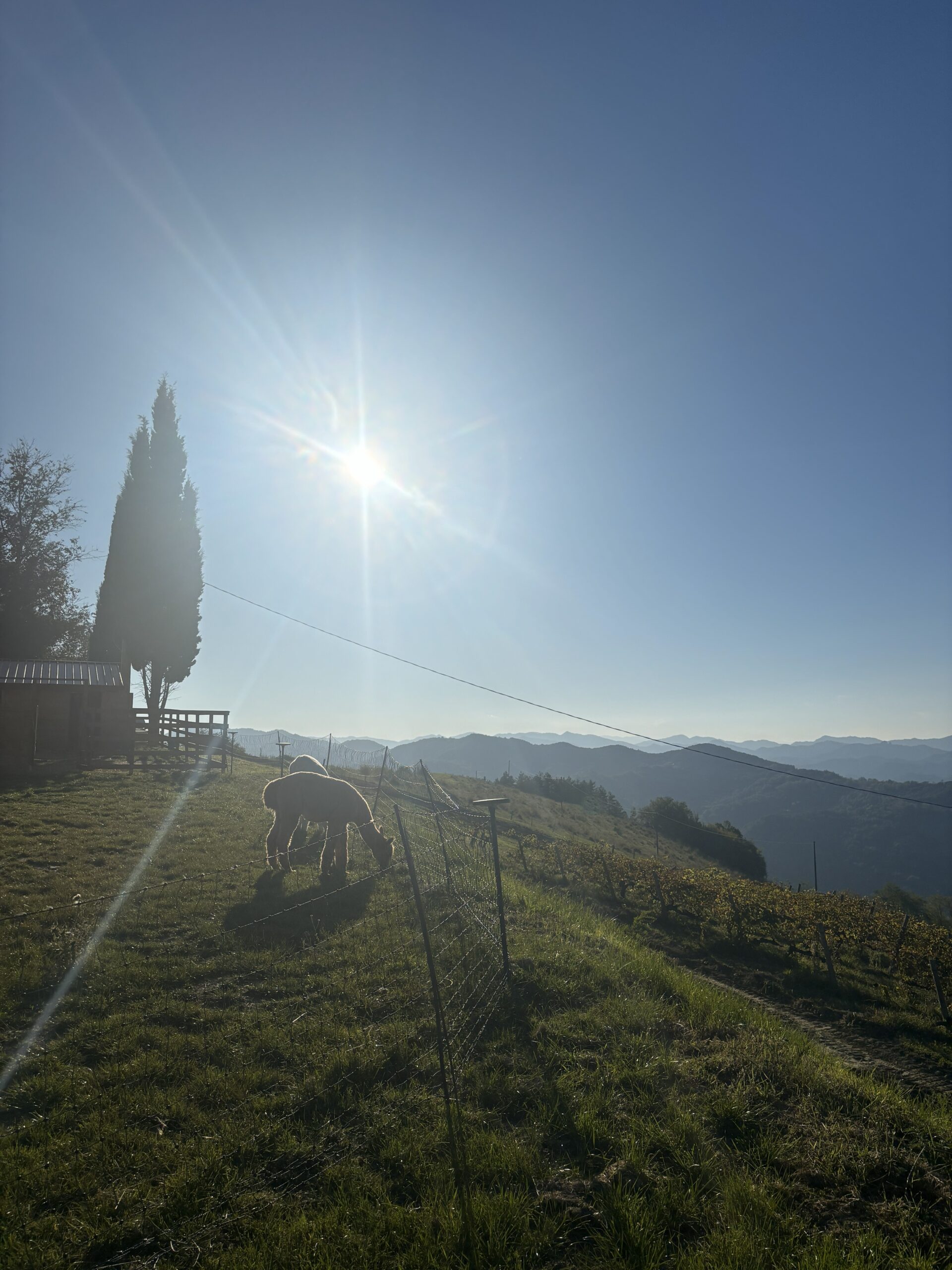
Ronchi di Castelluccio occupies an unlikely position in Romagna’s viticultural history (both geographically and philosophically). Perched at roughly 1,300 feet in the Apennine foothills, the estate sits well above the valley-floor vineyards that historically defined the region’s production. High-yielding fruit from flatter sites once dominated local thinking; hillside viticulture at this altitude was the exception, not the rule.
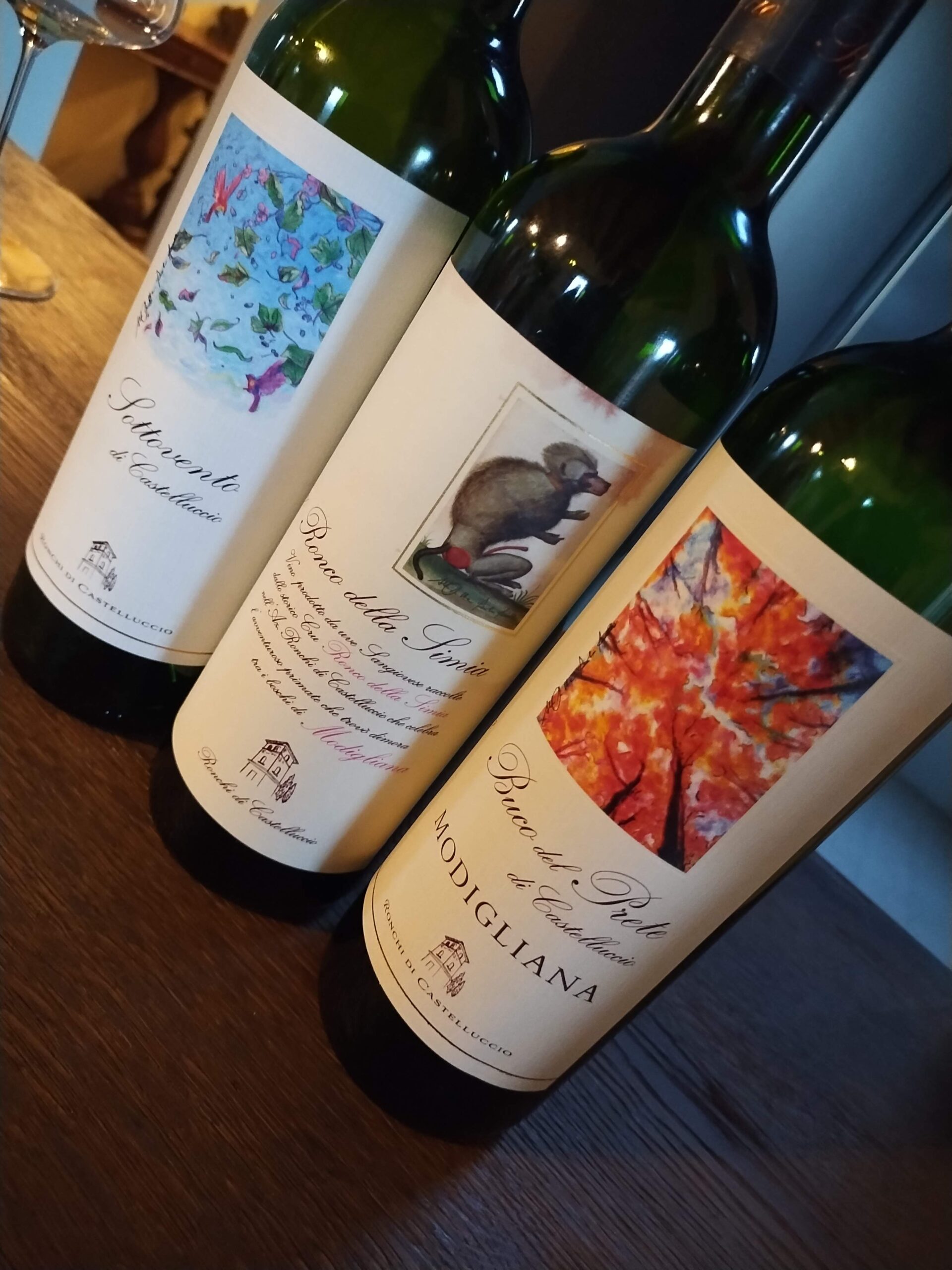
“Back in the 1970s single-vineyard production was not something usual. We borrowed it from the French. It took someone from outside the wine world [the original founder was in the movie business] to do it in Romagna,” emphasizes co-owner Aldo Rametta. That outsider perspective proved catalytic, introducing site specificity long before it became fashionable locally.
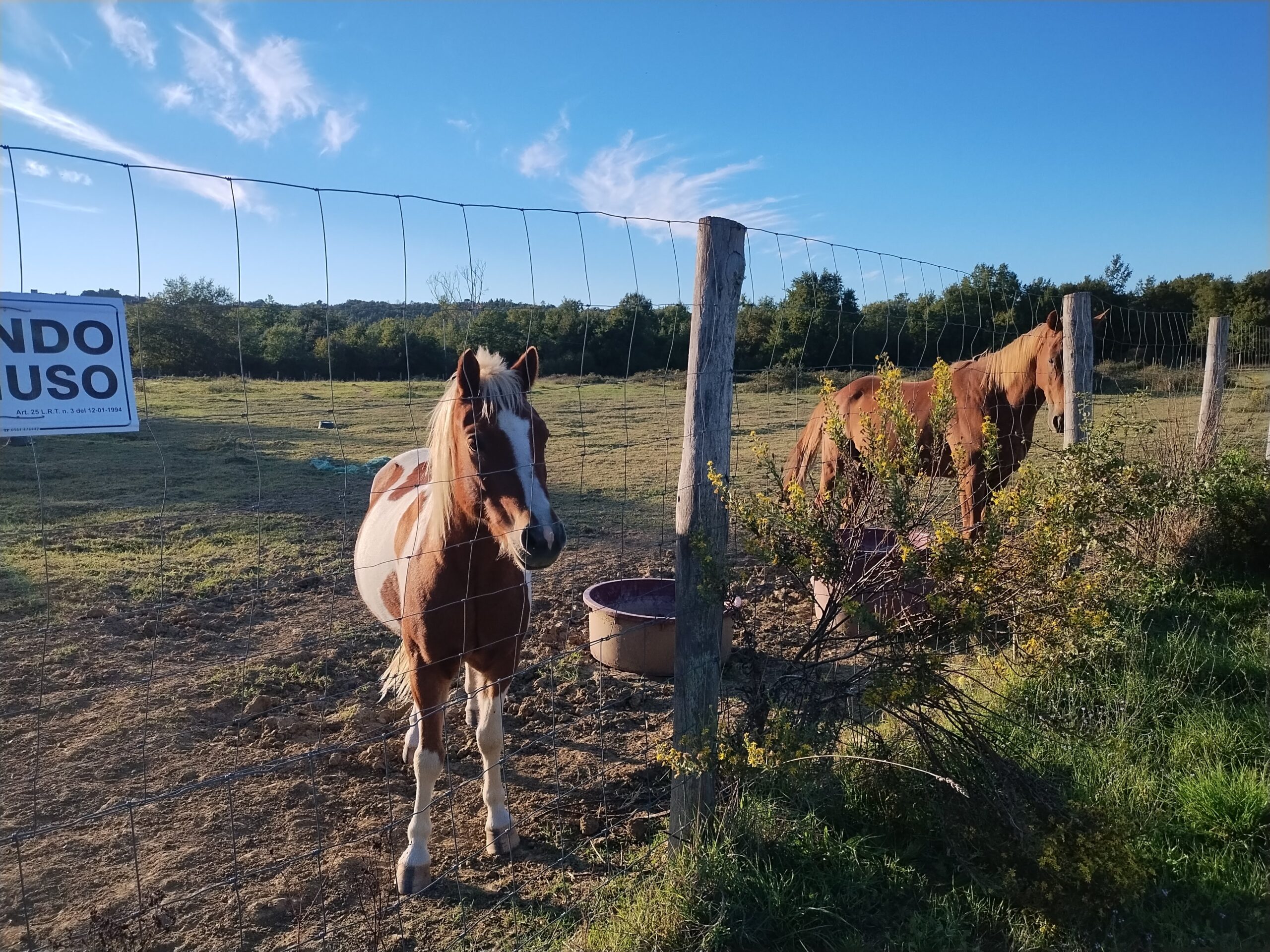
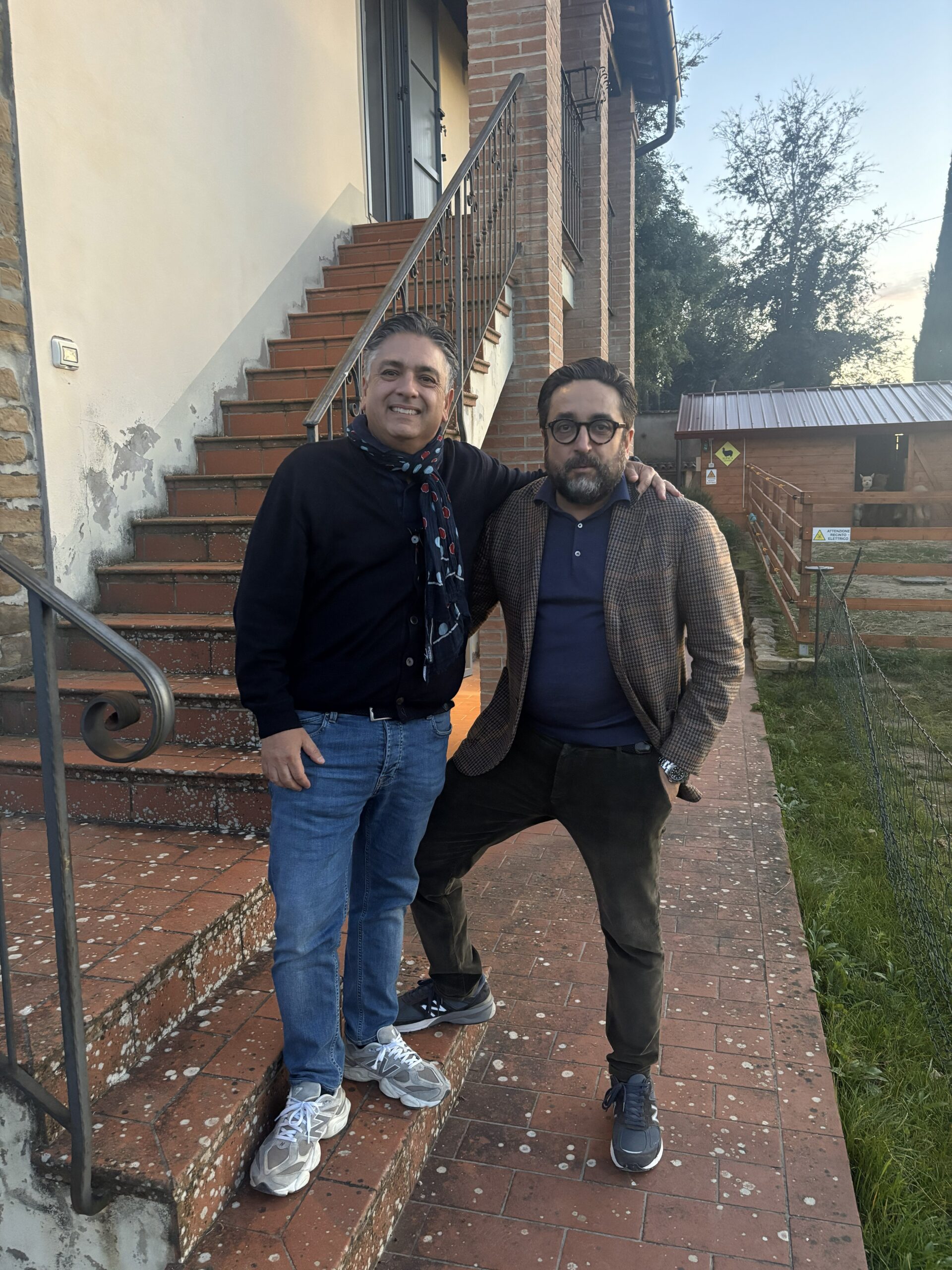
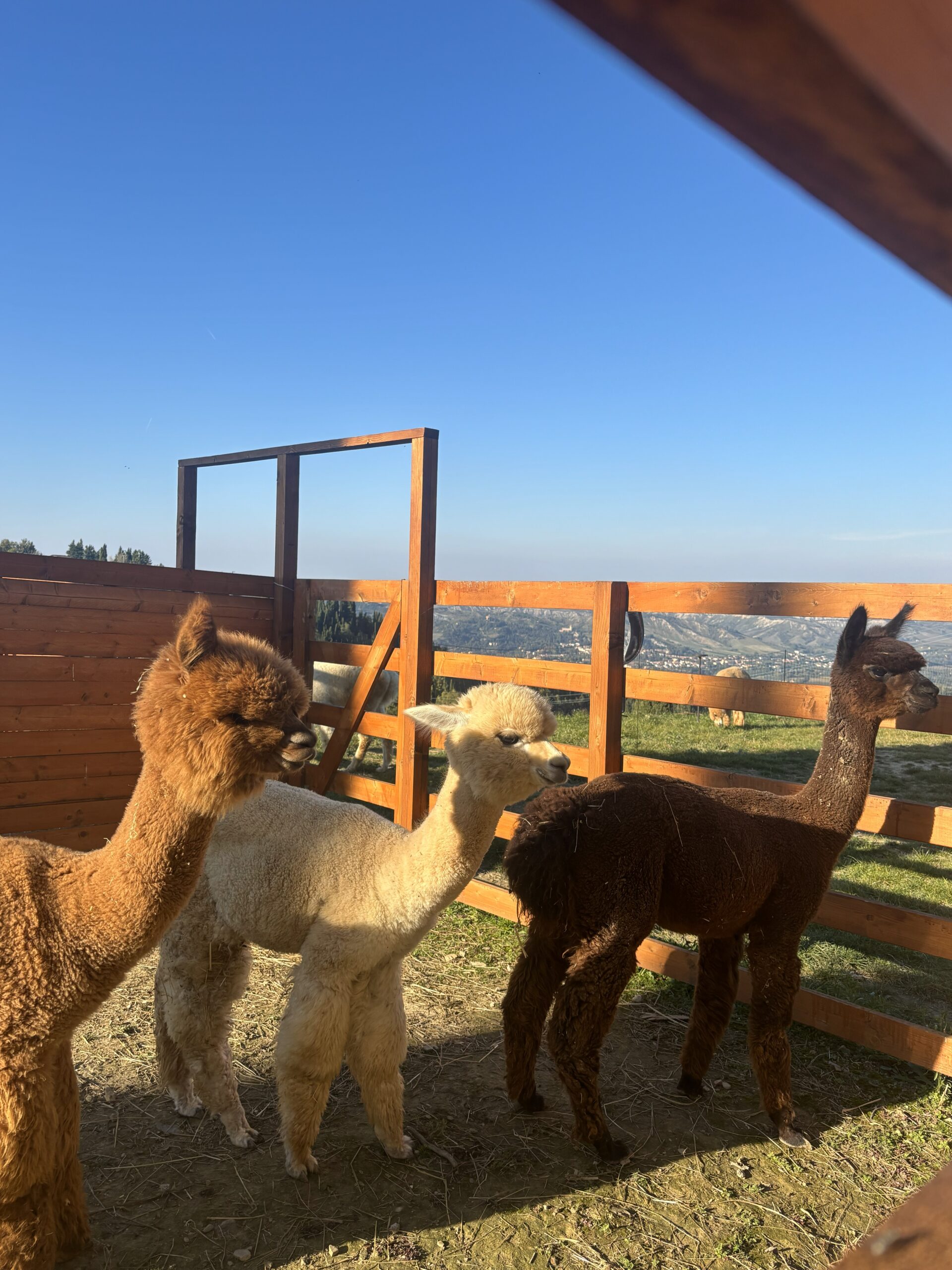
Today, Ronchi di Castelluccio is guided by Aldo and his brother Paolo Rametta, who acquired the brand in 2020. “My brother and I had this crazy idea to purchase the brand. He decided that we didn’t have enough problems,” Aldo says, dryly, an understatement underscored by their decision to add six alpacas to the property shortly thereafter. Humor aside, the brothers moved quickly to sharpen the estate’s focus, prioritizing terroir expression, organic farming, and renewed brand clarity.
Climate and landscape are central to that effort. The vineyards sit within a predominantly Mediterranean climate, but altitude tempers heat and preserves freshness, while surrounding woodland creates a natural buffer that moderates extremes. Beneath the vines lie sandstone soils dating back roughly 15 million years, formed when the area was still under the sea.
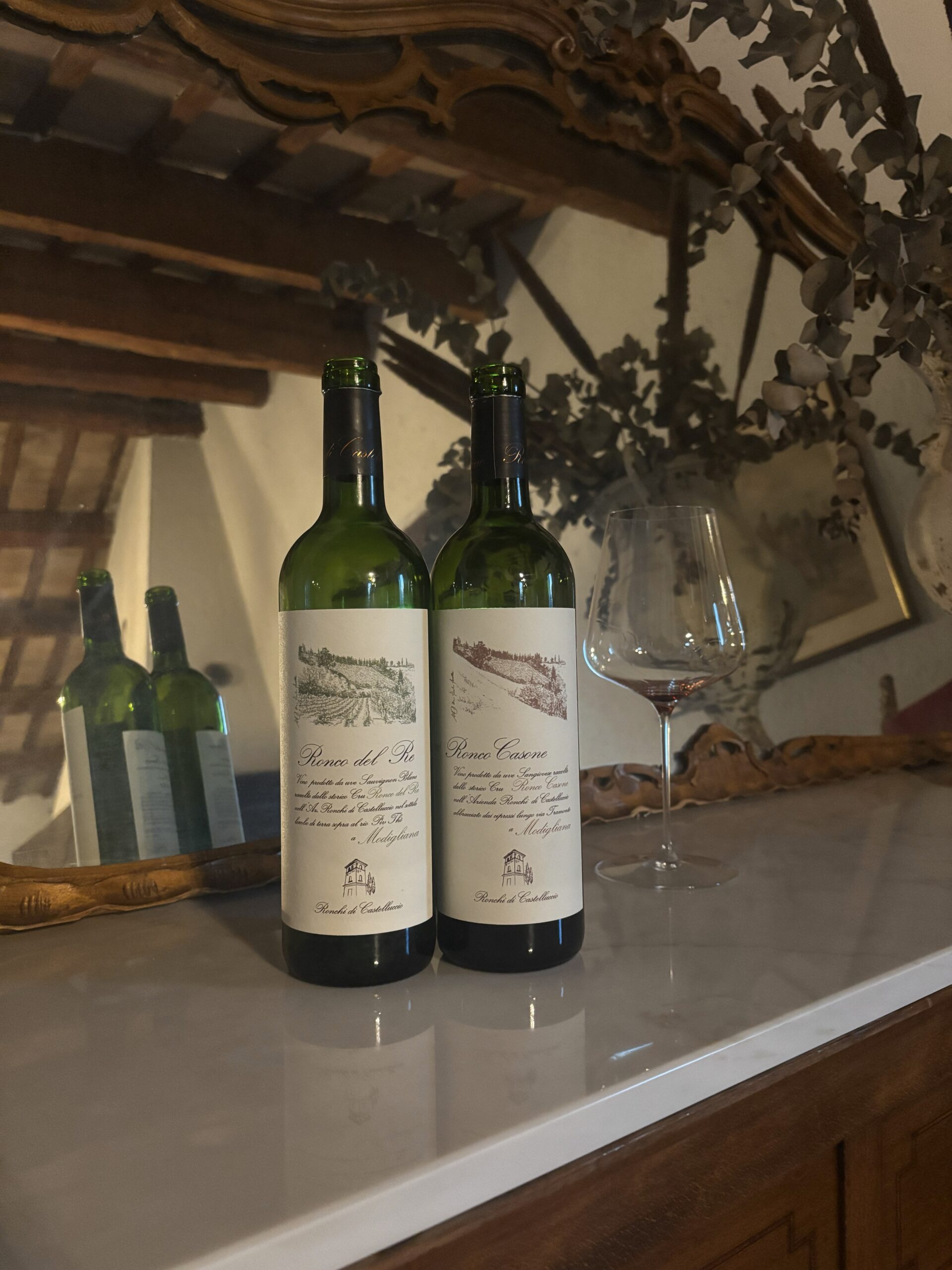
The Ramettas have narrowed their attention to varieties that best articulate this setting. Sangiovese anchors the estate, joined by Sauvignon Blanc, which is bush-trained—a rarity in the area that speaks to both the wind exposure and low-vigor soils at their site. There is also a small, historically significant parcel of Cabernet Sauvignon planted in 1974, maintained more as a living archive than a commercial statement. Organic farming underpins all of it.
Continuity matters here, too. The agronomist who first planted the vineyards is now in his 80s and still consults, alongside his son, in a generational throughline that mirrors the Ramettas’ own stewardship. For Aldo, the goal is not polish for its own sake, but honesty. “Every year has to tell its own story, every year speaks for itself.”
Imported into the U.S. by Estrucan.
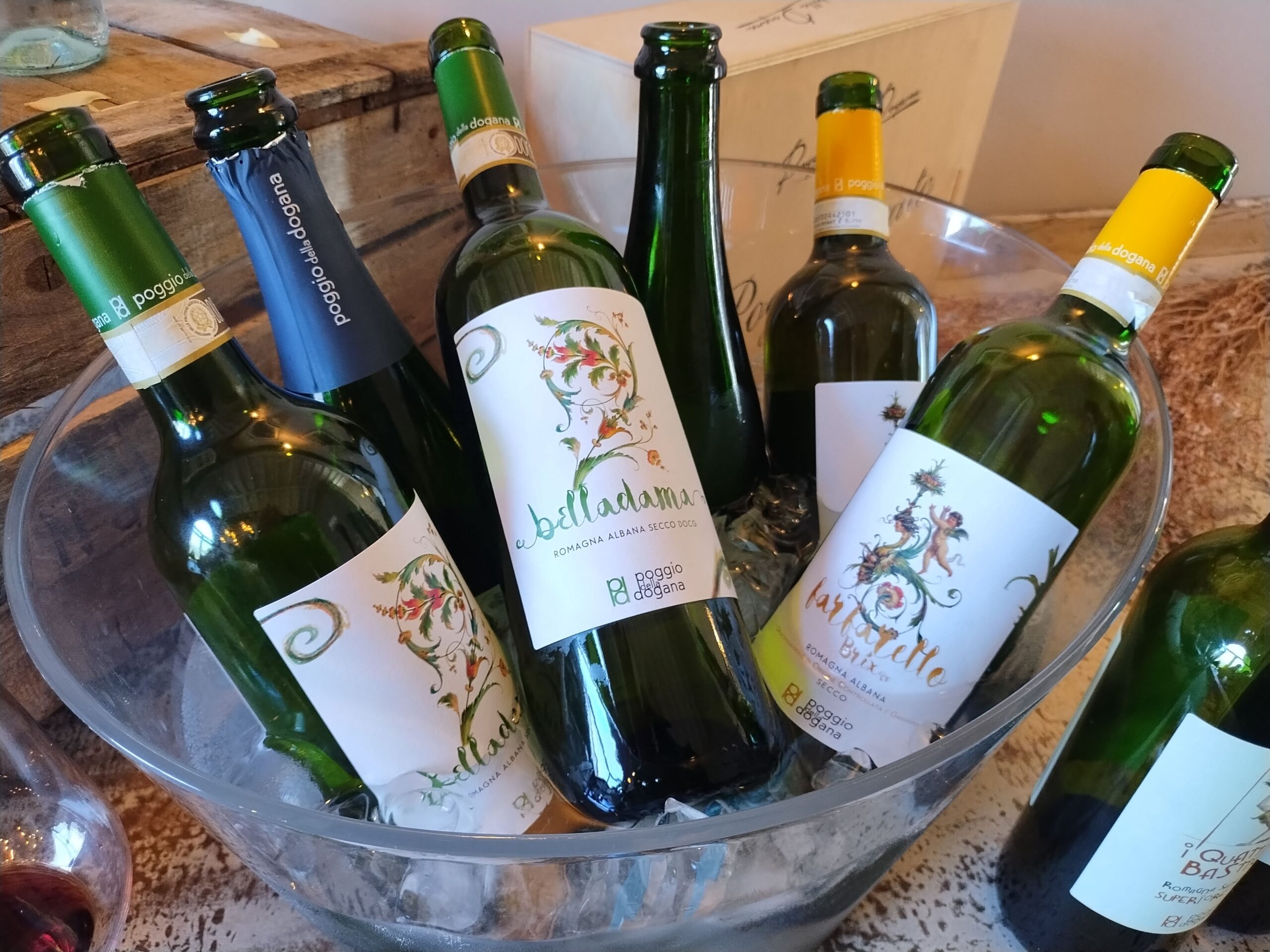
Poggio della Dogana
Romagna
Poggio della Dogana represents the starting point of Aldo and Paolo Rametta’s return to Romagna—and, in many ways, it is the philosophical counterweight to their Ronchi di Castelluccio brand. This was the brothers’ first acquisition, purchased in 2017 after years of living and working abroad, and it set the tone for how they would approach winegrowing in their home region: with fresh eyes, technical discipline, and a renewed respect for local tradition.
Located closer to the coast, Poggio della Dogana occupies a more exposed position than Ronchi di Castelluccio. Seaside breezes are funneled inland through nearby mountain corridors, creating constant airflow through the vineyards (an important moderating influence in a region that can otherwise lean warm). The vines here average around 35 years of age and are rooted in clay soils with a distinct sulfuric character, shaped in part by nearby hot springs. That geological fingerprint translates directly into the wines, giving them a darker, spicier, more muscular profile.
While the Ramettas share a unified vision across both estates, Poggio della Dogana is intentionally different in expression. The focus here is firmly on native and traditional varieties, interpreted through a lens that emphasizes structure, depth, and savory complexity. Compared to the higher-altitude, sandstone-driven finesse of Ronchi di Castelluccio, Poggio della Dogana’s wines are broader-shouldered and more assertive—built on equal parts texture, spice expression, and freshness.
This contrast is not accidental. Together, the two estates function as a study in Romagna’s internal diversity, shaped by exposure, soil, and microclimate rather than appellation boundaries alone. Poggio della Dogana captures the maritime-influenced, clay-rich side of the region, where wind and heat converge to produce wines of power and character without sacrificing balance.
Like Ronchi di Castelluccio, Poggio della Dogana is farmed organically, and imported into the United States by Estrucan.