
Jonathan Cristaldi sits down with Tancredi Biondi Santi of Castello di Montepò to discuss Super Tuscan history, cru vineyards, vine clones, and what’s planned for the future of this storied estate.
Guiding an Historic Tuscan Estate into the Future
The Biondi-Santi name has been synonymous with Brunello di Montalcino for generations.
Now, after leaving the family’s historic estate behind, Jacopo and Tancredi Biondi-Santi are building something new at Castello di Montepò, while bringing a little bit of the old Biondi-Santi magic along with them.
I recently asked Tancredi Biondi-Santi about the changes afoot at their Montepò estate; and his answers should get Super Tuscan fans excited about what’s to come.
Q&A with Tancredi Biondi Santi of Castello di Montepò
Q: When your family sold the last of its shares in the Brunello di Montalcino estate to EPI in 2019, what was that moment like for you and your father and how quickly did the focus shift entirely to Castello di Montepò?
Tancredi Biondi Santi (TBS): For my father and me, the sale was never the end of a story. Castello di Montepò had already been part of our lives for decades, and much of our energy and attention had long been invested there alongside our work in Montalcino. What mattered most was that the work we had dedicated our lives to remained with us. The BBS11 vine selection, developed and preserved by our family over generations came with us to Montepò, which gave us the opportunity to focus entirely on exploring the full potential of the clone across different soils, exposures, and winemaking approaches. Tradition remains our starting point, but wine is a living thing. Every generation has the responsibility not only to preserve what it inherits, but also to deepen its understanding and contribute something of its own.
Q: Your father acquired Montepò in the late 1980s at a time when people were actively warning him against buying land in the Maremma. Looking back, what do you think he understood about this place that others simply couldn’t see?
TBS: My father has always preferred to follow his own instincts. When he first came to the Maremma, it was not yet considered one of Tuscany’s leading wine regions, but he saw qualities that others overlooked. He believed the combination of soils, climate, and exposure offered the potential to produce wines of real depth and longevity. What drew him there was the opportunity to build something from the ground up. Decades later, I think the results speak for themselves.
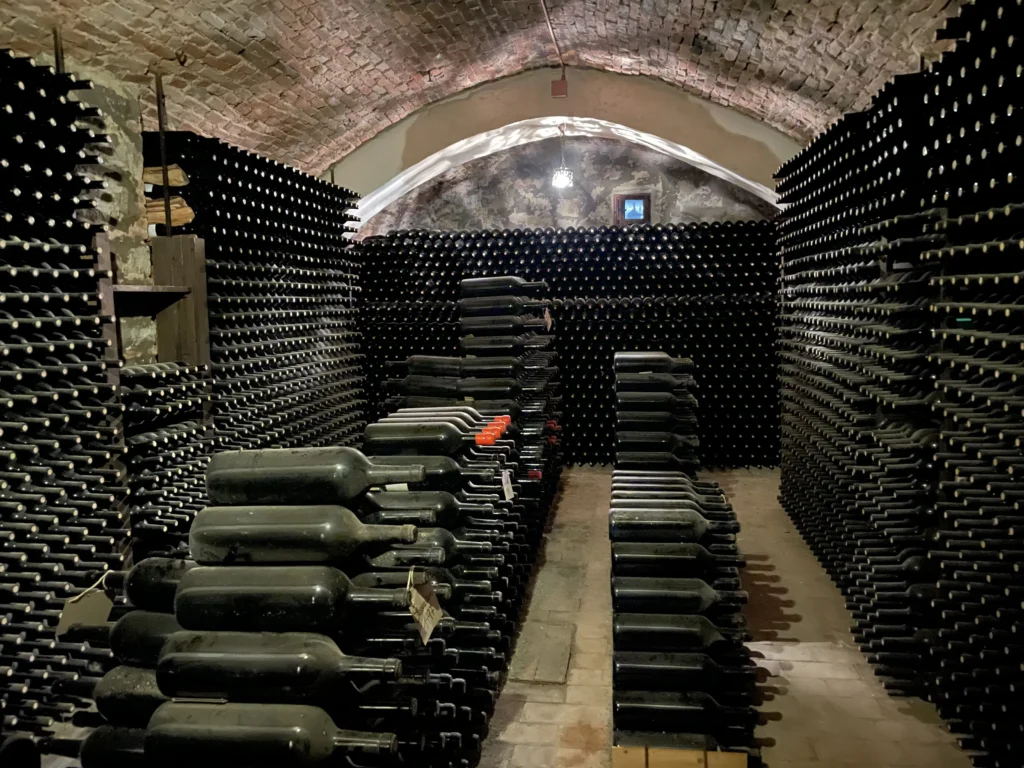
Q: The three cru vineyard blocks, Fontecanese, Poggio Ferro, and Maceone, sit within a relatively compact estate, yet they each express a distinctly different character. How do you explain that kind of variation to someone encountering these wines for the first time?
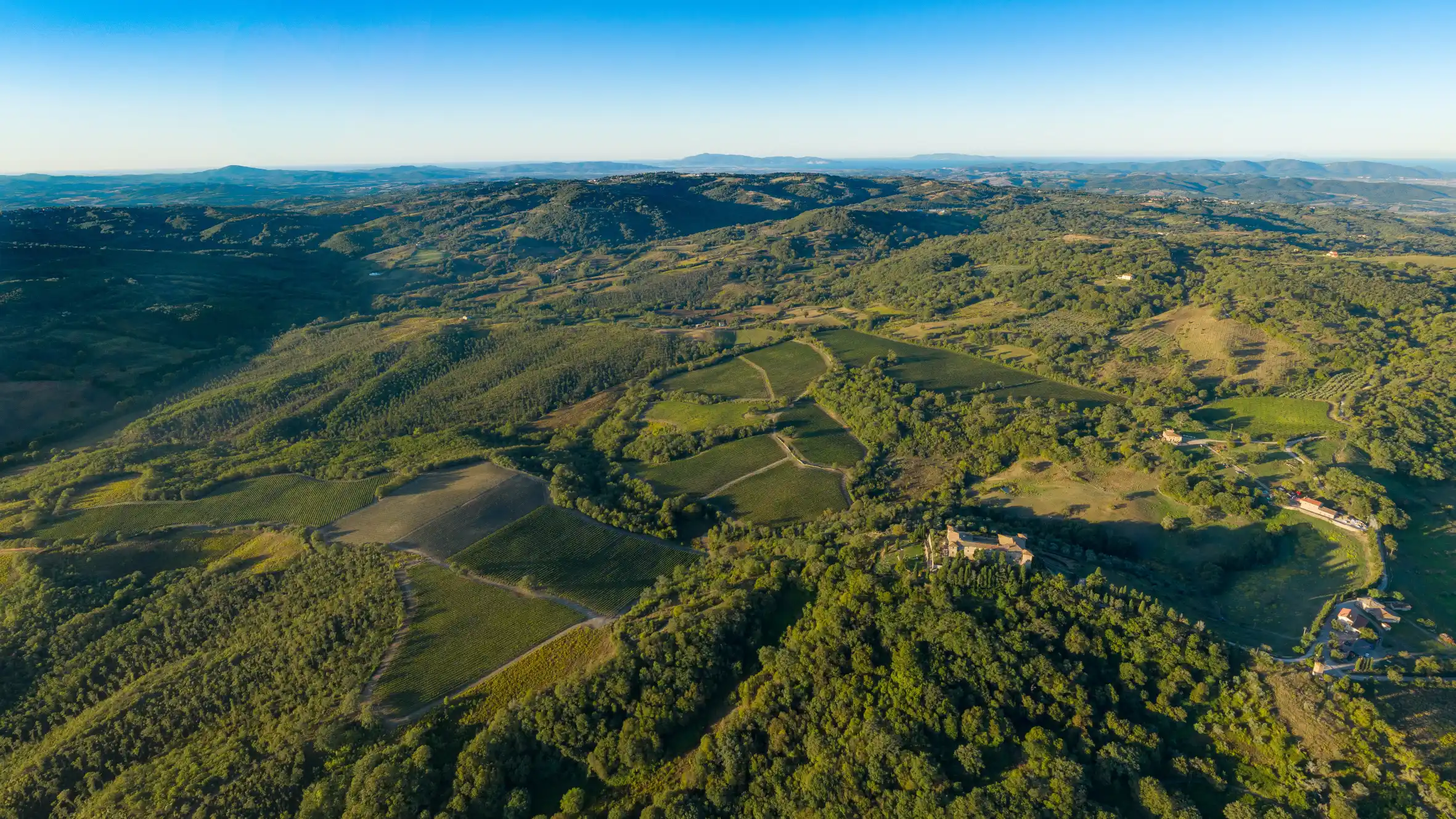
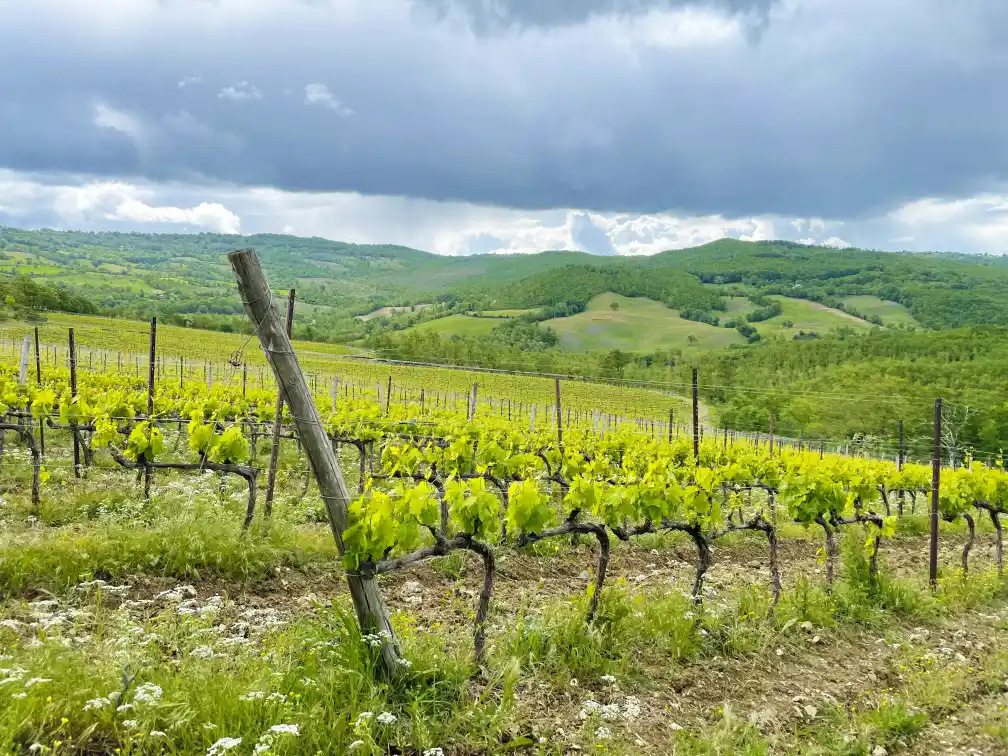
TBS: Montepò is 1,532 acres, completely isolated, with altitudes ranging from 820 to 1,706 feet and Galestro soils that shift dramatically across the estate. What makes the crus extraordinary is that the vinification is identical for all three; every difference in the glass is purely the land speaking. Poggio Ferro is the most extreme, southwest-facing, southernmost, pure mineral Galestro under intense hydric stress. Maceone is the northernmost vineyard on the estate, east-facing, cooler, with more clay dissolved into the Galestro, giving it a fresher, more lifted quality. Fontecanese is a different conversation entirely, our one-hectare Cabernet Sauvignon block, shaped by altitude and precision.
Q: The Sangiovese Grosso BBS11 clone is inseparable from your family name and the history of Brunello di Montalcino; it’s essentially your inheritance. What does it mean to now be redefining what that clone can do in the context of Maremma soils and a completely different appellation?
TBS: Sangiovese Grosso BBS11 is our family’s greatest gift to the wine world, a clone selected over generations to express complexity and longevity at the highest level. But Montepò is not a continuation of that story; it is the next chapter, and in many ways the next level. At Montepò, BBS11 encounters a very different environment from Montalcino. The warmer climate and the diversity of soils bring out different characteristics while preserving the structure, complexity, and longevity that have always distinguished it. For me, that is what makes it so fascinating. We are not trying to replicate something that already exists. We are continuing to learn what this vine is capable of expressing in a new place.
Q: Dry farming, native yeast fermentation, extended barrel aging in some of the rarest cooperage in the world: how would you describe the philosophy that governs the way these wines are made from harvest to bottle?
TBS: We vinify exactly as our family has always done, nothing more and nothing less; our role is simply to transform grapes into wine without changing anything along the way. No irrigation, no inoculation, no shortcuts; just the land, the vintage, and the patience to let both speak clearly. This is what we mean when we say tradition, and it is also what we mean when we say complexity, because the simplicity of our approach is precisely what allows the complexity of the place to come through. Wine is made in the vineyard, not in the cellar.
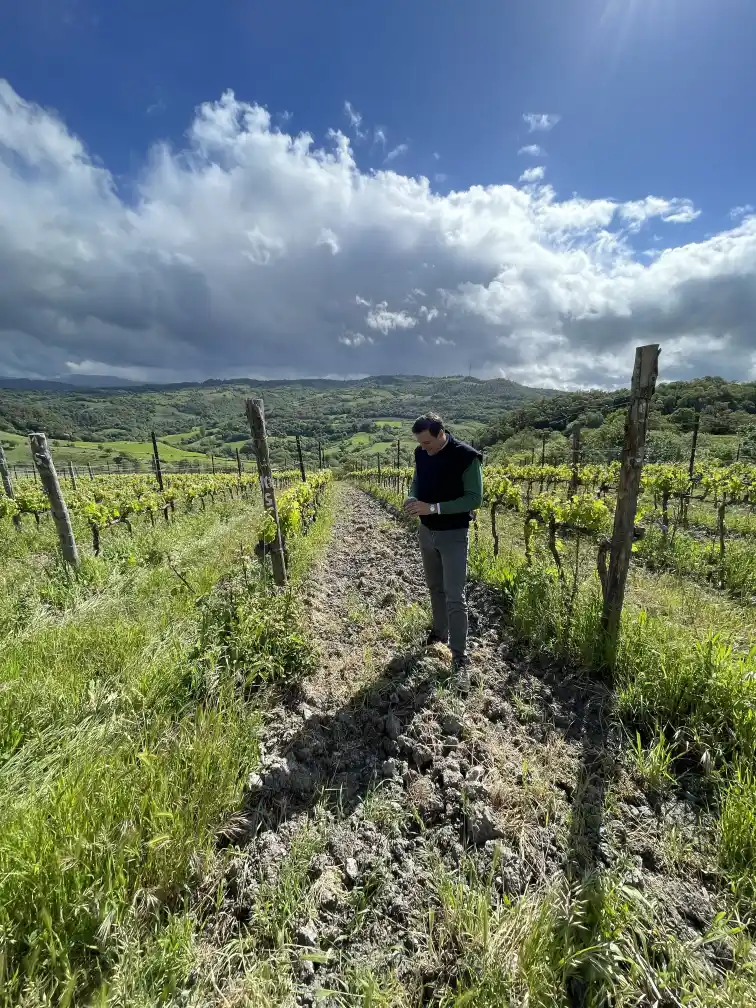
Q: The Fontecanese Cabernet Sauvignon feels like an outlier in the portfolio, a Bordeaux clone brought to Tuscany by your father and now being studied for massale selection. What is the longer-term vision for that vineyard and that wine within the Montepò story?
TBS: My father’s vision has always started with the same question: what does this land want to become? He understood that Fontecanese was made for Cabernet Sauvignon, and he planted it in pursuit of the perfection that this specific place can achieve with that variety. Simply that. The broader vision for Montepò is to prove that longevity and complexity are not exclusive to BBS11 or to Sangiovese, but are expressions of the land itself, capable of revealing themselves through different grape varieties when the match between vine and soil is right.
Q: Montepò already produces wines at multiple tiers, from the Morellino and Sassoalloro through to the cru bottlings. Talk us through the wines and give us a quick sense of why they are in the portfolio.
TBS: BBS11 tells the whole story. JeT, our rosé, Sassoalloro, the modern red, and Sassoalloro Oro, the classic red, are all 100% BBS11; three completely different wines from the same grape, showing what vinification alone can achieve. Then come the crus, Poggio Ferro, Maceone and Fontecanese, which are our answer to the Burgundy concept of terroir; one-hectare microplots where the land alone, not the winemaking, defines the glass. Schidione is the only Supertuscan our family has ever produced, a pure expression of the Maremma and nothing else. And our Morellino di Scansano is our commitment to the DOCG where this castle stands, a statement of what quality and long-term vision can bring to an appellation we believe in deeply.
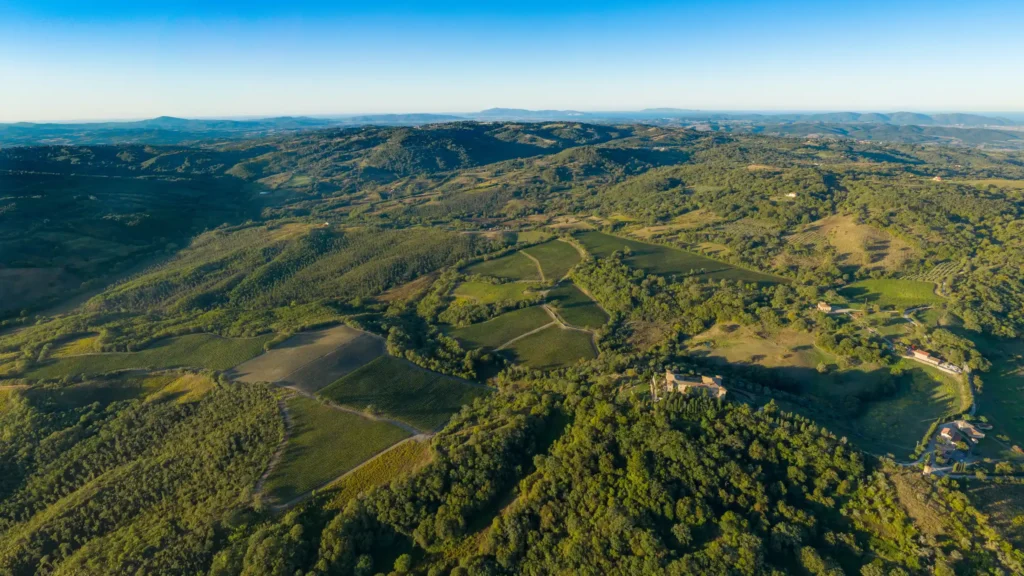
Q: You live in this castle, you work this land, and one day this will be yours to carry forward alone. When you look at what your father built here and what you are building together now, what does the next chapter of the Biondi-Santi legacy at Montepò actually look like to you?
TBS: Every generation of our family has carried a different challenge. My great-grandfather created Brunello di Montalcino as a DOCG and produced what many still consider the greatest bottle ever made, the 1955. My grandfather held an uncompromising line through decades of pressure to modernize, when everything around him was changing. My father followed his curiosity for land-driven wines, brought BBS11 to a wild and untamed land, and built something from nothing. The thing about legacy is that people often talk about it as if it belongs to the past. I don’t see it that way. To me, a legacy only exists if each generation is willing to take responsibility for it and move it forward. When I look at what my father built at Montepò, what I admire most is not the wines or even the estate itself. It’s the courage it took to believe in something before anyone else did. He planted vineyards in a place that, at the time, most people would never have considered for this kind of ambition. I think every generation faces the same question: do you protect what you’ve inherited by preserving it exactly as it is, or by giving it the chance to keep evolving? For me, the answer has always been the second. My hope is that, one day, people will look at Montepò and see not only the continuation of a family story, but proof that tradition and curiosity can exist side by side.
IMPORTER: 2TierTrading
Visit TastingPanelMag.com to see Cristaldi’s reviews of the 2020s and the Tasting Panel’s reviews of the 2019 Castelo di Montepò wines.