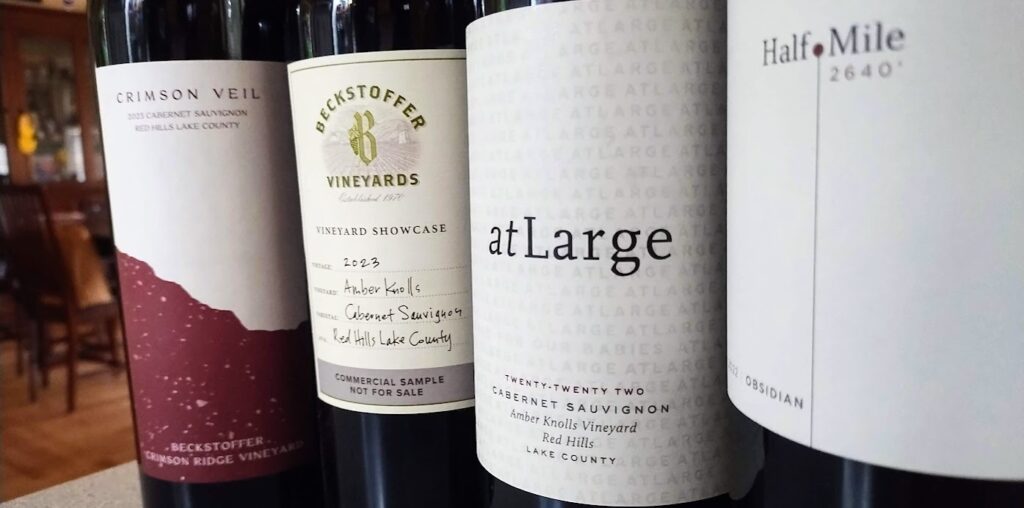

Many wine insiders know Andy Beckstoffer as the influential farmer behind some of the highest-scoring Cabernets in Napa Valley History. But as Joe Roberts recently discovered during a media tasting of wines from Beckstoffer’s vineyard holdings in the Red Hills Lake County AVA, Beckstoffer’s Midas touch (particularly with Cabernet Sauvignon) extends well beyond the storied Napa properties that are his modern claim to American winegrowing fame.
Red Hills Rising
Do a quick search of the Cabernet Sauvignon wines made from Andy Beckstoffer’s Napa Valley vineyards, and you’ll be absolutely bombarded with stratospheric scores from wine critics. The appearance on the label of those vineyard names—Dr. Crane, Bourn, Georges III, To Kalon, Las Piedras, Missouri Hopper—almost guarantee lofty price tags and quickly dwindling inventory snatched up by Cab collectors.
Beckstoffer has spent more than five decades helping to reshape the modern California wine landscape, building Beckstoffer Vineyards into a powerhouse operation farming roughly 4,000 acres. Originally from Virginia, Beckstoffer studied engineering at Virginia Tech, and by age 30 had already launched the company that would become one of Napa’s most influential vineyard owners (arguably THE most).
His impact hasn’t just been felt on the ground: as an early leader in organizations like the Napa Valley Grapegrowers and the Rutherford Dust Society, he helped shape the region’s modern winegrowing identity (his introduction of quality-based grape pricing in the 1970s created a seismic shift in how wine grapes and growers themselves are valued in the industry). Beckstoffer’s early push for vineyard-designated wines—treating individual sites as the clearest expression of terroir—helped spark a movement that pretty much still defines how consumers view the tip-top tier of California wine in general.
So we should at least pause a moment or two when Beckstoffer says “Lake County is the next place for premium California Cabernet,” as he told the Lake County Winery Association back in 2024. I mean, the guy’s track record is pretty good, after all.
Sitting east of the more recognized Mendocino County, and northeast of the much more recognized Napa and Sonoma Counties, Lake County is oft-overlooked; but Beckstoffer’s continuous involvement might change that, at least for its Clear Lake sub-AVA (which has been home to grape vines since at least the 1870s).
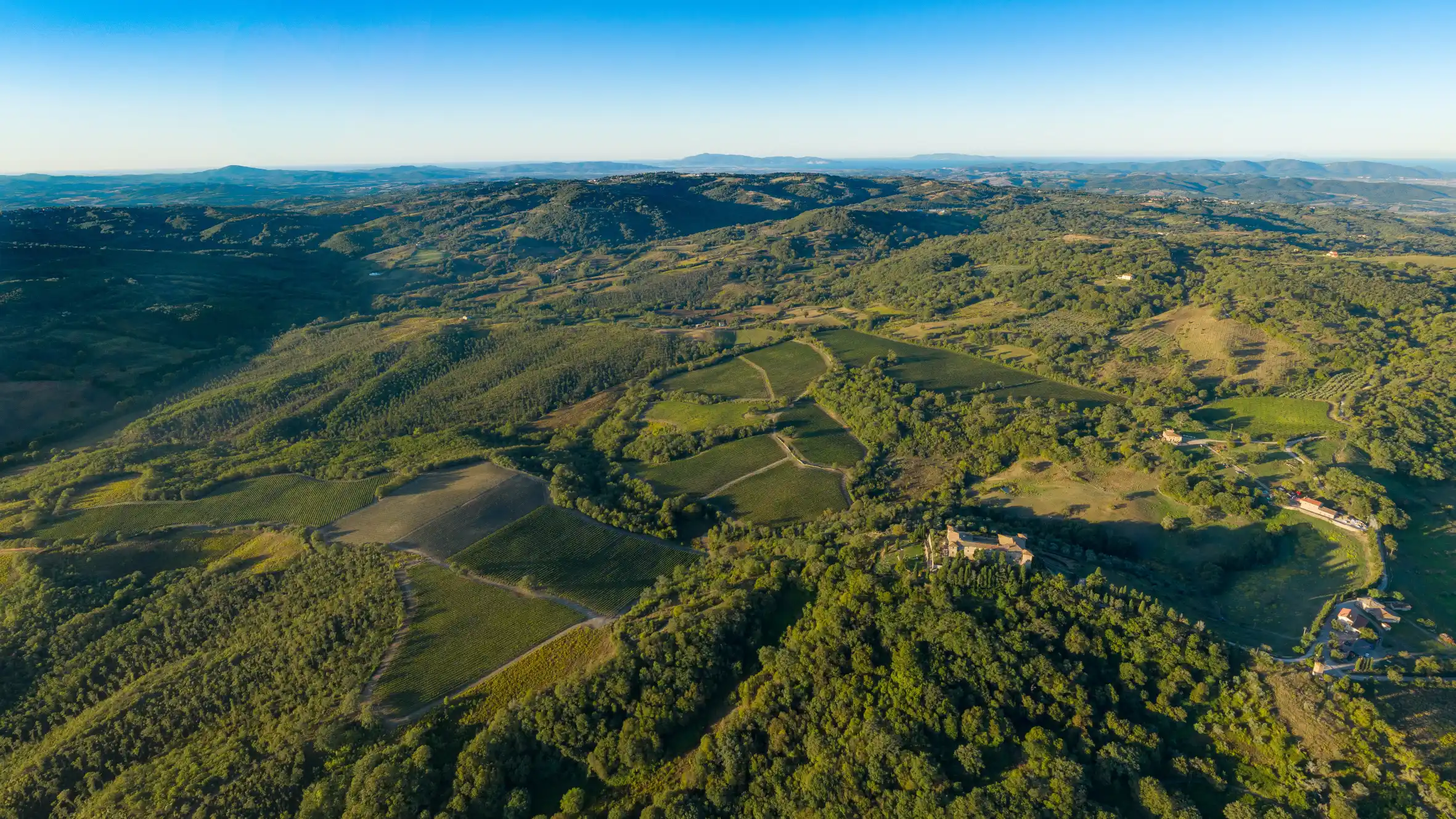
Beckstoffer himself was an important player in the formation of the Red Hills Lake County AVA sub-region in Clear Lake, and his holdings sit on the southwest edge of the area, among volcanic hills ranging in elevation from 1,350 to 3,700+ feet above sea level (most of the plantings there are currently found from 1,350 to 2,600 feet). The soils sit atop fractured rock that is well-draining, promoting deep root penetration, and naturally low fertility, all perched atop a magma pocket that’s one of the thinnest crusts in all of North America. Black obsidian (large, glass-like hunks of it), quartz, and volcanic gravel can all be found among the vines, and every 1,000 feet or so in elevation further shortens the growing season as the grapes and vines become exposed to increasing levels of ultraviolet light.
I tasted through examples of wines crafted from grapes sourced from Clear Lake vineyard holdings farmed owned and/or farmed by Beckstoffer, and if you’ll forgive the most-definitely intended pun, the premium Cabernet potential of the region does seem pretty clear to this taster’s palate.
Beckstoffer Amber Knolls Vineyard
According to Beckstoffer Vineyards’ Jesse Giacomelli, the Amber Knolls Vineyard contains some of the oldest plantings in the company’s Clear Lake holdings: “Those vines were planted almost thirty years ago,” and given that the site has little disease pressure and doesn’t see much rain, they’ve no current plans to rip anything out that is still performing well. This site is known for ample obsidian chunks, a detail that impressed Andy Beckstoffer during his initial visits to the area. Giacomelli cited a “Red Hills earthy spice” quality as the “unique footprint that these wines always have” from the site.
Beckstoffer Crimson Ridge Vineyard
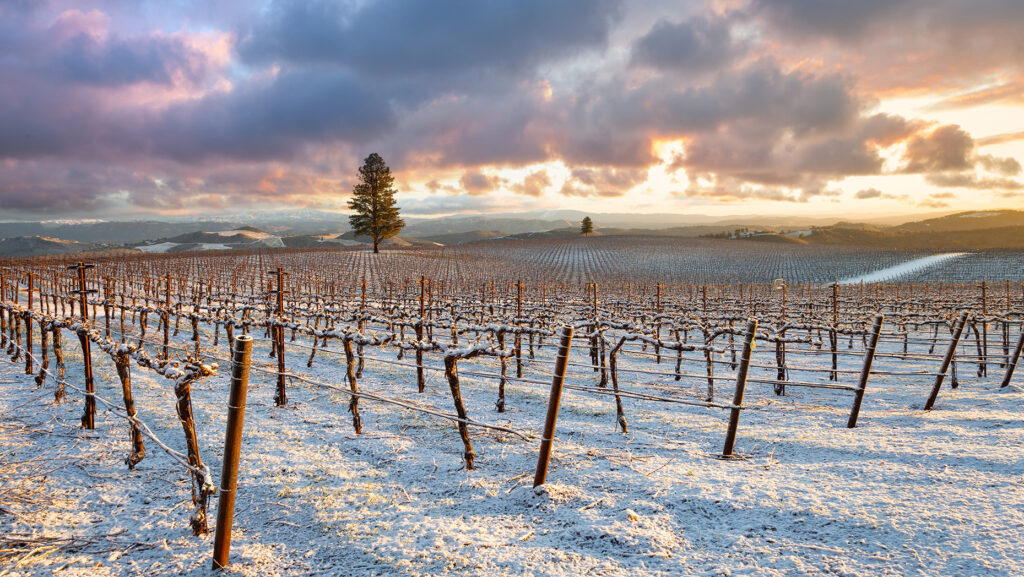
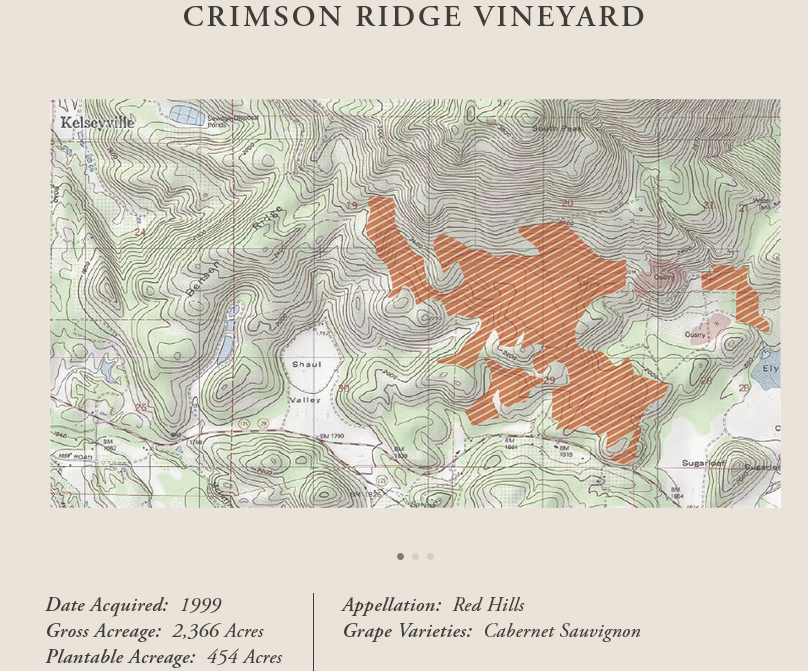
Wines from Crimson Ridge (where vines are planted up to 2,500 feet), were the first that Andy Beckstoffer allowed outside of Napa County to carry his name on the labels. The eruption of Mount Konocti 11,000+ years ago influenced the current state of the site’s soils: alluvial Benridge-Konocti that sit atop west-facing slopes, with hills that can hit 30% grades in some spots. The Benridge series consists of well-drained loamy soils that can run deep, and they carry a reddish hue that gives the site its name. The Konocti series is less deep, but also well-drained, with andesite, basalt, and dacite. As consulting winemaker and Rutherford local Kirk Venge pointed out during our tasting, the elevation dictates most of the farming at Crimson Ridge: “up in Lake County, the #1 issue is always going to be sun and over-exposure.”
Obsidian Ridge Vineyard
Obsidian Ridge Vineyard occupies a dramatic site at the northern edge of the Mayacamas Range, where vines planted in 1999 cling to a rugged volcanic outcrop roughly 2,300 to 2,640 feet above sea level, rooted in red soils laced with obsidian. The mountain environment is anything but forgiving, marked by low humidity, chilly nights, and heightened UV exposure which naturally limits vine vigor and yields smaller, thicker-skinned berries. Planted predominantly to Cabernet Sauvignon, the estate has three distinct climate bands, with its highest blocks found above the fog line on steep, rocky terrain that runs notably warmer than the lower elevations. This combination accelerates the growing season, leading to earlier break bud and ripening, while delivering fruit with a powerful flavor profile.
Obsidian Wine Co.’s Peter Molnar describes himself as the “volcanic wine whisperer” after working with Obsidian Ridge fruit. “We pulled out tons of obsidian from that site,” he noted. “We do no leafing, because it’s such a short growing season. Red Hills is like the Priorat of the North Coast,” he continued, noting the similarities to one of Spain’s most famous regions for red wine. “We’re very keen on precision irrigation, there is such a small margin of error in these volcanic soils. I wouldn’t say it’s easy to farm up there, but it is pretty straightforward.”